11 hrs
Lisboa
Fatima and Coimbra Religious Tour: Private Day Trip from Lisbon
✓ Free cancellation Kids friendly
5.0(1 reviews)
From €655/ person
Book Now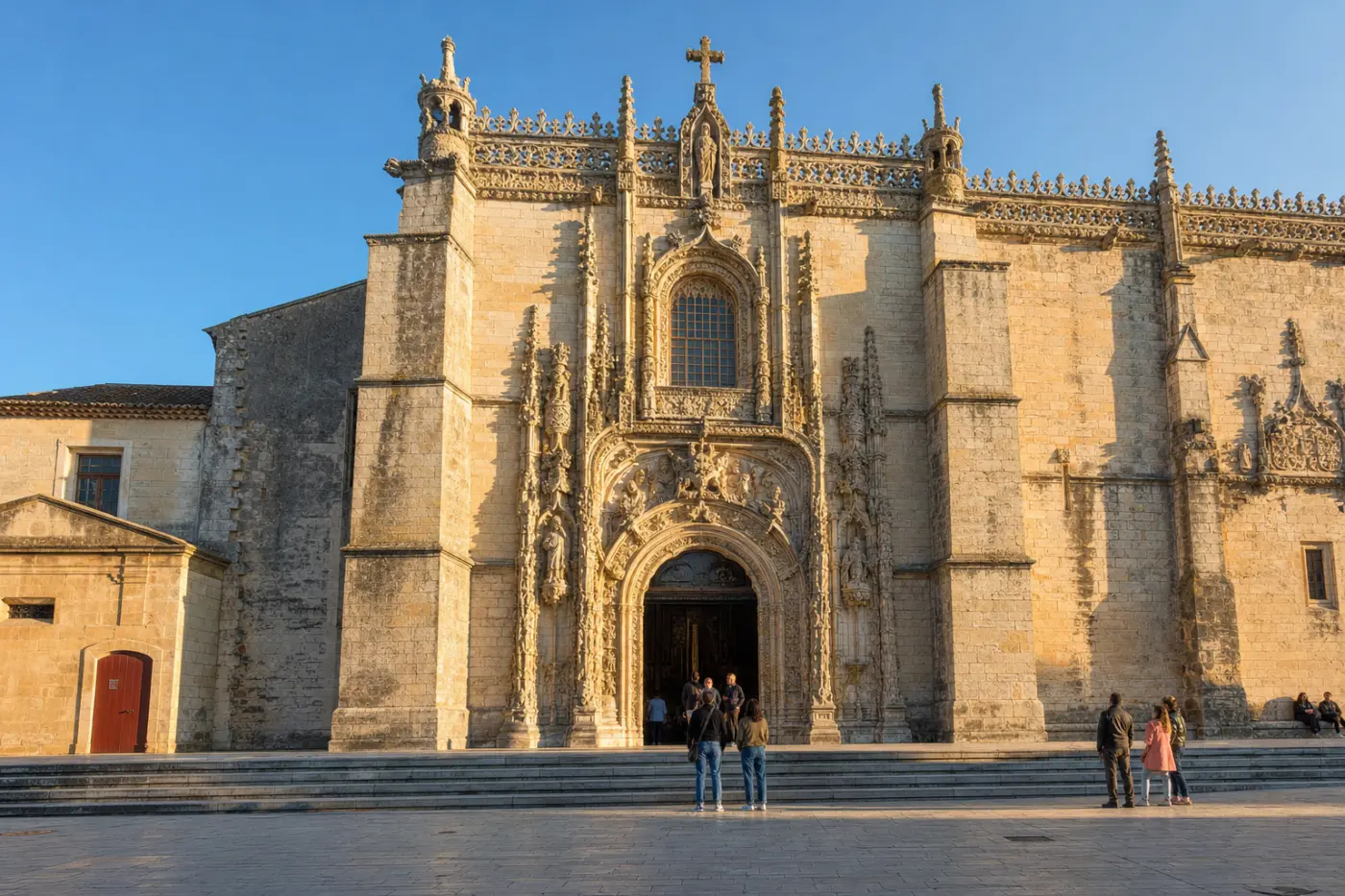
Tourist attraction
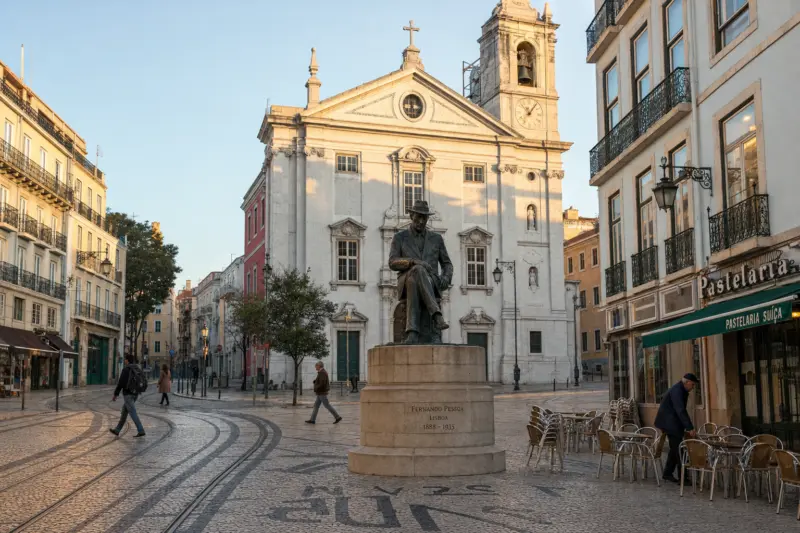
The Monastery of Santa Cruz stands at the heart of Coimbra's Praça 8 de Maio as one of Portugal's most historically loaded religious monuments. Its foundation stone was laid on June 28, 1131, under the direct patronage of D. Afonso Henriques — the first King of Portugal — who had chosen Coimbra as his capital and entrusted the new house to the Canons Regular of Saint Augustine. By February 1132, a community of 72 monks under Prior D. Teotónio had taken up residence, and the Romanesque church was formally consecrated in January 1229 in the presence of Papal Legate John of Abbeville, Bishop of Sabina. King Afonso Henriques himself was buried here after his death on December 6, 1185, making Santa Cruz a dynastic mausoleum from its earliest centuries.
The monastery's appearance today owes everything to two successive royal rebuilding campaigns in the sixteenth century. Between roughly 1507 and 1527, King D. Manuel I ordered the original Romanesque church and cloister demolished and rebuilt in the ornate late Gothic-Manueline style, commissioning grand new tombs for Afonso Henriques and his son Sancho I in the main chapel. Barely a decade later, D. João III transformed Santa Cruz into Portugal's first Renaissance monastery, adding two new cloisters — one housing the celebrated Manga Fountain — along with a new dormitory, library, and dining hall. It was from this reformed complex that the Rua de Santa Sophia (Street of Holy Knowledge) was laid out to serve the colleges of the newly installed University of Coimbra. Later centuries added a seventeenth-century vestry and an elaborate Baroque sanctuary, layering still more architectural periods onto the complex.
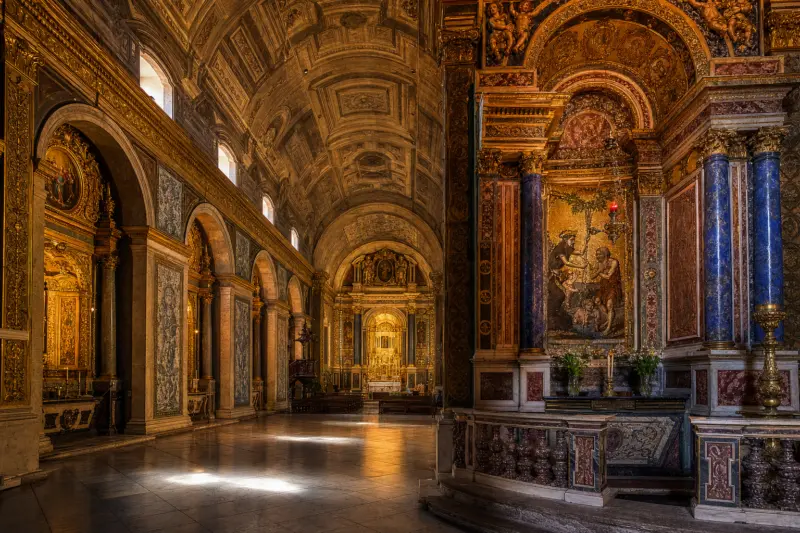
Visitors entering the church immediately encounter the elaborate Manueline façade, richly carved with nautical and botanical motifs that characterize the reign of D. Manuel I. Inside, the royal tombs of Afonso Henriques and Sancho I occupy the chancel beneath intricately worked stone canopies. The sacristy walls are lined with painted azulejo tile panels depicting scenes from the life of Saint Augustine, while the Cloister of Silence (Claustro do Silêncio) displays delicate Renaissance arcading enriched with low-relief sculpture. The nearby Manga Fountain — a Renaissance jewel in its own cloister — represents one of the earliest expressions of Italian Renaissance garden design in Portugal.
The extinction of religious orders in 1834 led to the dispersal of much of the monastery's movable heritage and the loss of several dependencies, but the church survived and was classified as a National Monument. In 1997, architect Fernando Távora completed a sensitive rehabilitation of Praça 8 de Maio, restoring civic dignity to the ensemble, and in 2003 Santa Cruz was officially designated a National Pantheon. The church remains an active place of worship. Entry to the church is free, though a small fee applies to the sacristy and cloister. Arrive early on weekday mornings to avoid tour groups and to catch the morning light filtering through the nave windows.
Private tours with a local guide, at your own pace.
Lisboa

Lisboa
Lisboa
Lisboa

Lisboa
Lisboa
Lisboa

Lisboa
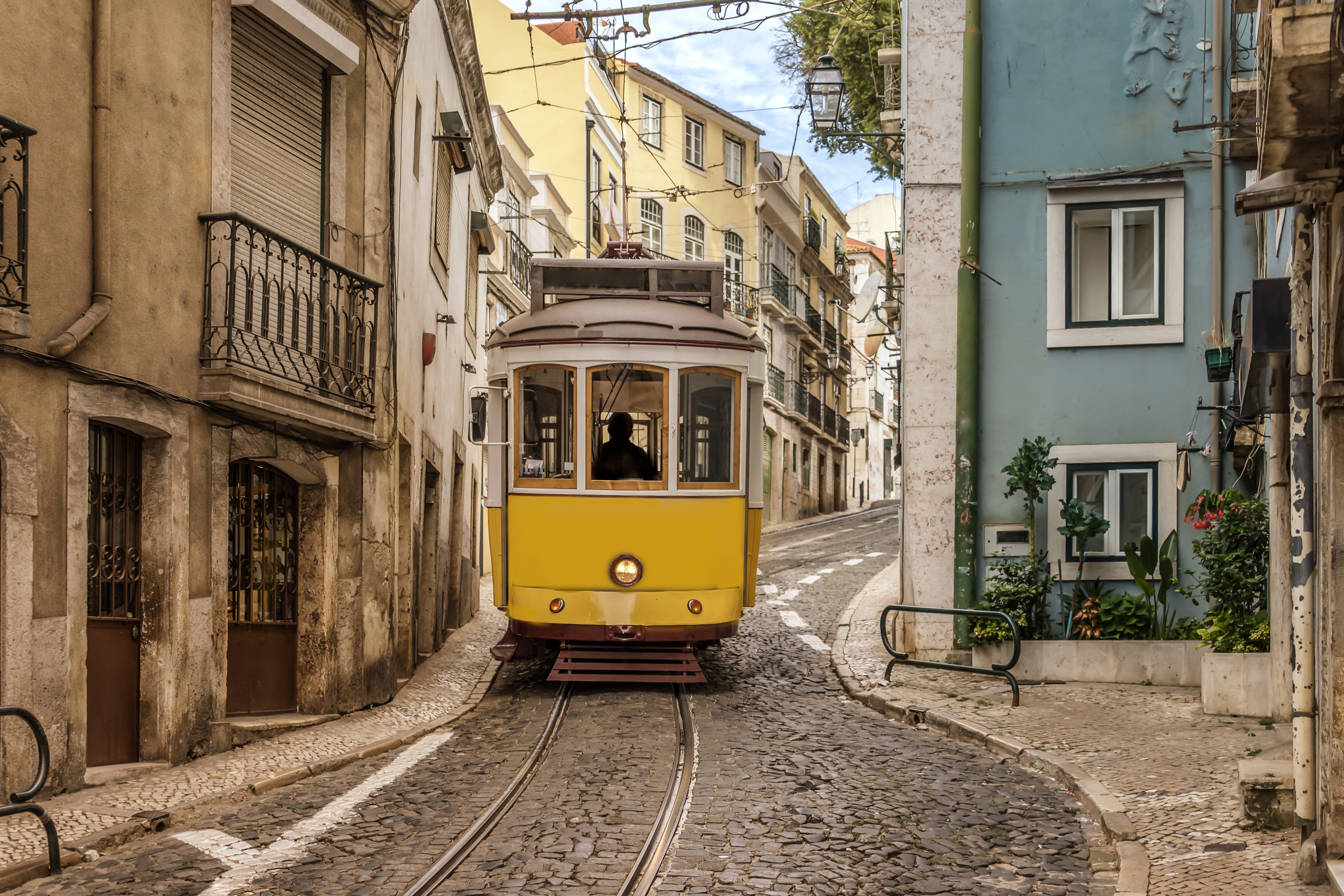
Lisboa
We use a single cookie, to remember this choice. We do not use analytics or advertising cookies. Read our cookie policy.