5 hrs
copenhagen
Copenhagen Private Full Day Tour with Lunch Option
✓ Free cancellation Kids friendly
4.8(138 reviews)
From €334/ person
Book Now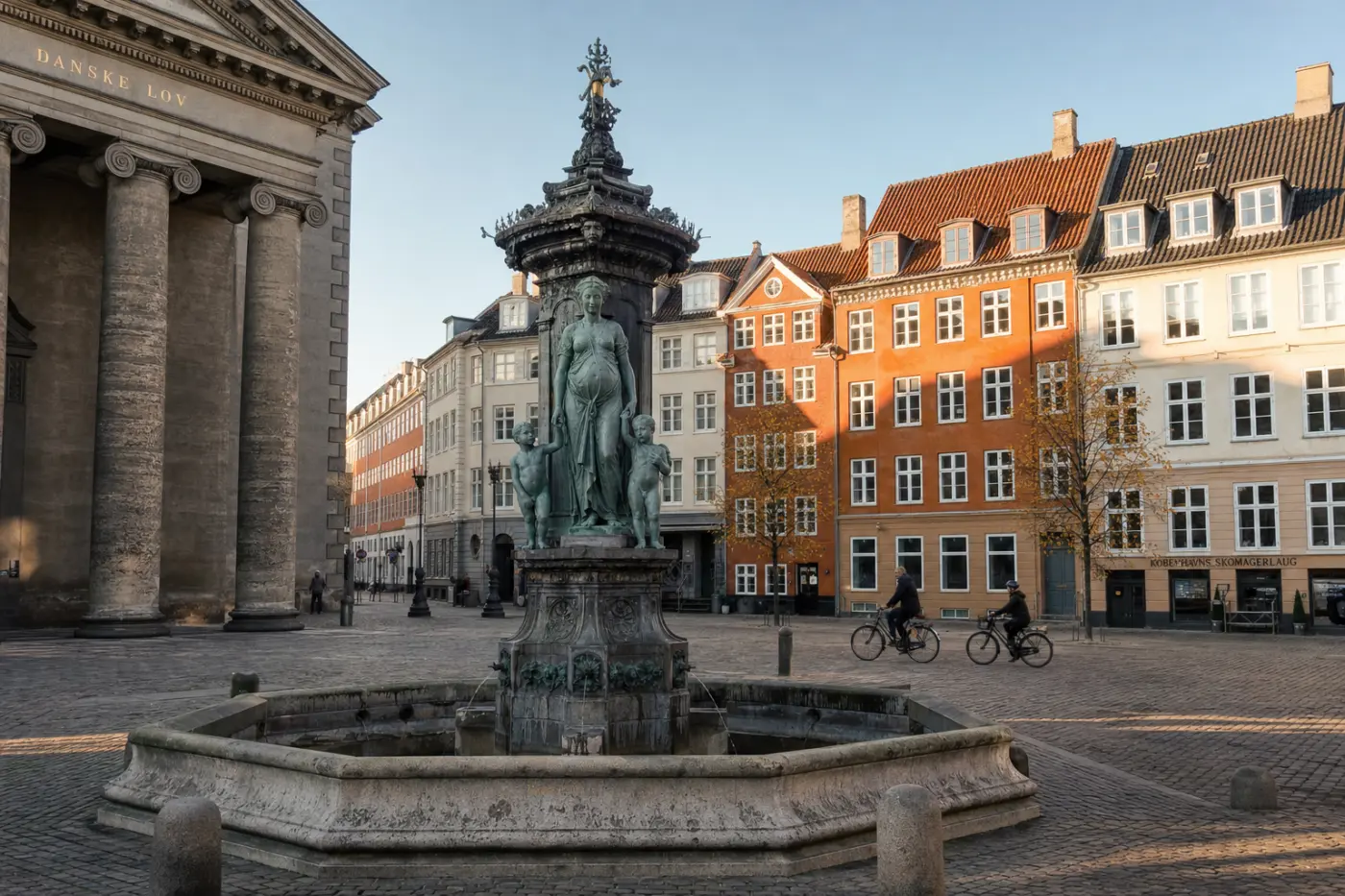
Tourist attraction
Nytorv ("New Square") and Gammeltorv ("Old Square") are two adjacent public squares in the very core of Copenhagen's old city, separated only by Nygade street. Together they form a single elongated space that has served as the civic and commercial heartbeat of the Danish capital for over 800 years. Gammeltorv is the older of the two — it was established around the 12th century as the city's original market square and was the site of the medieval town hall. For centuries it hosted weekly markets, public executions, and royal proclamations. The ornate Caritas Fountain at its centre, erected in 1608 during the reign of Christian IV, is the oldest functioning fountain in Copenhagen; its bronze figures of a pregnant woman and two children originally dispensed drinking water to the city's residents. On the birthday of the Danish monarch it still flows with coins, a tradition that stretches back hundreds of years.
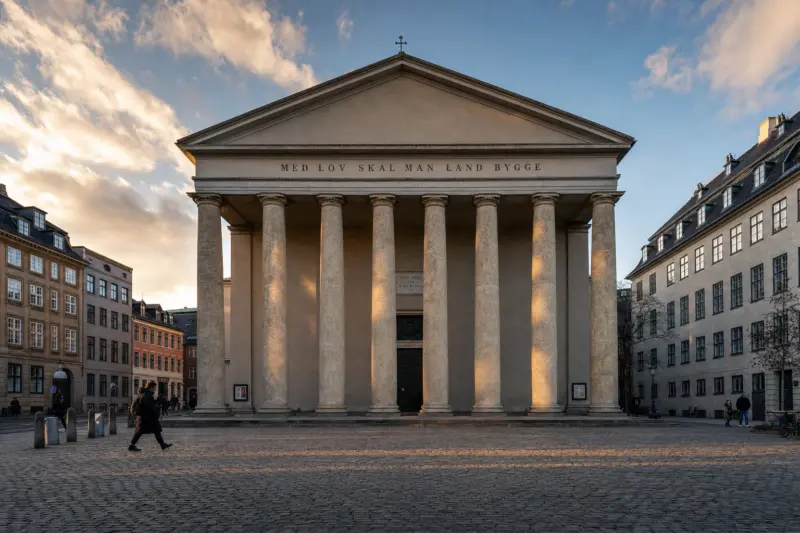
Nytorv, laid out in the 17th century to relieve congestion in the growing city, became Copenhagen's judicial centre. The neoclassical Copenhagen City Court (Domhuset), completed in 1815 and designed by Christian Frederik Hansen, dominates the square's southern edge with its austere granite colonnade of twelve Ionic columns — a deliberate architectural statement of Enlightenment-era civic authority. Hansen rebuilt much of central Copenhagen after the catastrophic British bombardment of 1807, and the courthouse stands as one of his most significant surviving works. Condemned prisoners were once led directly from the building across Nytorv to execution on Gammeltorv, a grim procession the two squares witnessed well into the 19th century.
Today the squares pulse with everyday Copenhagen life rather than royal decrees. Gammeltorv hosts a lively flea market every Wednesday and Saturday from spring through autumn, while both squares are ringed by cafés, bakeries, and the kind of unhurried street activity that makes the area a favourite midpoint on the Strøget pedestrian axis — the longest pedestrian shopping street in Europe, which runs directly through here. The Caritas Fountain is a natural gathering point, and the surrounding buildings, many dating from the late 18th and early 19th centuries, give the ensemble a coherent neoclassical character interrupted only by the occasional bright café umbrella.
Both squares are entirely free to visit and accessible at all hours; the flea market on Gammeltorv typically runs from around 8:00 to 17:00 on market days. The nearest Metro station is Rådhuspladsen or Kongens Nytorv, and both squares sit roughly five minutes on foot from Copenhagen City Hall. Early mornings on weekdays offer the quietest experience, when the cobblestones are largely empty and the Caritas Fountain can be appreciated without the midday crowd. The squares link seamlessly with nearby attractions including Strøget, Slotsholmen, and the Latin Quarter, making them an effortless addition to any walking itinerary through the old city.
Private tours with a local guide, at your own pace.
copenhagen

copenhagen
copenhagen
copenhagen
copenhagen
We use a single cookie, to remember this choice. We do not use analytics or advertising cookies. Read our cookie policy.