3 hrs
copenhagen
Highlights & Secrets of Copenhagen - History & Culture - Private Walking Tour
✓ Free cancellation Kids friendly
5.0(127 reviews)
From €244/ person
Book Now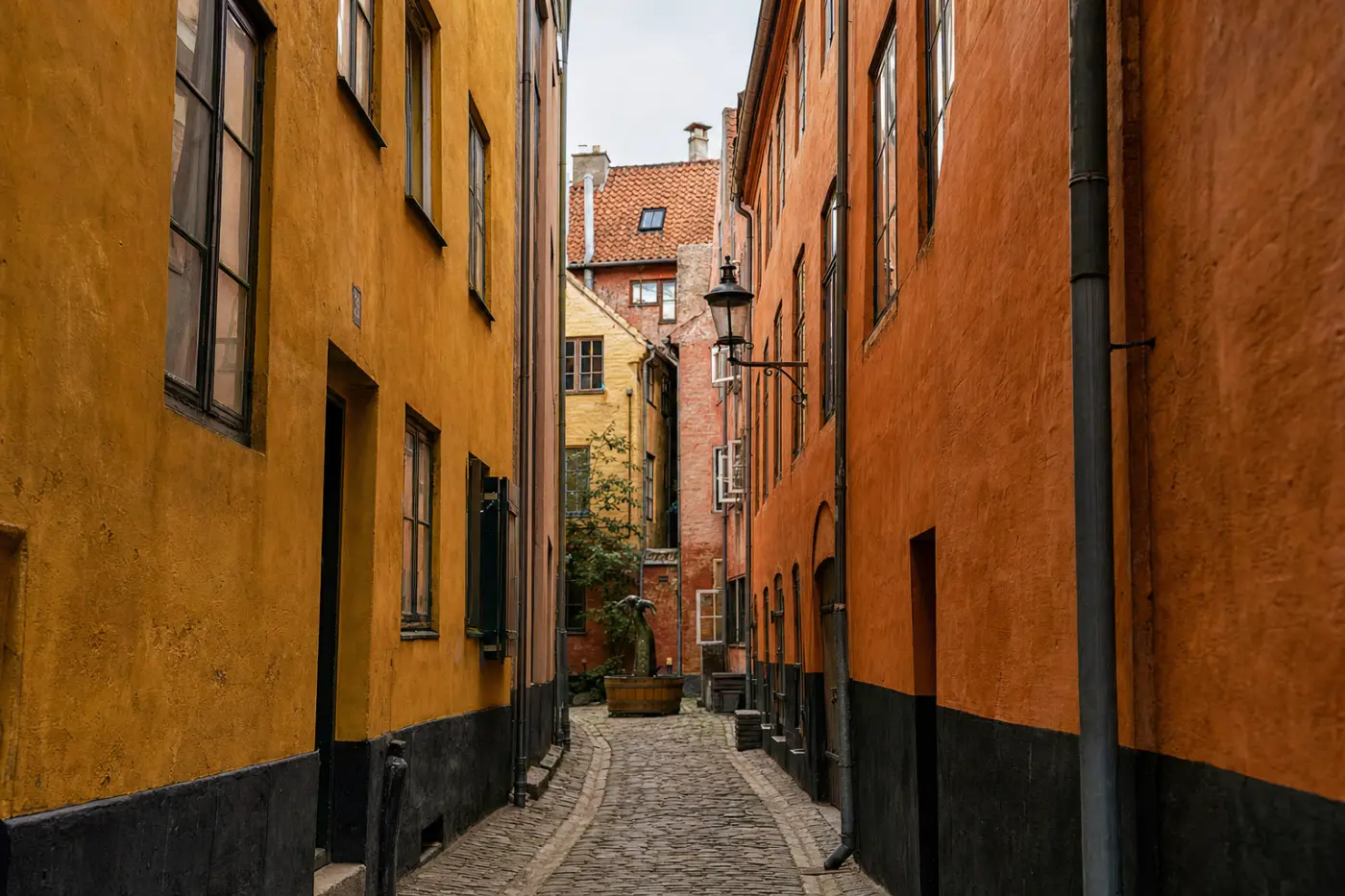
Tourist attraction
Pistolstræde — Danish for "Pistol Alley" — is a narrow, winding passage connecting Østergade and Ny Østergade in Copenhagen's Inner City. Its name derives not from any violent history but from the shape of the alley itself, which bends like the barrel and grip of a pistol when viewed from above. The buildings lining the passage were constructed between 1732 and 1742, rising from the ashes of the catastrophic Copenhagen fires of 1728 and 1795 that leveled much of the medieval city. Walking through the alley today gives a visceral understanding of exactly why those fires were so devastating: the timber-framed houses stand just metres apart, their upper stories leaning toward each other overhead, cutting the sky to a narrow strip of light.
The passage is one of the few places in central Copenhagen where the pre-fire urban fabric was rebuilt in its original compressed form rather than widened and regularized under post-fire planning reforms. The buildings retain their late-Baroque proportions — low ground floors given over to commerce, stepped gabled rooflines, and weathered brick facades painted in ochre, terracotta, and cream. According to local tradition, Hans Christian Andersen wrote his fairy tale The Little Match Girl (1845) while living in this quarter, drawing on the poverty and biting cold that characterized the cramped lanes around Østergade in the 19th century. The story's unnamed girl selling matches in the freezing dark feels entirely credible against Pistolstræde's shadowed winter walls.
In 1980 the alley's small internal courtyard received a piece of public sculpture that has become quietly beloved: Skadebrønden (The Magpie Well), created by sculptor Gunnar Westman (1915–1985). Westman trained at the Royal Danish Academy of Fine Arts and devoted much of his career to sculpture for children in playgrounds and schools. The work depicts a stylized house sparrow perched atop a pole above a wooden tub, water trickling continuously from its beak. The bird's composed, self-contained expression makes it one of Copenhagen's most charming small-scale public works. Westman's larger masterpiece, Snow Owl, stands in Bispeparken at Bispebjerg.
Today Pistolstræde hosts a cluster of independent boutiques, cafés, and small restaurants that suit the intimate scale of the space. It sits a short walk from Kongens Nytorv and the top of Strøget, making it easy to visit as part of a broader Inner City itinerary. The alley is at its most atmospheric on overcast mornings before the main shopping streets fill up — the damp cobblestones, the compressed architecture, and the sound of water from Skadebrønden create a sensory pocket of old Copenhagen that the surrounding commercial district has long since erased. There is no entry fee and no opening hours; the passage is accessible at all times.
Private tours with a local guide, at your own pace.
copenhagen

copenhagen
copenhagen

copenhagen
copenhagen
We use a single cookie, to remember this choice. We do not use analytics or advertising cookies. Read our cookie policy.