3 hrs
Barcelona
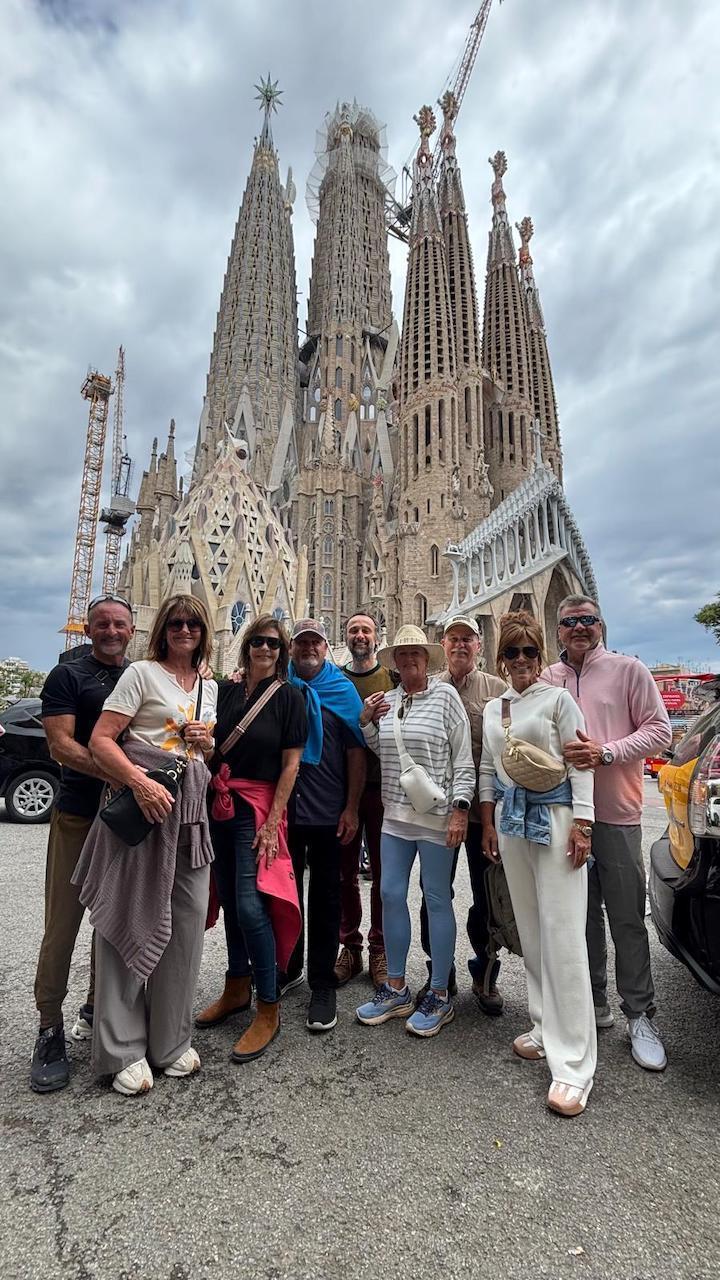
Sagrada Familia & Gaudi Tour Private or Small Group with Tickets
✓ Free cancellation Kids friendly
4.8(1403 reviews)
From €197/ person
Book Now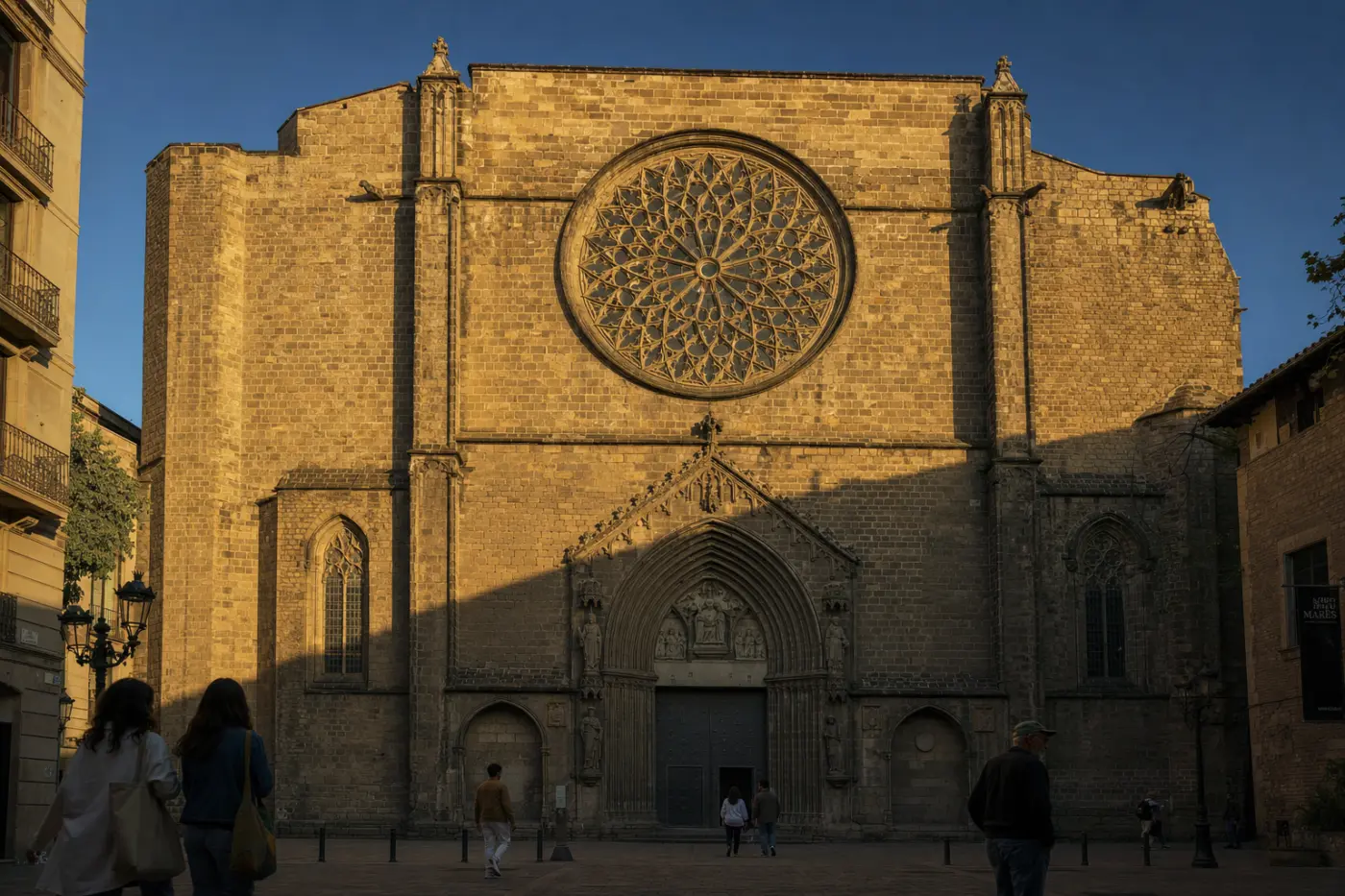
Tourist attraction
Santa Maria del Pi is a 14th–15th century Gothic basilica standing at the centre of three interconnected squares — Plaça del Pi, Plaça de Sant Josep Oriol, and Placeta del Pi — in Barcelona's Barri Gòtic. Its name derives from the pine tree (pi in Catalan) that historically stood outside its main portal. Construction began in 1322 on the site of a pre-existing Romanesque chapel documented as early as 987 AD, and the church was consecrated in 1453 after more than a century of building. The result is a textbook example of Catalan Gothic architecture: a single broad nave with no side aisles, flanked instead by a series of lateral chapels set between the interior buttresses — a spatial formula that prioritised width and vertical simplicity over the multi-nave complexity favoured in French Gothic. The facade is anchored by an immense ocular rose window, one of the largest in the world at roughly 10 metres in diameter, which floods the interior with diffused light throughout the day.
The basilica has endured significant violence across its history. During the Spanish Civil War, anarchist militias set fire to the church in July 1936, destroying the original altarpiece, most of the historic stained glass, and a large portion of the interior furnishings. The rose window itself was shattered and had to be entirely reconstructed after the war — the geometric tracery visible today dates from the mid-20th century restoration. Despite this loss, the church preserves important medieval patrimony: its 14th-century keystones in the vaulted ceiling depict scenes from the life of the Virgin and various saints, and fourteen lateral chapels ring the nave, several containing notable Baroque retables. The basilica holds a particular devotion to Sant Josep Oriol (1650–1702), a local priest beatified in 1806 and canonised in 1909, who ministered here and is buried within the church.
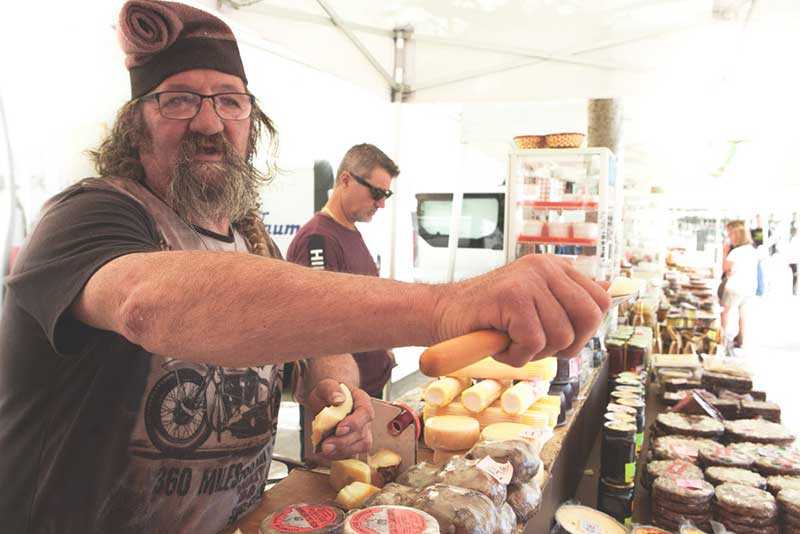
Visitors entering through the main Gothic portal on Carrer del Pi encounter a nave of striking spatial calm — the single-aisle design, reaching approximately 25 metres to the vault, creates an austere grandeur amplified by the warm ochre of the sandstone. The reconstructed rose window casts coloured light across the flagstone floor on clear mornings. The basilica offers a cultural visit that includes access to the bell tower, from which views extend across the rooftops of the Gothic Quarter to the hills of Collserola. The tower's bells, maintained by the volunteer Pi Bell Ringers association, are still rung by hand for feast days. The surrounding squares host a popular art market on weekends and a celebrated honey and cheese market on the first and third Fridays and Saturdays of each month.
The basilica is an active parish church, so cultural visits are scheduled around the Mass timetable — check the official basilicadelpi.cat website before arriving to confirm visiting hours, which can change on feast days and during Holy Week. Admission to the cultural visit (including the tower) carries a modest fee. The surrounding squares are among the most atmospheric in Barcelona at any hour: early morning, before the crowds gather, the stone façade and the cobbled Plaça de Sant Josep Oriol offer one of the city's finest and least-interrupted Gothic streetscapes.
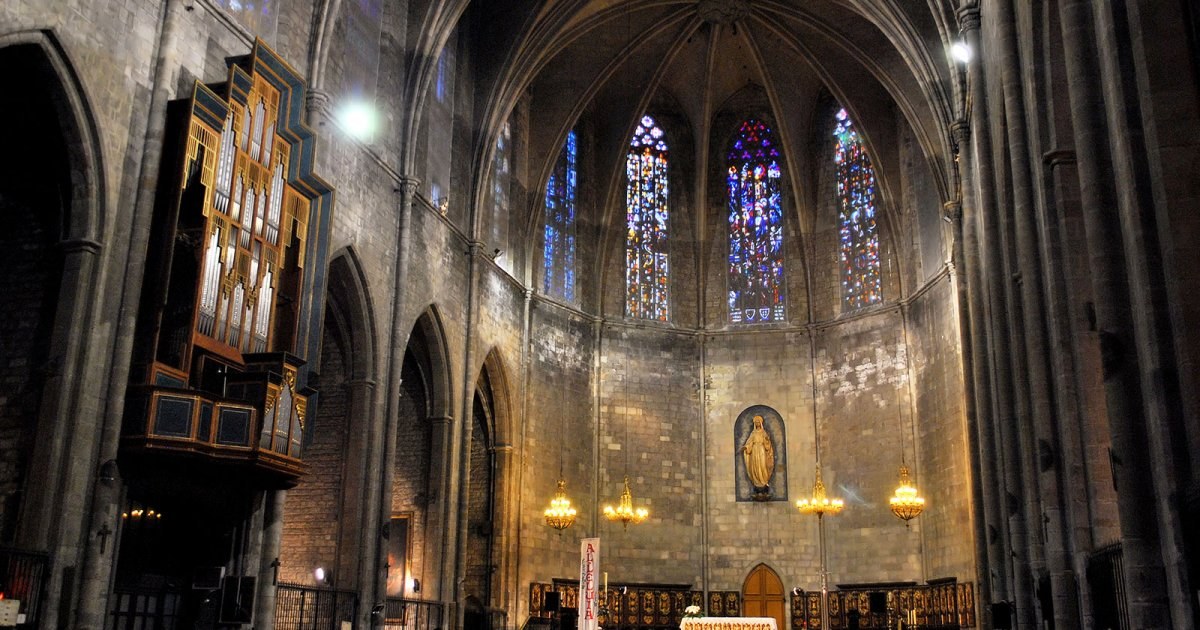
Inside the nave of the church you will find numerous chapels filled with beautiful religious and artistic objects. The most notable piece is the 15th century altarpiece by Jaume Huguet, depicting scenes from the life of Christ.
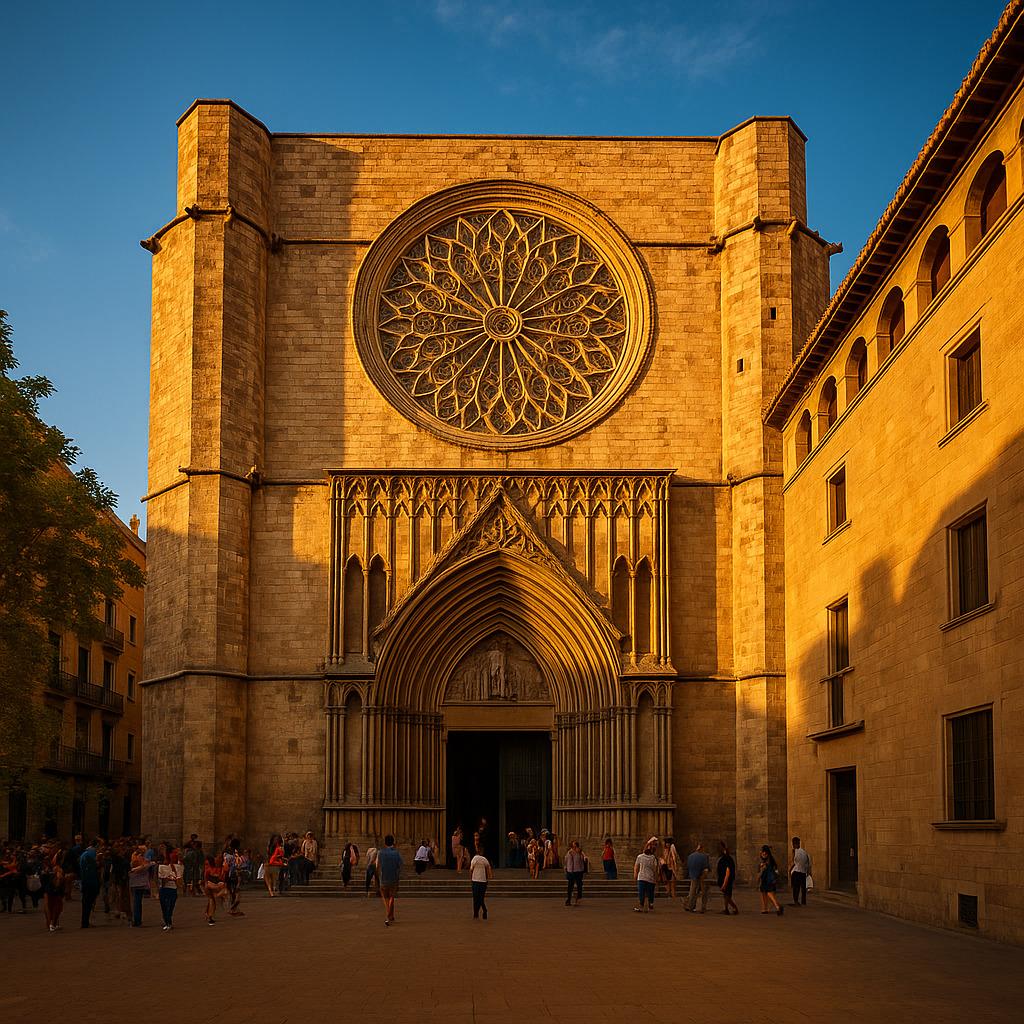
Despite its beauty, Santa Maria del Pi has a tumultuous history, having survived earthquakes, fires and even a bombing during the Spanish Civil War. But it remains one of Barcelona's most popular tourist destinations, attracting visitors from all over the world who come to marvel at its impressive architecture and rich history.
In addition to hosting religious services, the church is a cultural center, hosting concerts and other events throughout the year. It has become an important part of Barcelona's cultural scene.
Private tours with a local guide, at your own pace.
Barcelona
Barcelona
Barcelona
Barcelona
Barcelona
Barcelona
Barcelona
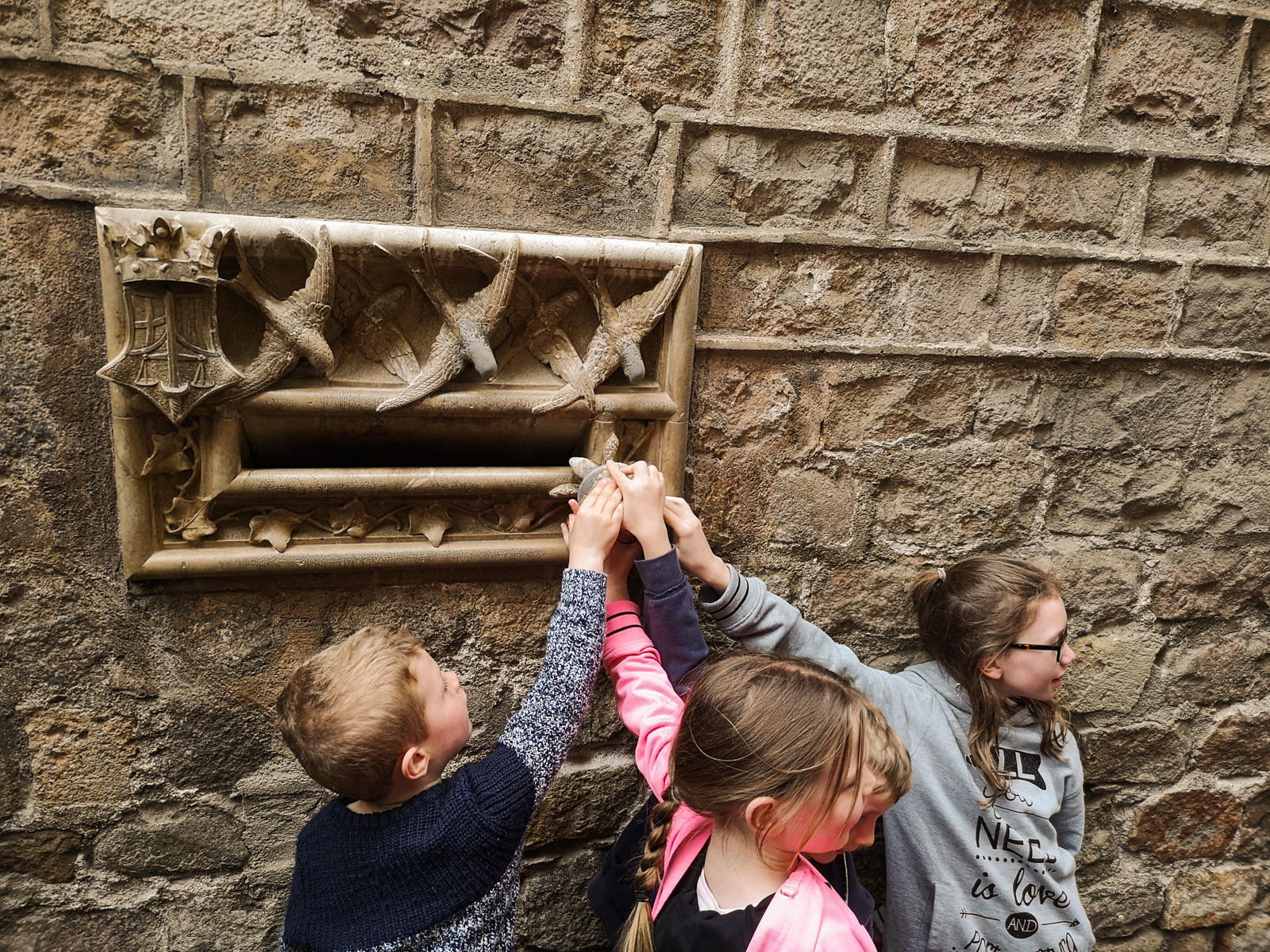
Barcelona
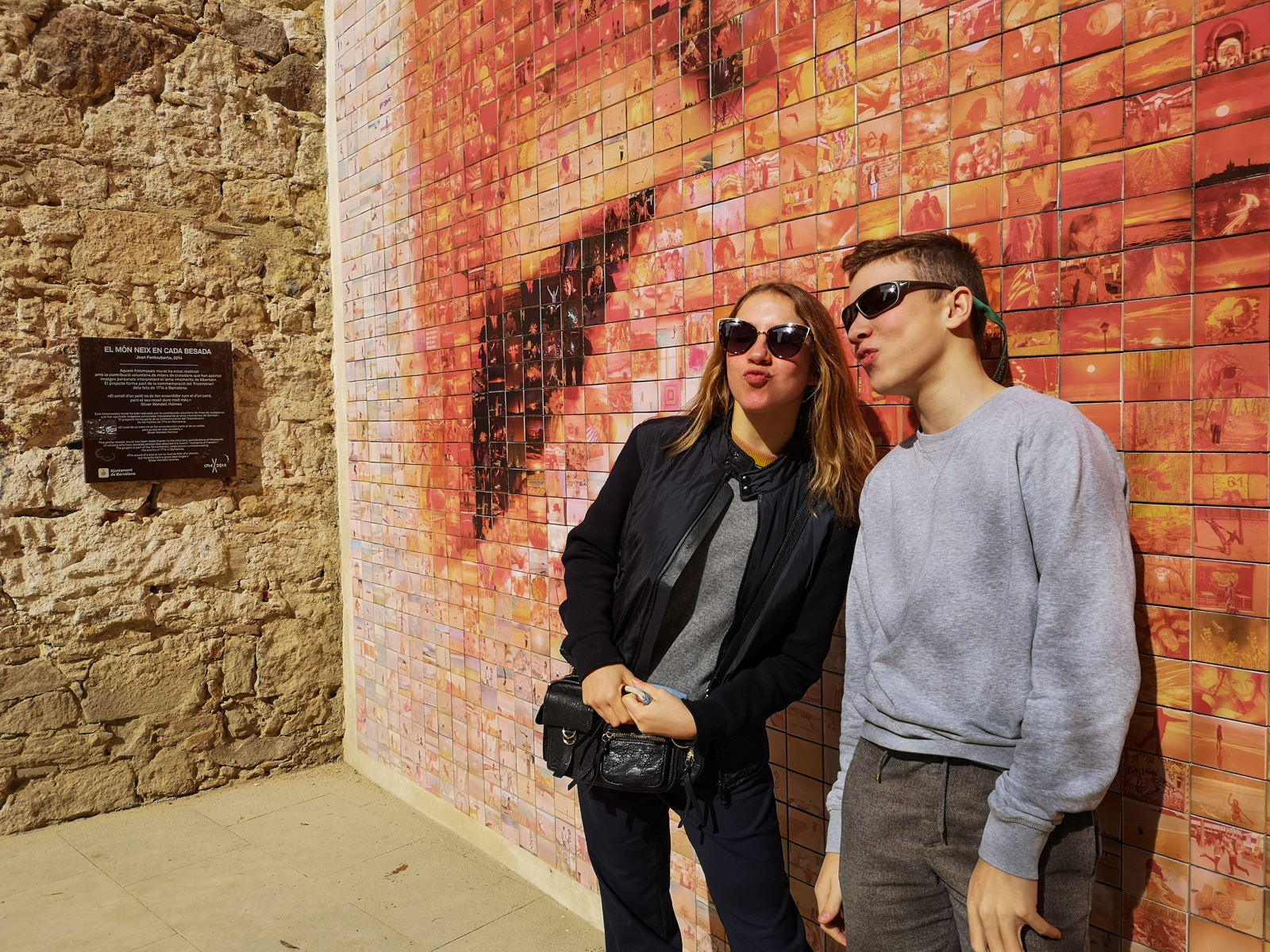
Barcelona
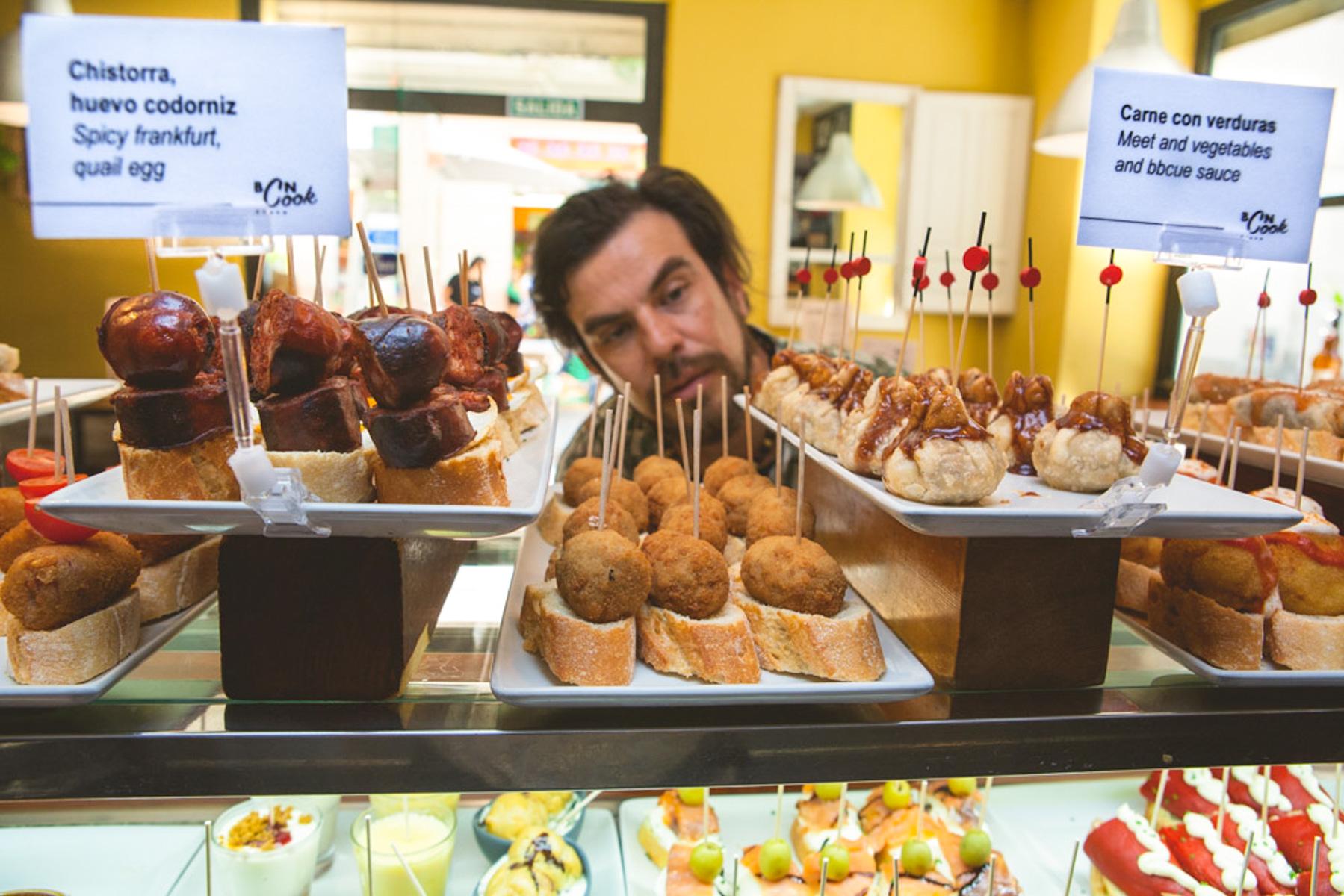
Barcelona
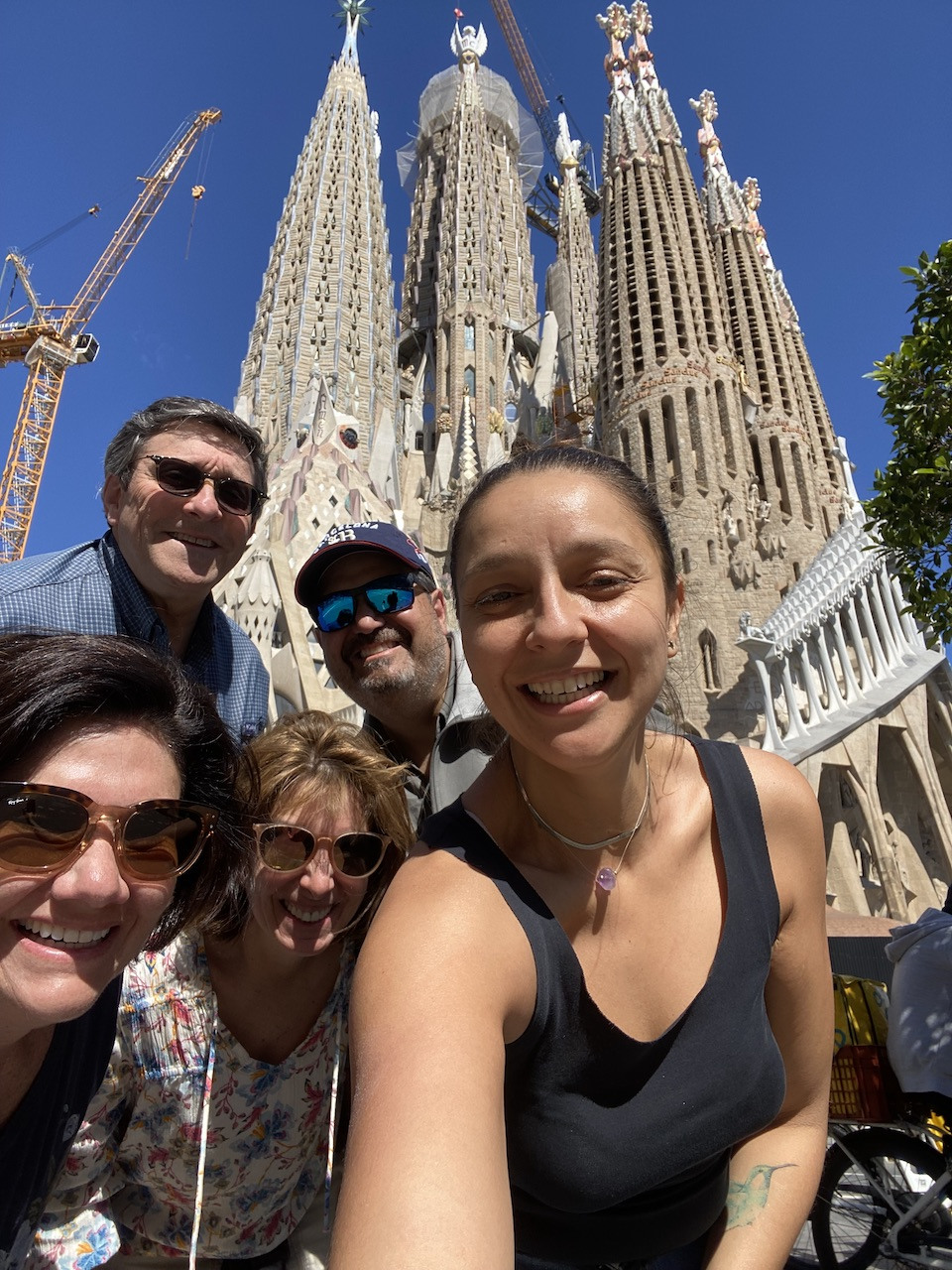
Barcelona
Barcelona
Barcelona
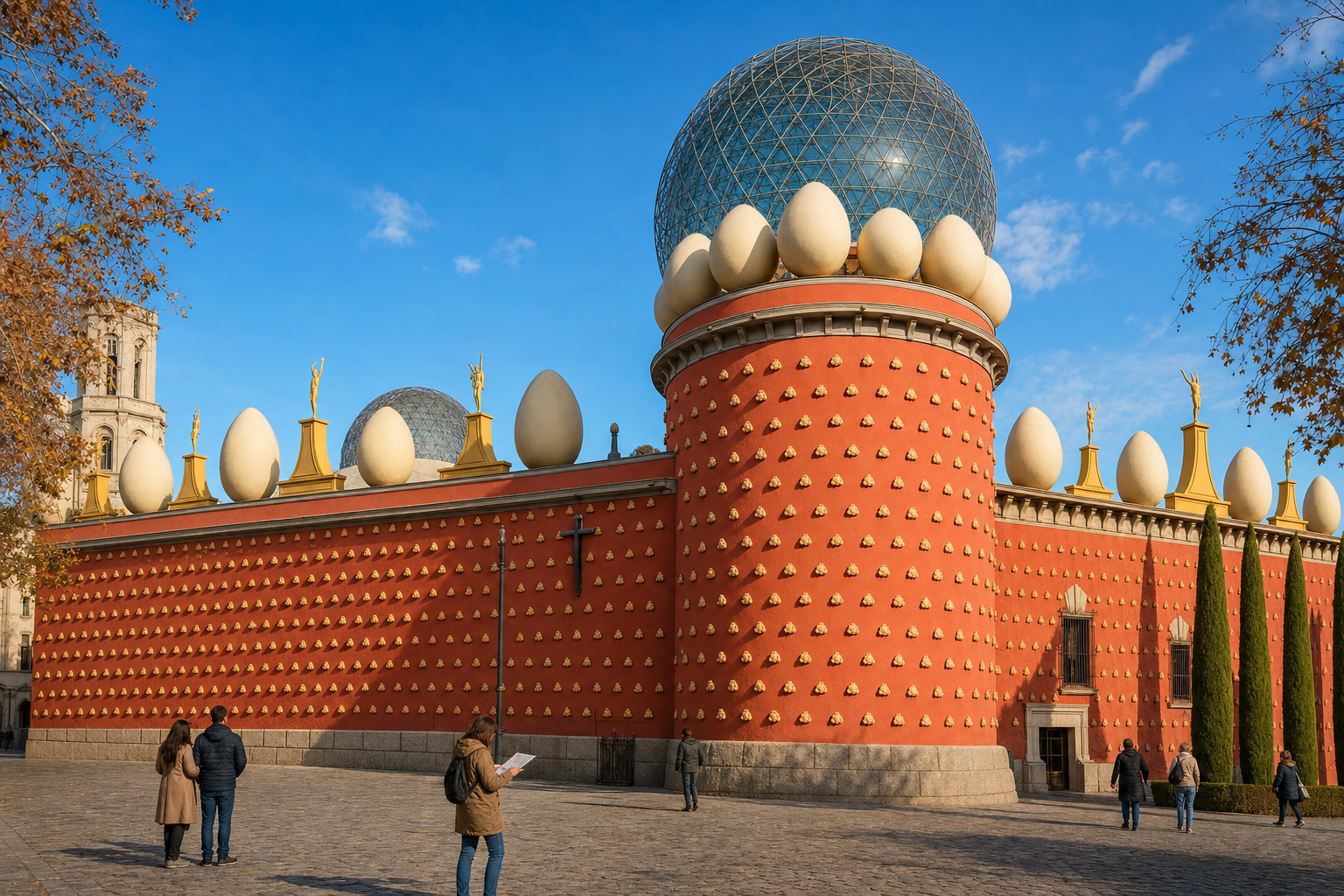
Most people know that Salvador Dalí was born in Figueres on 11 May 1904 — fewer realise that he spent the last decade of his life living inside his own museum, in a castle tower he had converted into a private apartment, refusing almost all visitors. That detail alone reframes everything you're about to see on a Costa Brava day trip from Barcelona. This isn't a sightseeing loop past pretty landmarks; it's a journey into one of the most deliberately constructed artistic universes ever assembled, set against a coastline so geologically dramatic that it physically shaped the imagery of a surrealist movement. From the geodesic dome above Figueres to the labyrinthine rooms of Portlligat, from the tramuntana-battered vines of the Empordà to the whitewashed lanes of Cadaqués, every stop carries a specific weight of history that rewards knowing before you arrive. This guide gives you that context — and shows you why adding a winery to the route isn't a detour, it's the most logical ending the day could have.
Read more →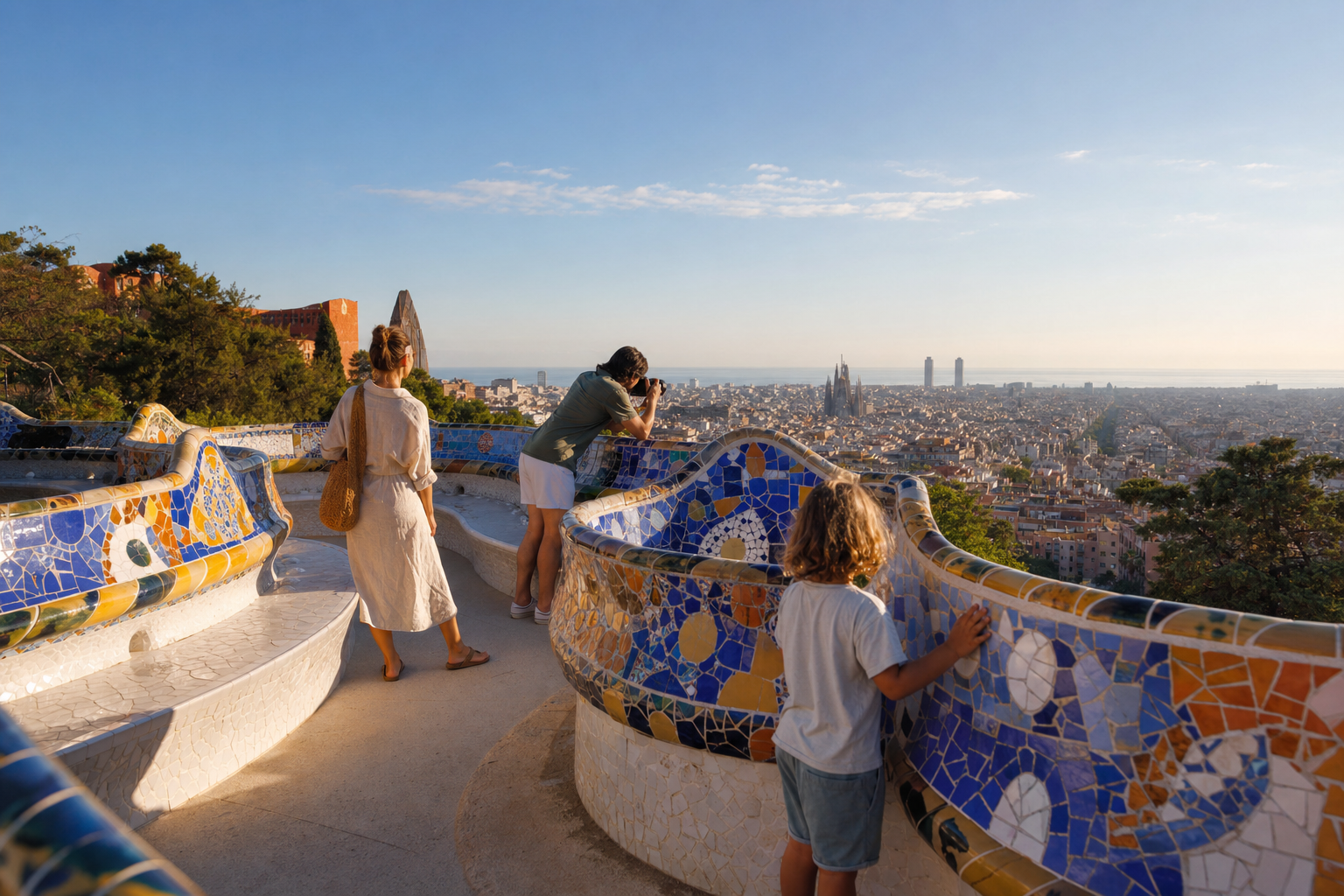
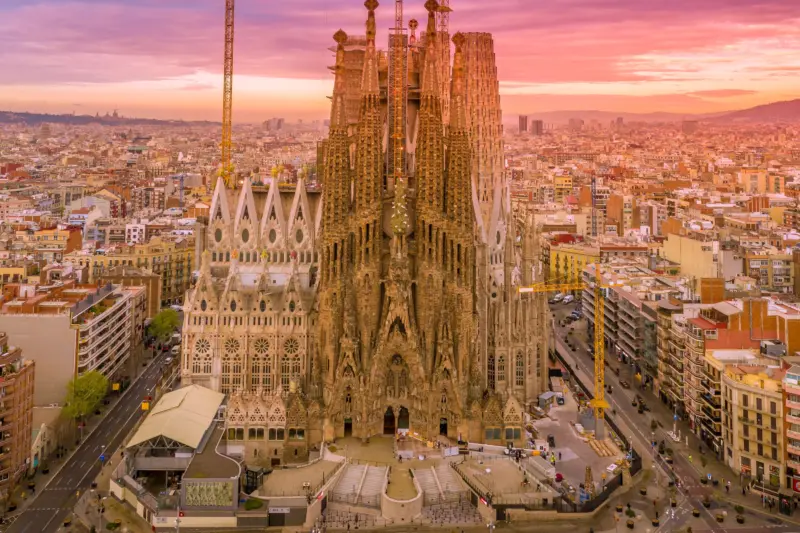
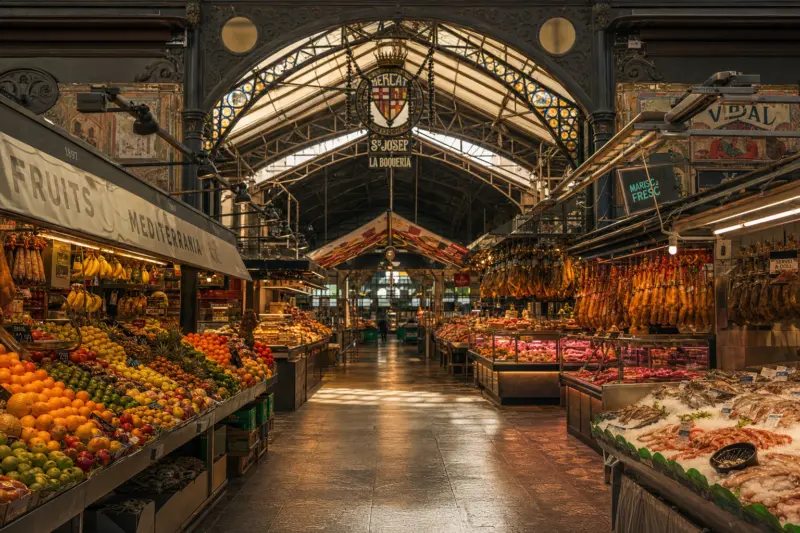
In 1883, a 31-year-old architect named Antoni Gaudí inherited a half-built church from a resigning predecessor and spent the next 43 years — until his death in 1926 — turning it into one of the most structurally radical buildings in human history. That church, the Sagrada Família, is still under construction today, and it is just one reason why Barcelona rewards curiosity more than almost any other city in Europe. But Gaudí's Barcelona is only one layer. Beneath the Gothic Quarter's cobblestones lie the preserved streets of a Roman settlement called Barcino, founded around 10 BC. In the city's markets, a food culture rooted in Catalan identity — not the generalised 'Spanish' clichés exported for tourists — plays out every single morning. Barcelona is a city that consistently offers more the deeper you look. This guide cuts past the surface to give you the historical facts, cultural context, and local knowledge that turn a good trip into an unforgettable one.
Read more →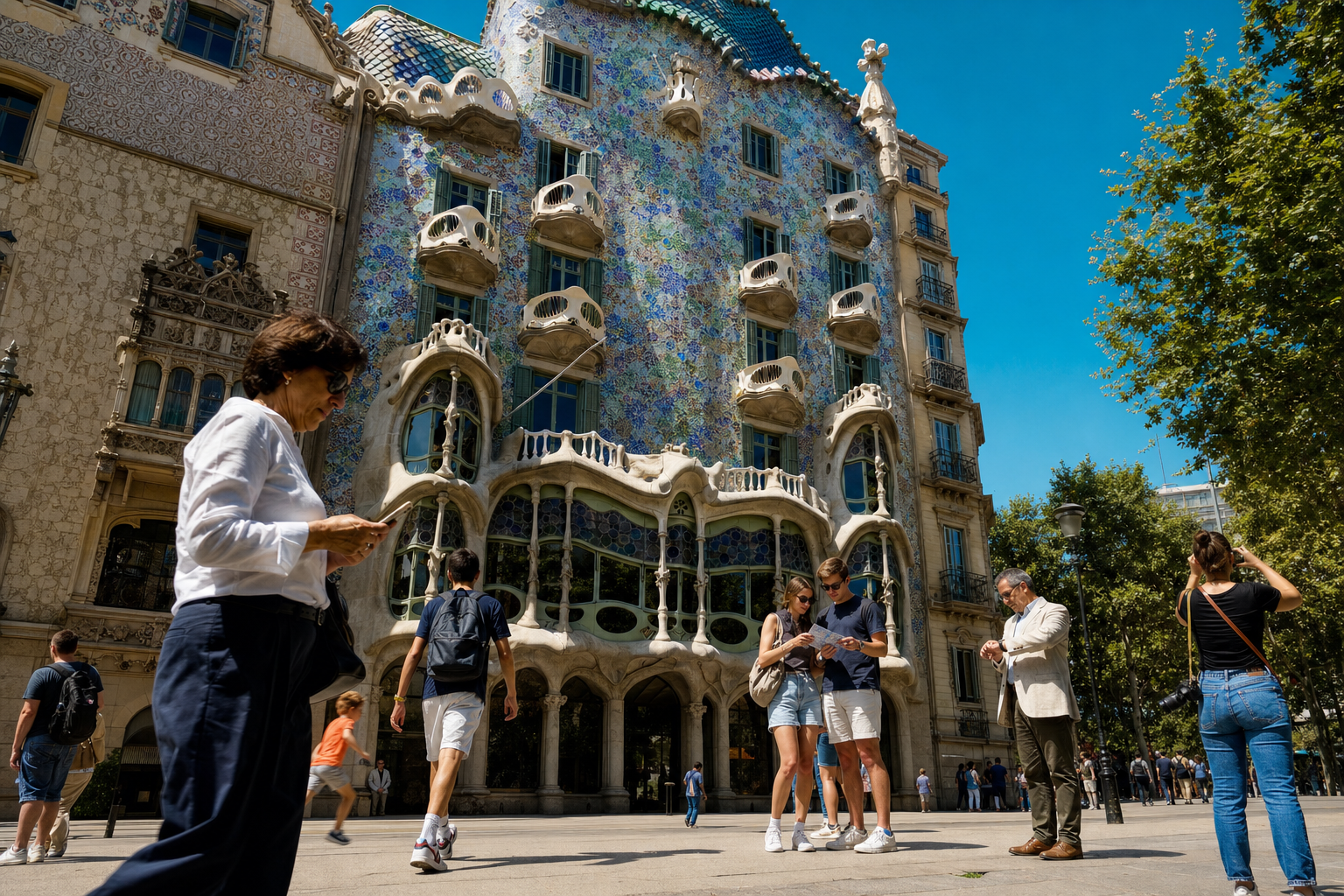
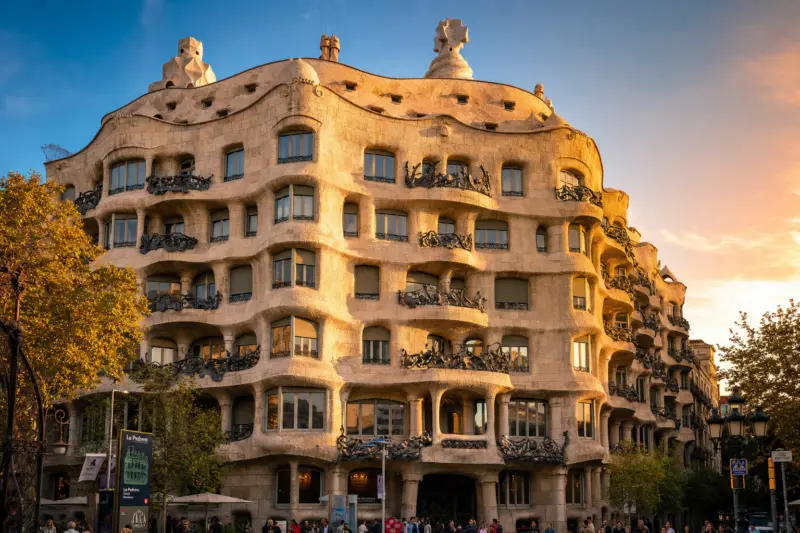
On the grandest stretch of Barcelona's Passeig de Gràcia — a boulevard so thick with Modernista jewels that locals call it the Block of Discord — one building stops every passerby cold. Casa Batlló shimmers like a living creature: scales of iridescent ceramic, a roofline that breathes, skulls carved into stone balconies. It was commissioned by a wealthy textile magnate, transformed by a visionary architect, and completed in 1906 as a statement that would redefine what a city building could be. This is its story.
Read more →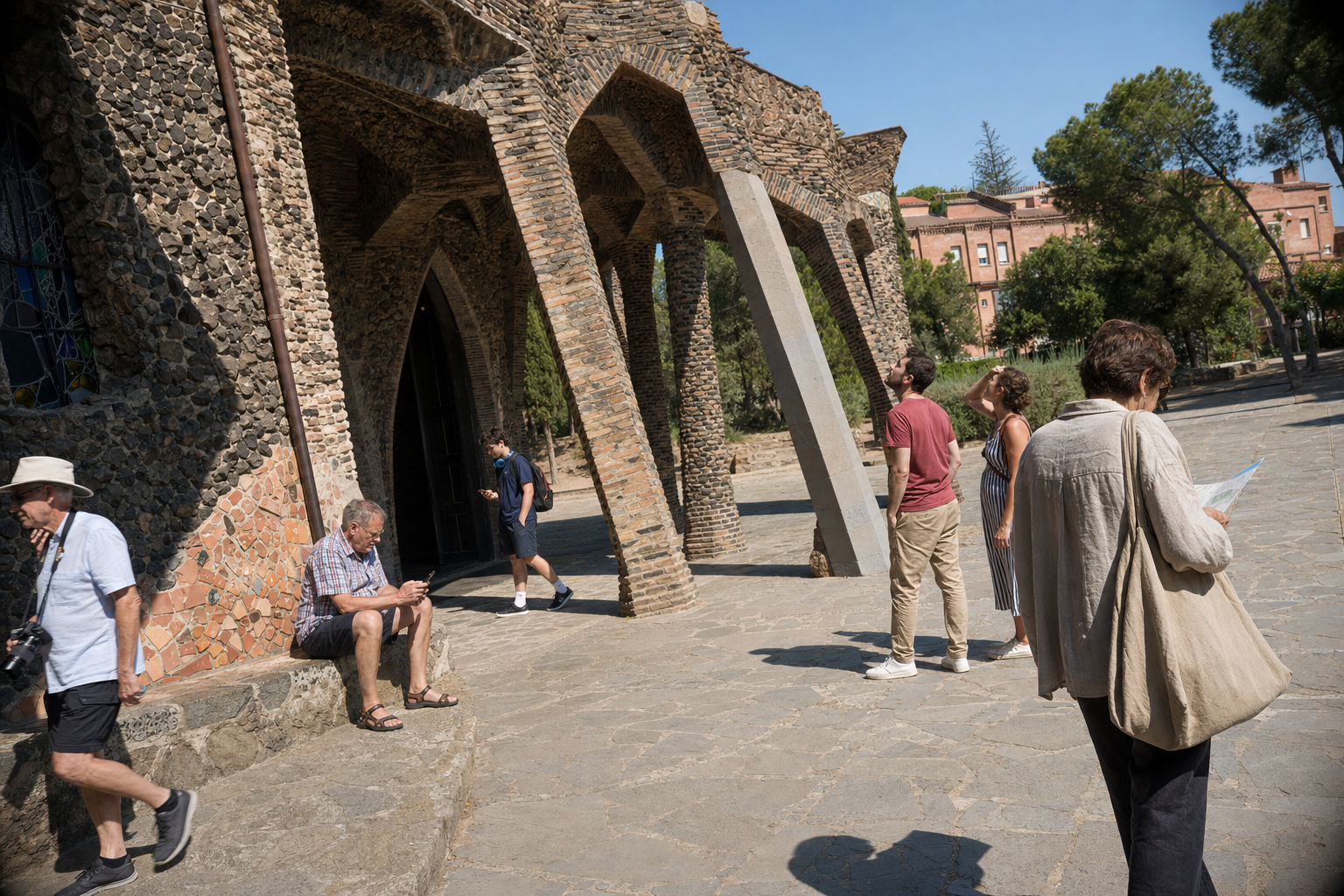
In 1890, the Catalan industrialist Eusebi Güell made a decision that was radical even by the standards of a city already electrified by modernisme: he abandoned Barcelona's choking factory districts and moved his textile mill — and his entire workforce — to a pine-forested hillside in Santa Coloma de Cervelló, just 20 kilometres southwest of the city. What he built there was not merely a factory complex but a full social experiment: a self-contained workers' village with housing, schools, a theatre, a cooperative shop, and a church that would become one of the most structurally daring buildings of the 20th century. That church was entrusted to Antoni Gaudí — and what Gaudí designed in its crypt between 1908 and 1914 was nothing less than the structural laboratory for the Sagrada Família. Colonia Güell is where the dream was tested. It draws a fraction of the crowds that queue outside Park Güell or the Sagrada Família, yet it is arguably the most intellectually fascinating Gaudí site in all of Catalonia.
Read more →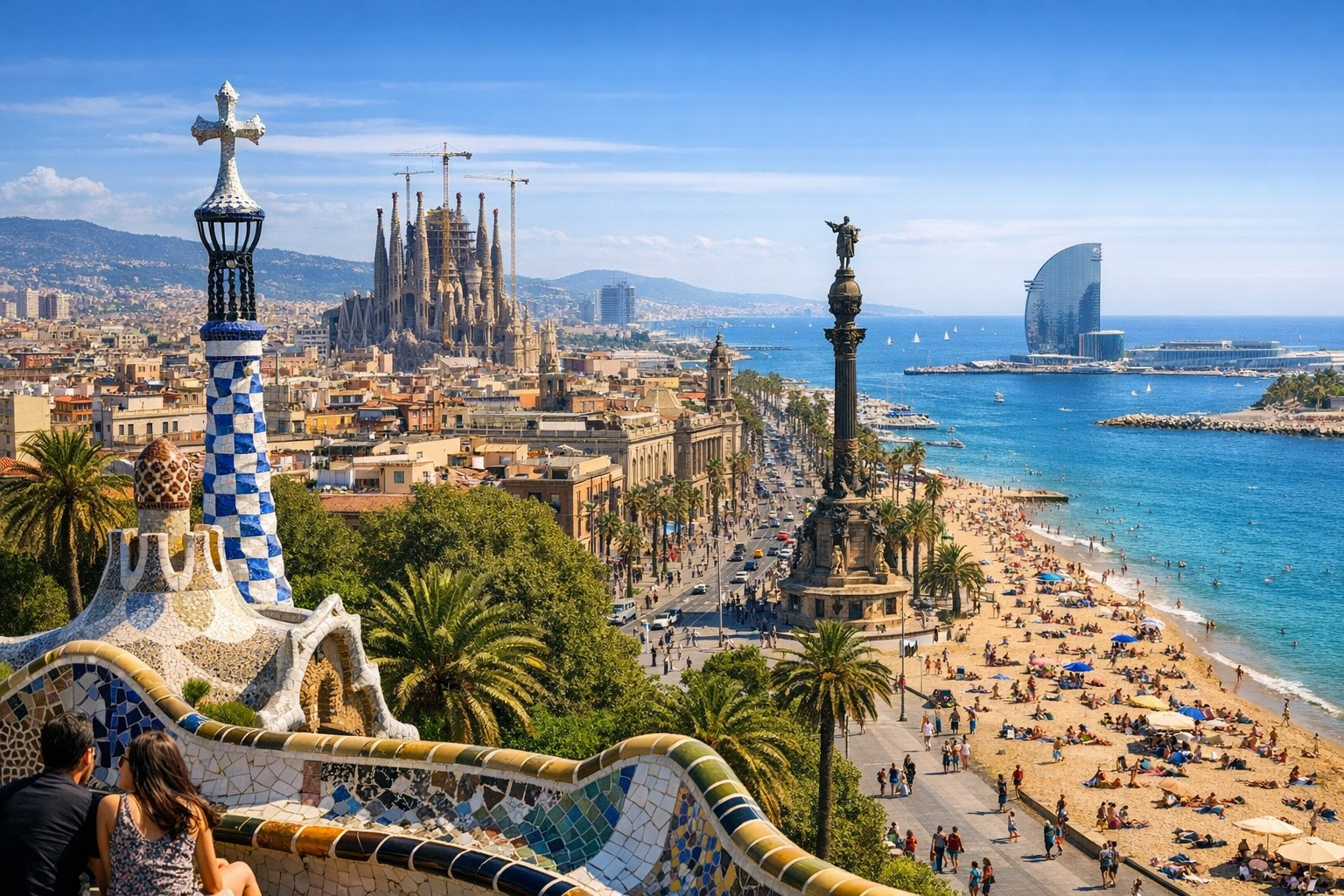
Discover the vibrant culture, stunning architecture, and culinary delights of Barcelona. From iconic landmarks to hidden gems, this guide offers the best activities to experience in the city, ensuring an unforgettable visit.
Read more →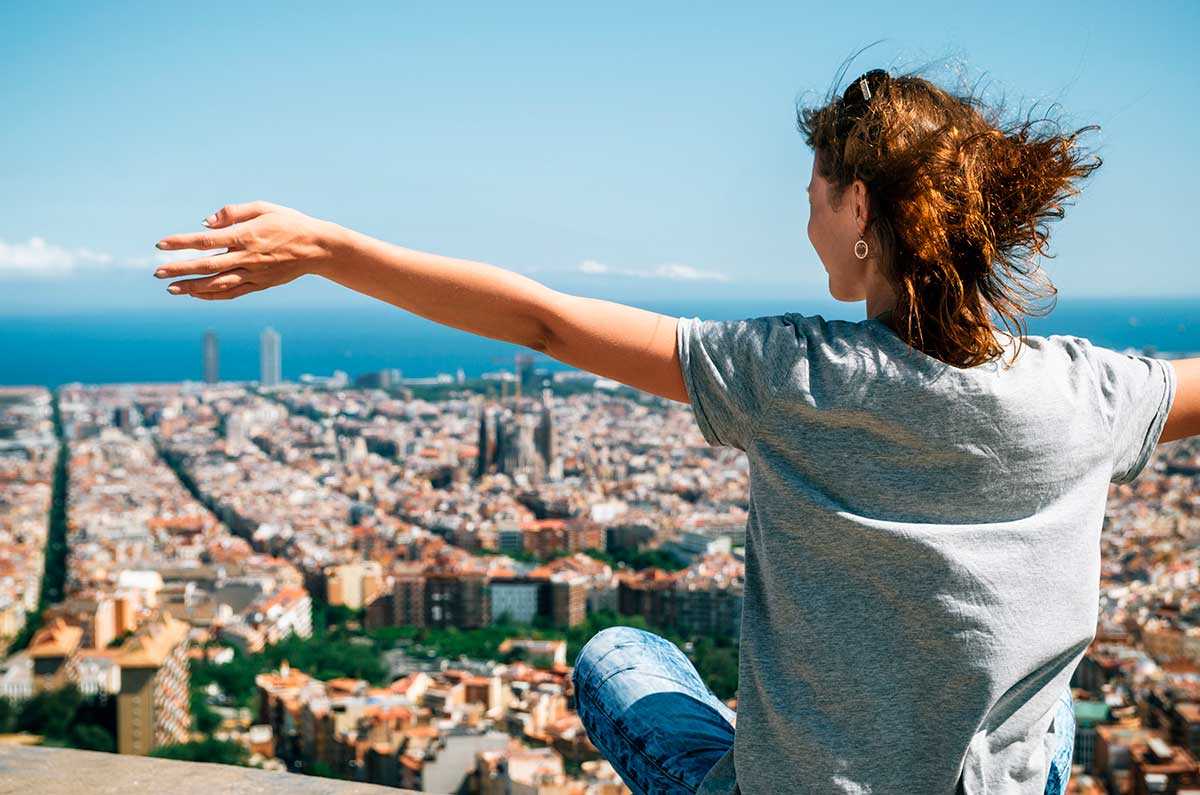
Barcelona, the enchanting coastal city in Spain, is a treasure trove of captivating attractions, historic landmarks, and awe-inspiring architecture. With so much to explore, having a well-designed attractions map can significantly enhance your sightseeing experience and ensure you make the most of your time in this vibrant destination. Whether you are an adventurous solo traveler or a family seeking a cultural getaway, a detailed map will be your faithful companion throughout your journey.
Read more →We use a single cookie, to remember this choice. We do not use analytics or advertising cookies. Read our cookie policy.