7 to 7,5 hrs
Barcelona
Barcelona & Montserrat Day Trip with Sagrada Familia Guided Tour
✓ Free cancellation Kids friendly
4.5(17 reviews)
From €134/ person
Book Now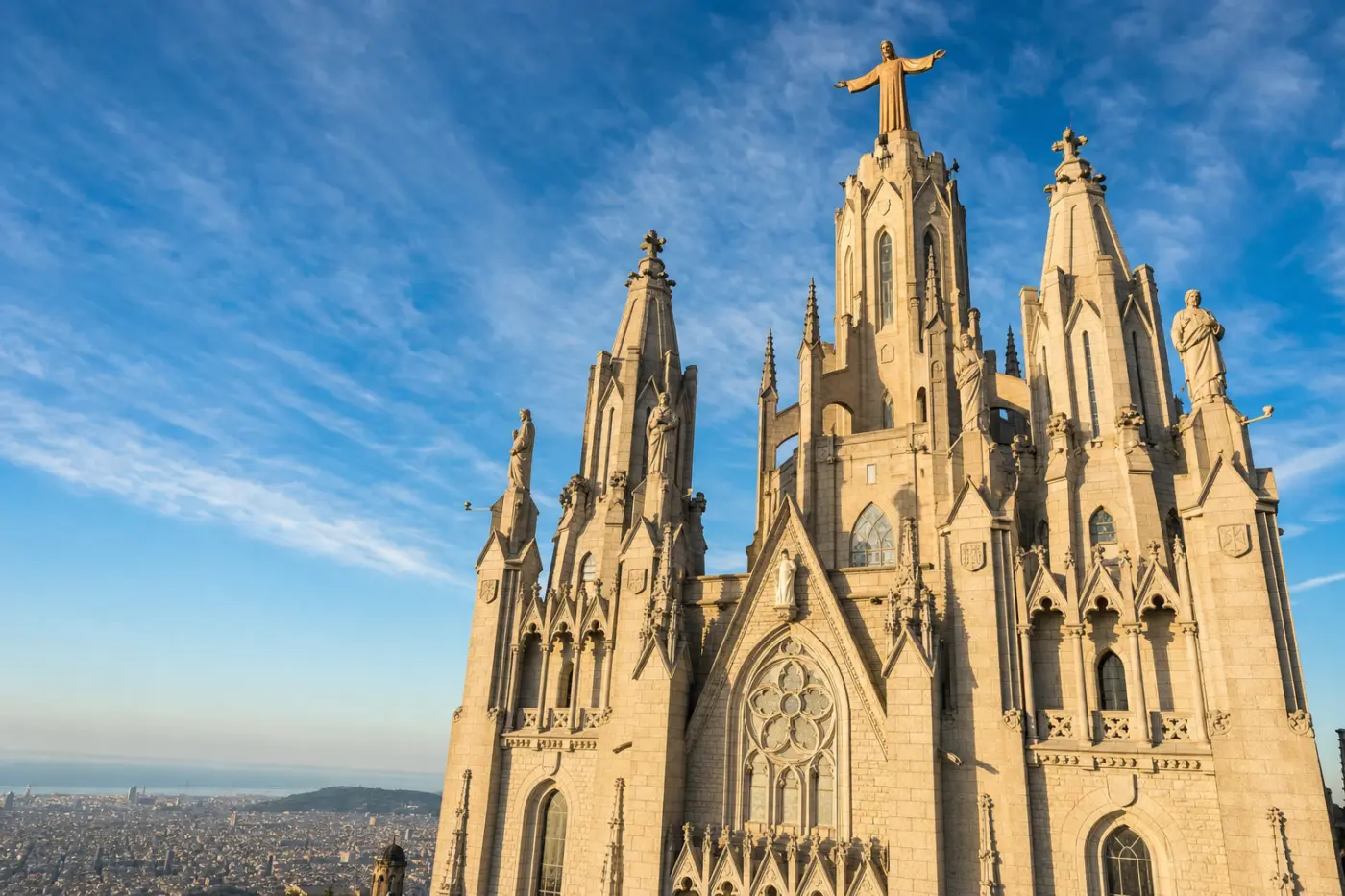
Tourist attraction
Perched at the summit of Mount Tibidabo — the highest point of the Serra de Collserola range at 512 metres above sea level — the Temple Expiatori del Sagrat Cor is one of Barcelona's most dramatically situated landmarks. Its origins trace to 1886, when Saint John Bosco visited Barcelona and, upon seeing Tibidabo's commanding peak, envisioned a church dedicated to the Sacred Heart of Jesus rising from its summit. A group known as the Board of Catholic Knights had already purchased the land specifically to prevent a Protestant chapel and hotel-casino from being built there, and they entrusted the site to Bosco's Salesian order. The project was further sustained by the philanthropist Dorotea de Chopitea and galvanised by Pope Leo XIII's encyclical promoting devotion to the Sacred Heart. The foundation stone was laid in 1902 under the design of Catalan architect Enric Sagnier, one of the most prolific ecclesiastical architects of his era.
Construction spanned nearly six decades and required two generations of the Sagnier family. The fortress-like Romanesque crypt — built between 1903 and 1911 — forms the structural base, its thick stone walls and rounded arches contrasting with the soaring neo-Gothic upper church that rises above it. Pointed arches, flying buttresses, five spires, and intricate stone tracery characterise the main edifice, which measures 60 metres in length and 70 metres in width. The upper church was consecrated in 1952 by Bishop Gregorio Modrego Casaus during Barcelona's 35th International Eucharistic Congress — a politically charged moment under Franco's regime that fused Catholic pageantry with the basilica's long-delayed completion. The final towers were not added until 1961, when Enric Sagnier's son, Josep Maria Sagnier i Vidal, brought the project to a close after nearly sixty years of interrupted construction.
The entire structure is funded by private donations — a deliberate theological statement embedded in its title "expiatori" (expiatory), meaning it was built as an act of collective atonement for societal sins. Crowning the topmost spire is a monumental bronze statue of Christ with arms outstretched over the city, a posture that makes the basilica visible from almost every quarter of Barcelona. An outdoor lift ascends to the statue's base, offering what is arguably the most unobstructed panorama in the entire metropolitan area — on clear days, the view extends to the Pyrenees to the north and Mallorca on the horizon to the south-east.
Visitors can explore three distinct levels: the Romanesque crypt at the base, with its atmospheric vaulted interior and side altars; the main neo-Gothic nave, which holds regular Masses and features ornate stained glass and mosaic work; and the exterior terrace surrounding the Christ statue at the summit, reached by the rooftop lift. The Tibidabo Amusement Park immediately adjacent makes the hill a full-day destination, but the basilica demands time on its own terms — particularly in the early morning, before the crowds arrive, when mist sometimes clings to the spires and the city below glows in flat golden light. Wear comfortable shoes, as the approach from the Tramvia Blau tram terminus involves a steep uphill walk.
Private tours with a local guide, at your own pace.
Barcelona
Barcelona
Barcelona
Barcelona
Barcelona

Barcelona

Barcelona
Barcelona

Barcelona

Barcelona
Barcelona
Barcelona
Barcelona
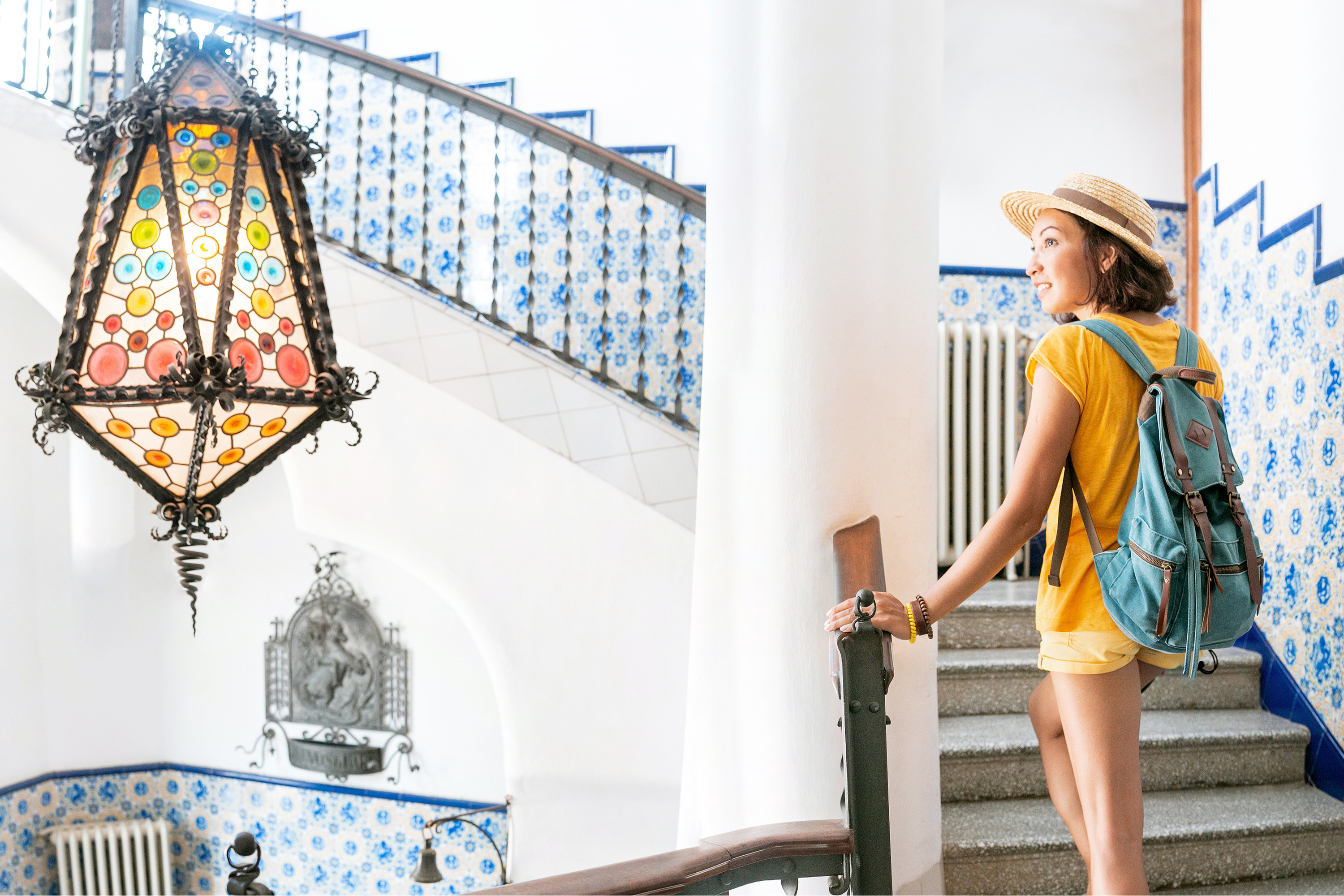
Barcelona