7 to 7,5 hrs
Barcelona
Barcelona & Montserrat Day Trip with Sagrada Familia Guided Tour
✓ Free cancellation Kids friendly
4.5(17 reviews)
From €134/ person
Book Now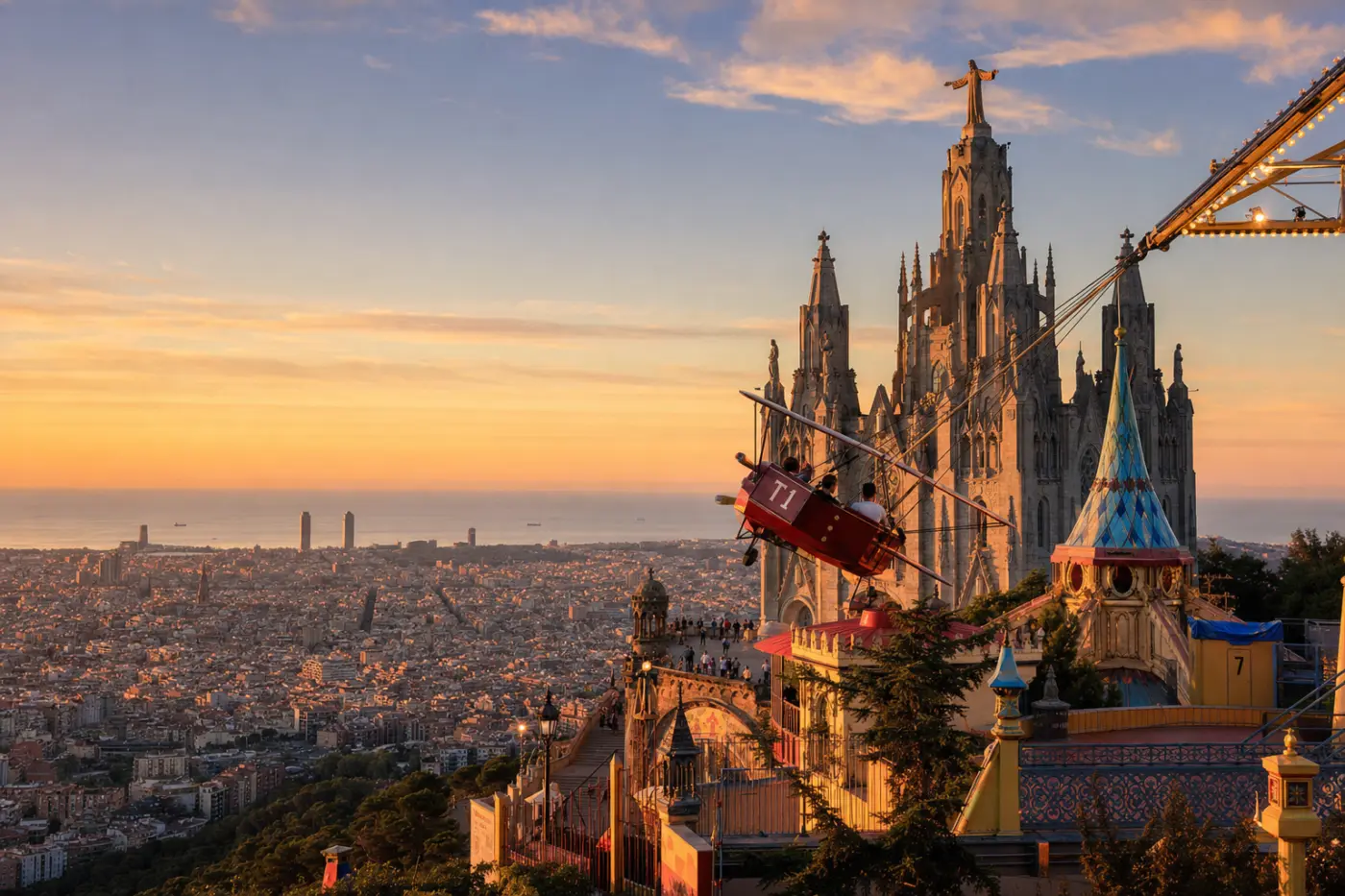
Tourist attraction
Perched at 512 metres atop the Tibidabo mountain — the highest point of the Collserola ridge — the Parc d'Atraccions del Tibidabo has been Barcelona's most theatrical leisure destination since it opened in 1901. Its founding is inseparable from the story of Dr. Salvador Andreu, a pharmacist-turned-entrepreneur who developed the mountain as a recreational retreat for city dwellers. To carry visitors up the steep terrain, he financed the construction of the Tramvia Blau (Blue Tram) in 1901 and the Tibidabo funicular railway, which still operates today, making the journey to the summit part of the experience itself. The park's name derives from the Latin phrase "Tibi dabo" — "I shall give thee" — drawn from the Biblical passage in which the Devil tempts Christ by offering him the kingdoms of the world visible from a mountaintop. From Tibidabo's peak, the panoramic view over Barcelona, the Mediterranean Sea, and on clear days as far as Mallorca, makes the reference feel entirely apt.
The park is one of the oldest continually operating amusement parks in the world, and it has carefully preserved several of its original attractions alongside modern thrill rides. The Museu d'Automàts, housed within the park, contains a remarkable collection of coin-operated mechanical figures and automata dating from the late 19th century — some of which were among the park's very first attractions. The iconic Avió, a replica aeroplane ride installed in 1928 and modelled on the Junkers F 13, still swings out over the Barcelona skyline, offering riders a vertiginous open-air view of the city below. Towering directly above the park is the Temple Expiatori del Sagrat Cor, a neo-Gothic and Byzantine basilica whose construction began in 1902 and was not completed until 1961. Crowned by a monumental bronze statue of Christ, it is visible from almost every neighbourhood in Barcelona and serves as an unmistakable landmark on the city's horizon.
Today, the park blends its heritage identity with contemporary attractions. The Muntanya Russa roller coaster, the free-fall tower, and the 4D cinema draw younger visitors, while the meticulously restored vintage rides — including a 1920s carousel and the original funhouse — retain the park's early-20th-century atmosphere. The park is managed by Barcelona de Serveis Municipals, a municipal services company of Barcelona City Council, ensuring its preservation as a civic institution rather than purely a commercial venture. Annual attendance regularly exceeds one million visitors, and the park remains a deeply embedded part of Barcelona's collective memory, referenced in Catalan literature, film, and song throughout the 20th century.
The most atmospheric way to arrive is via the Tramvia Blau from Plaça Kennedy — one of the last remaining traditional tram services in Spain — followed by the funicular from Peu del Funicular station. The park operates seasonally, with reduced hours outside of summer; checking the official calendar at tibidabo.cat before visiting is essential. The Skyway ride and the terrace of the Sagrat Cor church offer the best panoramic views and are worth prioritising on clear days. Arrive early to avoid queues for the Avió and the automata museum, which are the most popular heritage draws.
Private tours with a local guide, at your own pace.
Barcelona
Barcelona
Barcelona
Barcelona
Barcelona
Barcelona

Barcelona
Barcelona

Barcelona
Barcelona
Barcelona
Barcelona
Barcelona
Barcelona