3 hrs
Rome
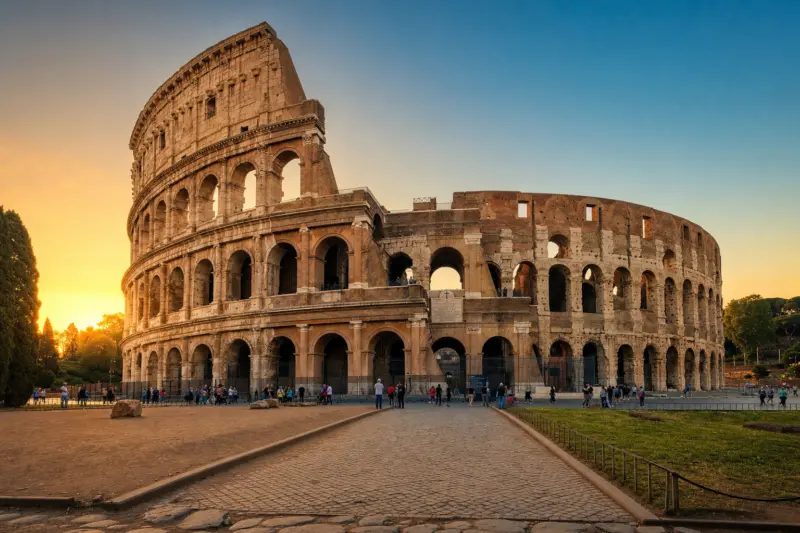
Private Cooking Class with Colosseum Views and Local Chef
✓ Free cancellation Kids friendly
4.7(19 reviews)
From €223/ person
Book NowTourist attraction
The Via Appia Antica is one of the ancient world's greatest feats of engineering and ambition. Construction began in 312 BC under the censor Appius Claudius Caecus — whose name the road still bears — as a military and trade artery connecting Rome to Capua, a distance of roughly 212 kilometers. It was later extended south to Brindisi (ancient Brundisium) on the Adriatic coast, reaching a total length of about 540 kilometers and forming the backbone of Rome's conquest of southern Italy. Roman engineers laid the road with a precision that still commands respect: a base of large stone blocks, flanked by drainage ditches and raised sidewalks, designed to remain passable in all weather. The road's width of approximately 4.1 meters was standardized to allow two carts to pass side by side, a specification that influenced road construction across the empire for centuries. Cicero, Horace, and the apostle Paul are among the historical figures known to have traveled its stones.
Roman law prohibited burials within the city walls, so the Appian Way became lined with elaborate tombs and mausoleums built by wealthy families to display their status to every traveler entering Rome. Among the most prominent surviving monuments is the circular Mausoleum of Cecilia Metella, dating to around 30 BC, whose massive travertine drum still dominates the roadside skyline. Beneath the road's flanks run the famous catacombs — the Catacombs of San Callisto, established in the late 2nd century AD, once held the remains of over 500,000 Christians and 16 popes; the Catacombs of San Sebastiano are believed to have temporarily housed the bones of Saints Peter and Paul during the 3rd century AD. These underground networks of tunnels extend for dozens of kilometers and remain among the most significant early Christian sites in the world. In 71 BC, the road also bore witness to one of Roman history's grimmest spectacles: after the defeat of Spartacus's slave revolt, some 6,000 crucified rebels were displayed along the Appian Way from Capua to Rome.
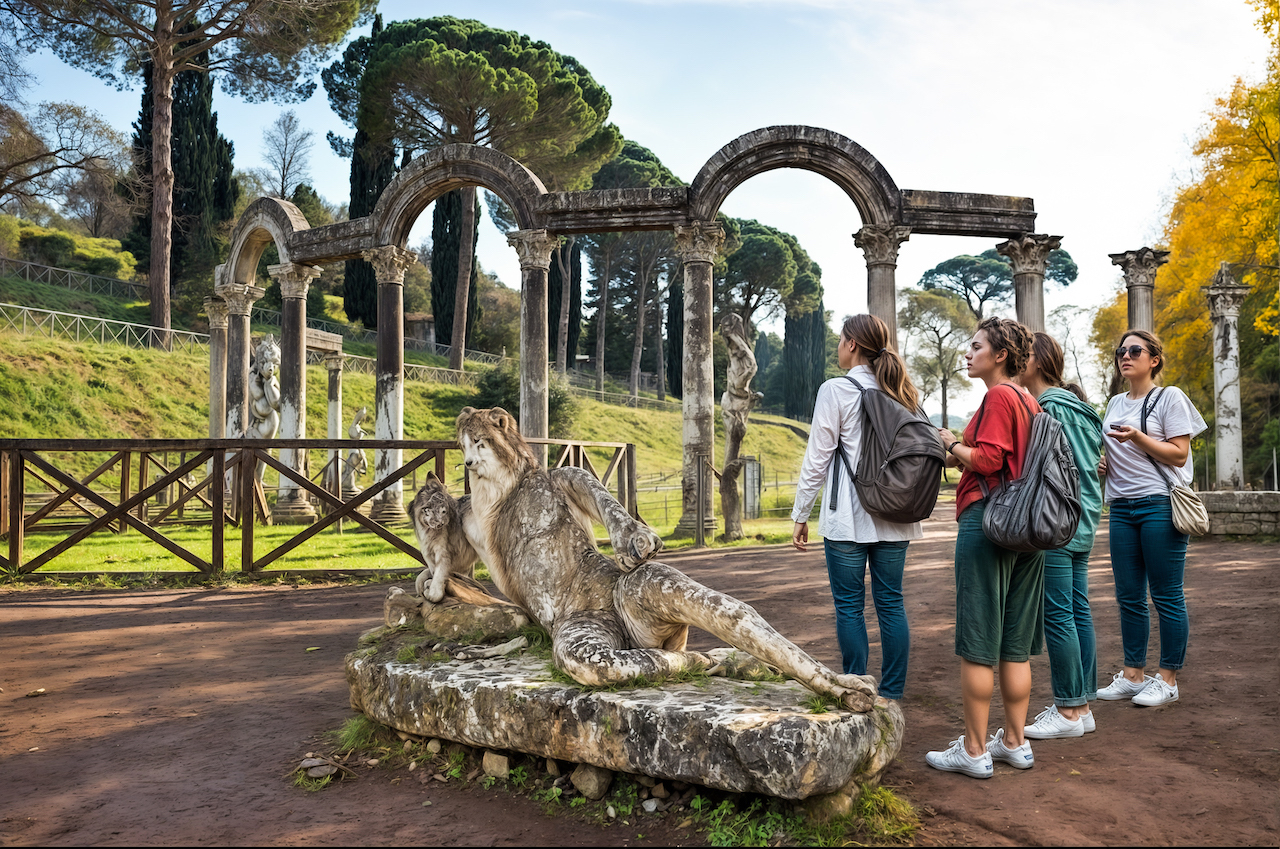
Today, much of the road survives within the Parco Regionale dell'Appia Antica, a protected green corridor established in 1988 covering over 4,700 hectares southeast of the city center. Walking or cycling along the preserved basalt paving stones — the original polygonal blocks fitted without mortar, many still bearing the grooves of ancient chariot wheels — delivers an immediacy that few historical sites can match. The first stretch from the Porta San Sebastiano gate to the Mausoleum of Cecilia Metella (roughly 3 kilometers) concentrates the densest collection of ruins: fragments of funerary reliefs, the Villa of the Quintilii (a vast imperial estate seized by Emperor Commodus in AD 182), the Circus of Maxentius built around AD 309, and scattered column bases half-buried in the grass of the Roman Campagna.
The road is closed to private motor traffic on Sundays, making it the best day to walk or rent a bicycle from one of the vendors near the Porta San Sebastiano. The Catacombs of San Callisto and San Sebastiano both offer guided tours (the only way to access the tunnels) and are open daily except Wednesdays and certain religious holidays respectively — confirm hours before visiting. Wear comfortable shoes; the original basalt blocks are uneven and slippery when wet. The park information center near the start of the archaeological zone distributes free maps and can advise on trail conditions along the longer rural sections toward the Castelli Romani hills.
Private tours with a local guide, at your own pace.
Rome
Rome
Rome

Rome

Rome
Rome
Rome

Rome