3 hrs
Rome
Rome Private Family Walking Tour with Games for Kids
✓ Free cancellation Kids friendly
4.7(32 reviews)
From €177/ person
Book Now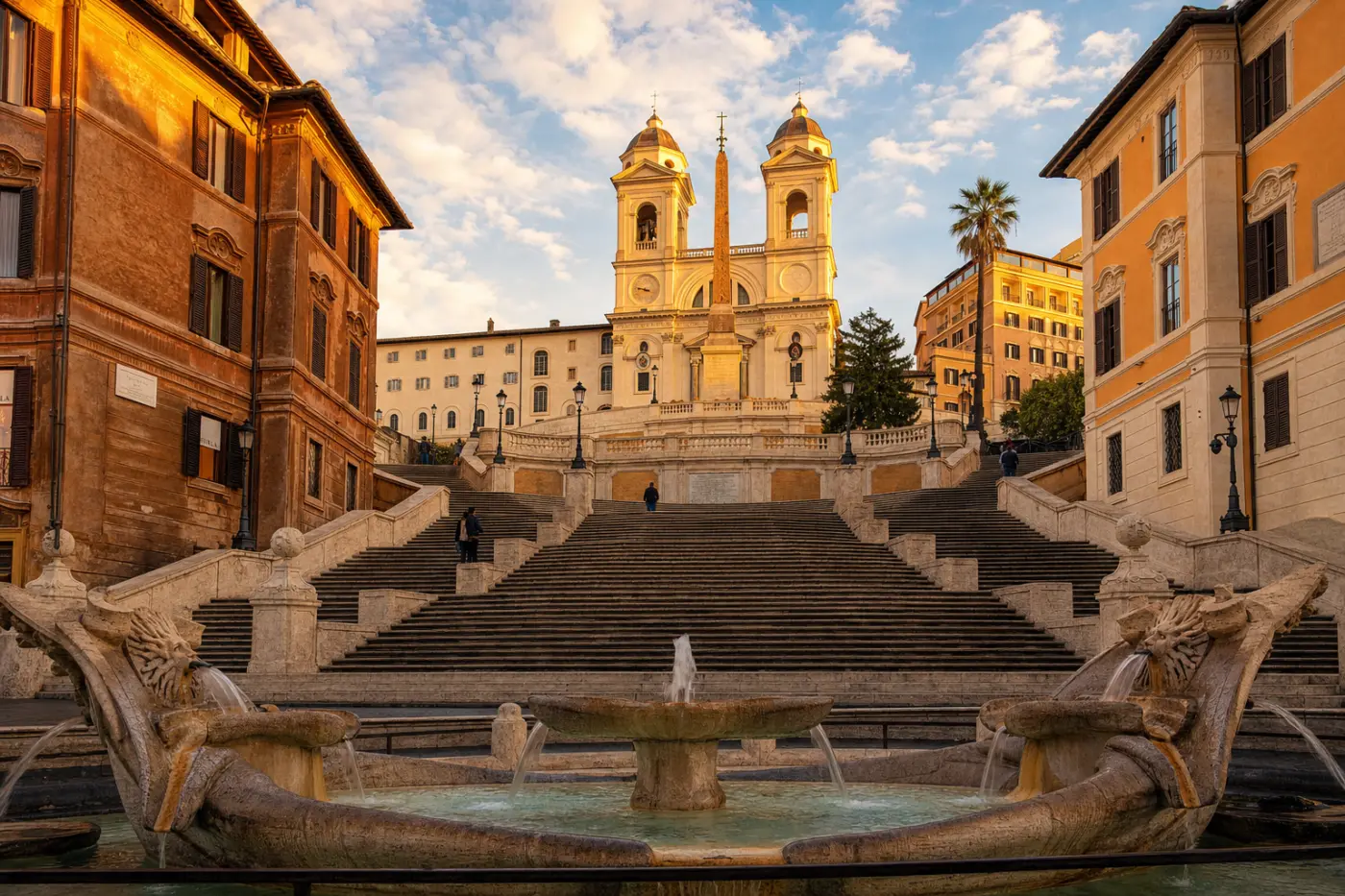
Tourist attraction
Piazza di Spagna takes its name from the Palazzo di Spagna, the residence of the Spanish Ambassador to the Holy See, which has occupied the square since the 17th century. The plaza's defining feature — the Scalinata della Trinità dei Monti, better known as the Spanish Steps — was completed in 1725 to a design by Francesco de Sanctis, funded by a bequest from French diplomat Étienne Gueffier. The 135 steps rise in a dramatic cascade of three terraces toward the twin-towered French church of Trinità dei Monti (consecrated 1585), creating one of the most sophisticated exercises in baroque urban scenography in the world. The staircase was constructed to physically link the French church at the summit with the Spanish diplomatic quarter below — a visible negotiation of competing national presences on Roman soil.
At the foot of the steps, Pietro Bernini (father of the more celebrated Gian Lorenzo) completed the Fontana della Barcaccia in 1627. The fountain's design — a half-submerged, leaking boat — was a clever engineering solution to the low water pressure of the Acqua Vergine aqueduct feeding it. Tradition holds that the boat shape commemorates a vessel stranded in the piazza after the catastrophic Tiber flood of 1598. The square became the beating heart of Rome's Grand Tour culture throughout the 18th and 19th centuries: the poet John Keats lived and died in the terracotta building to the right of the steps at No. 26, now preserved as the Keats-Shelley House museum, where visitors can see his death mask and original manuscripts. Nearby, the Caffè Greco on Via Condotti — opened in 1760 — served Goethe, Byron, and Stendhal, and still operates today.
Visitors approaching from Via Condotti, Rome's luxury shopping axis, arrive at the Barcaccia and are drawn upward by the staircase's sweeping symmetry. The steps themselves are a social theatre: in spring, they are lined with azalea planters (a tradition since 1721) that turn the travertine terraces into a cascade of pink and red bloom. From the uppermost terrace, the view stretches south over Rome's rooftops toward the Quirinal Hill. To the left of the church stands the Villa Medici, seat of the French Academy in Rome since 1725 — the same year the staircase was completed — reinforcing the piazza's long role as a crossroads of European cultural ambition.
The piazza is accessible 24 hours and admission is free. Metro Line A stops directly at Spagna station, one of the system's most architecturally notable stations, designed by Eugenio Montuori and opened in 1955. Sitting on the steps is now prohibited between 9 p.m. and 9 a.m. under a municipal ordinance introduced in 2019, with fines up to €400 — a measure introduced to protect the delicate travertine surface. The Keats-Shelley House is open Monday through Saturday and charges a small admission fee. For the quietest experience, arrive before 8 a.m., when the steps and fountain are largely empty and the morning light falls directly on the warm stone facade of Trinità dei Monti.
Private tours with a local guide, at your own pace.
Rome
Rome
Rome

Rome
Rome
Rome
Rome
Rome
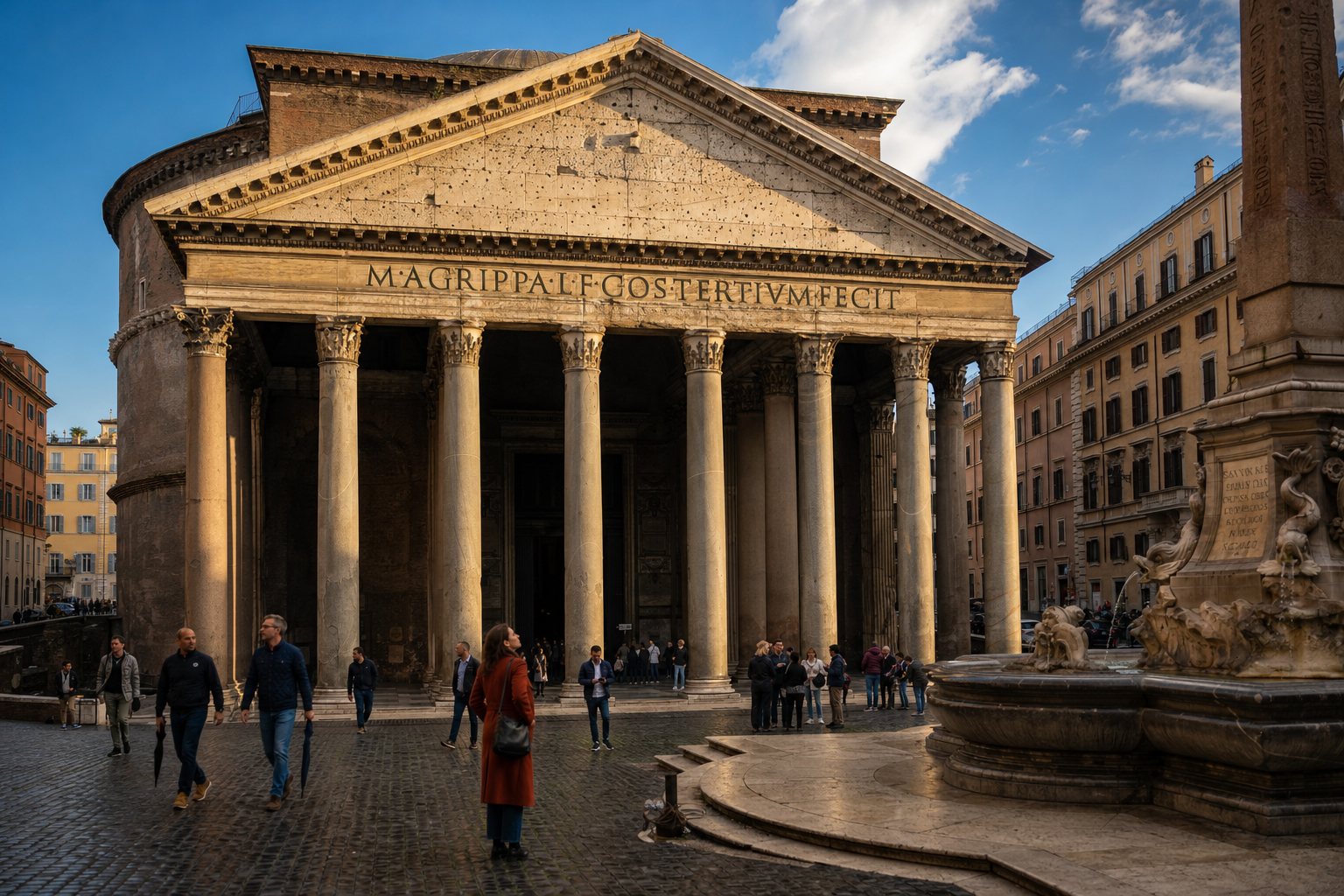
On the afternoon of 2 November 1950, Rome received 108mm of rain in a single day — one of the heaviest downpours in the city's recorded history. Locals ducked into trattorias, lingered over lunch, and emerged hours later to find the Sampietrini cobblestones of the historic center gleaming like polished obsidian. Here's the thing no travel guide tells you: rain doesn't ruin Rome. It transforms it. The same city that feels exhausting under July heat — queues snaking past the Trevi Fountain, tour groups stacked three-deep at the Pantheon — becomes something quieter, moodier, and far more liveable when clouds roll in off the Tyrrhenian Sea. Rome averages around 800mm of rainfall per year, with October, November, and February forming the wettest windows. That means millions of visitors each year encounter rain, yet most arrive with no plan beyond panic. This guide is that plan.
Read more →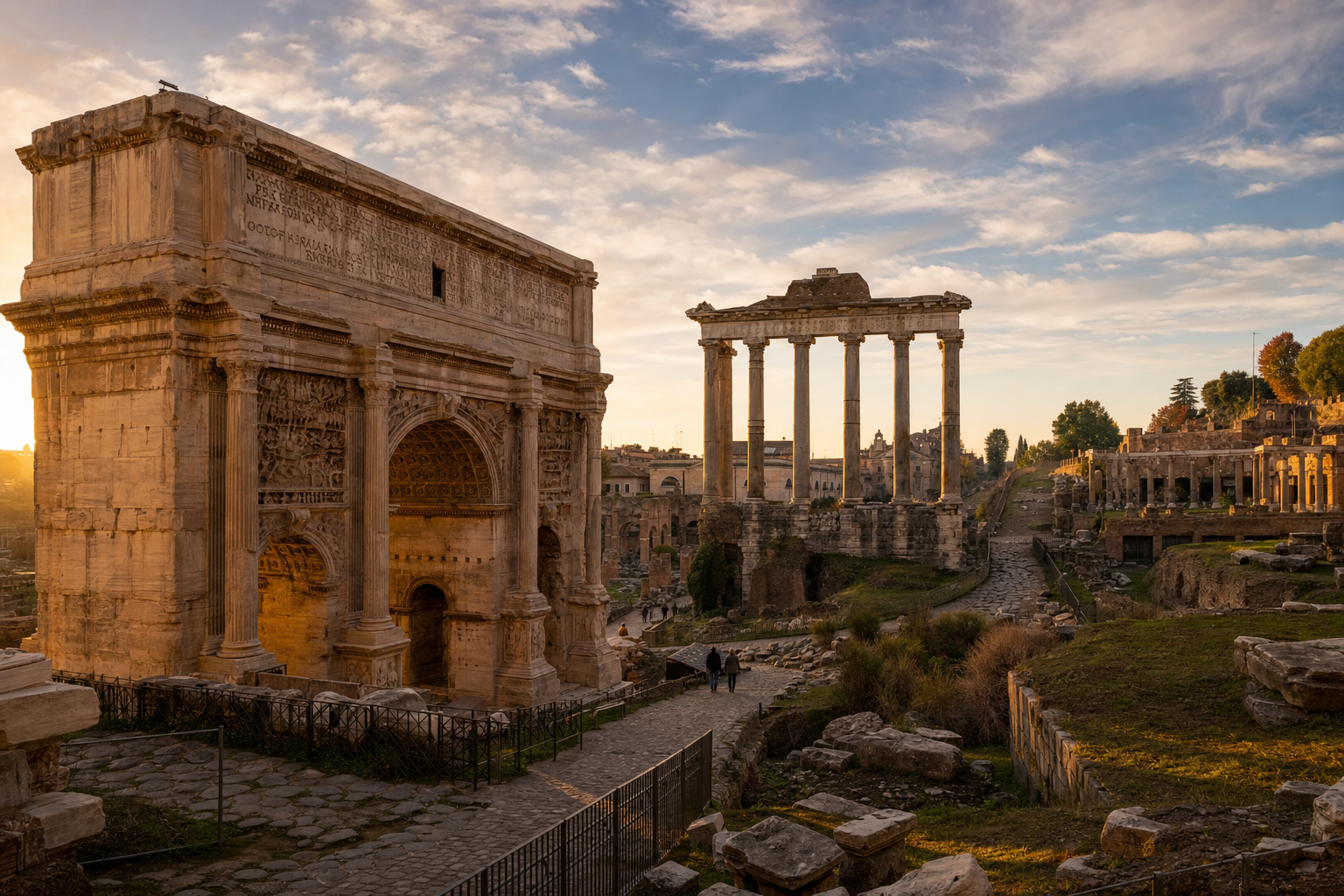
Rome was not built in a day — and it cannot be truly experienced in one either. Founded, according to tradition, on 21 April 753 BC, the city has been welcoming visitors for over two millennia, yet the question of when to go remains as contested as the Senate floor once was. Average annual tourist arrivals at the Colosseum alone exceed 7 million, meaning timing your visit is not a minor detail — it is everything. July temperatures regularly breach 35°C on the cobblestones of the Roman Forum, while a wet November morning at the Fontana di Trevi can feel like a private audience with Anita Ekberg's ghost. Each month carries its own character, crowd density, price point, and light quality. This guide cuts through the noise with specific facts, seasonal realities, and honest advice drawn from years of walking Rome's streets — so you arrive at exactly the right moment for the trip you actually want.
Read more →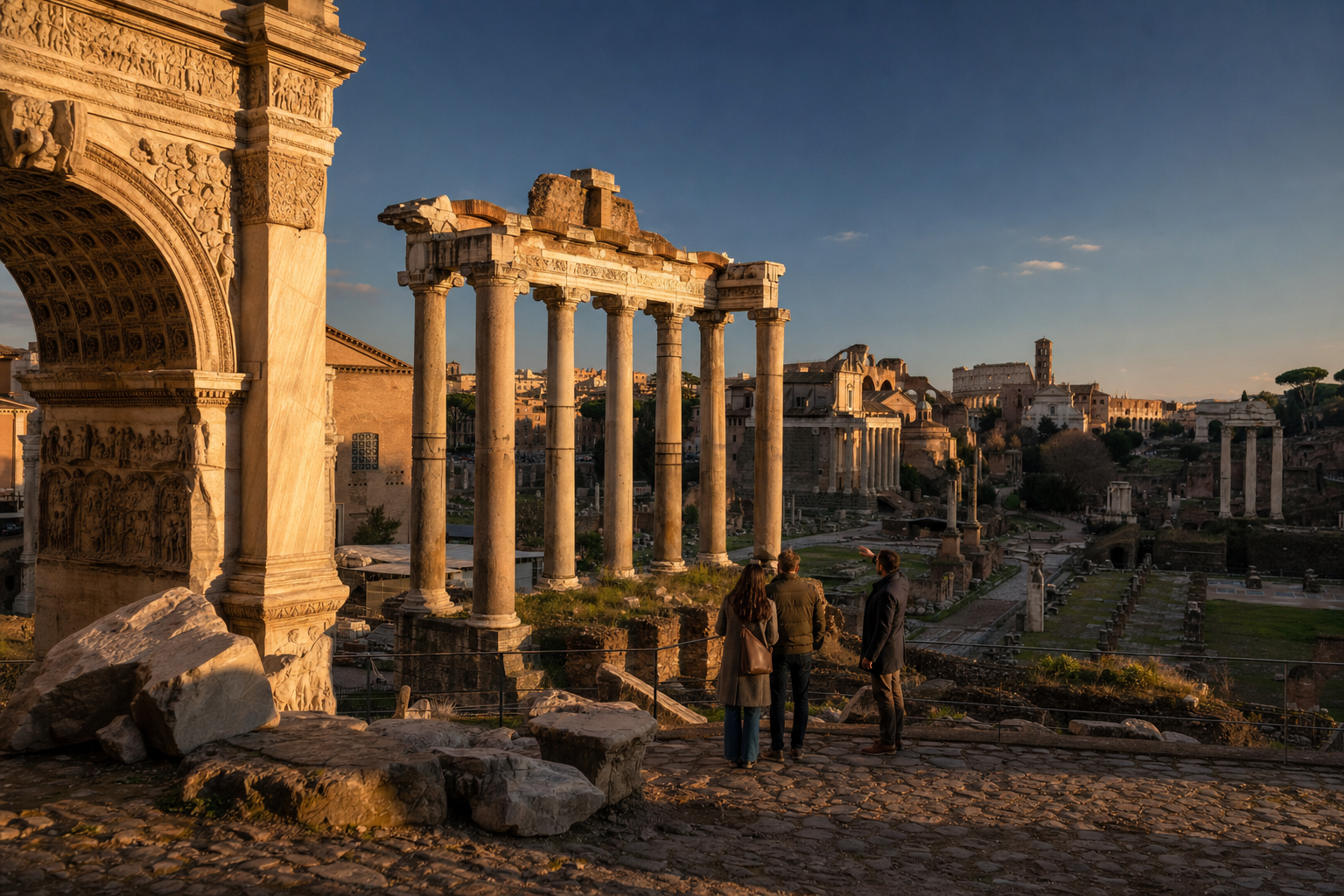
In 27 BC, Augustus Caesar famously boasted that he had found Rome a city of brick and left it a city of marble. What he didn't mention was that the city already contained several hundred years of Republican-era stone beneath his feet — and that future emperors, popes, and Renaissance architects would keep adding layers on top for the next two millennia. Today, Rome packs more than 2,000 years of continuous civilisation into 1,287 km², making it arguably the most historically dense urban environment on Earth. That density is precisely the problem with seeing it quickly, on a coach, in a crowd of strangers following a flag on a stick. Every piazza hides a deeper story. Every church floor covers an older church floor. Private tours in Rome don't just make the experience more comfortable — they make it genuinely comprehensible, turning a blur of ancient stones into a living, breathing city you actually understand.
Read more →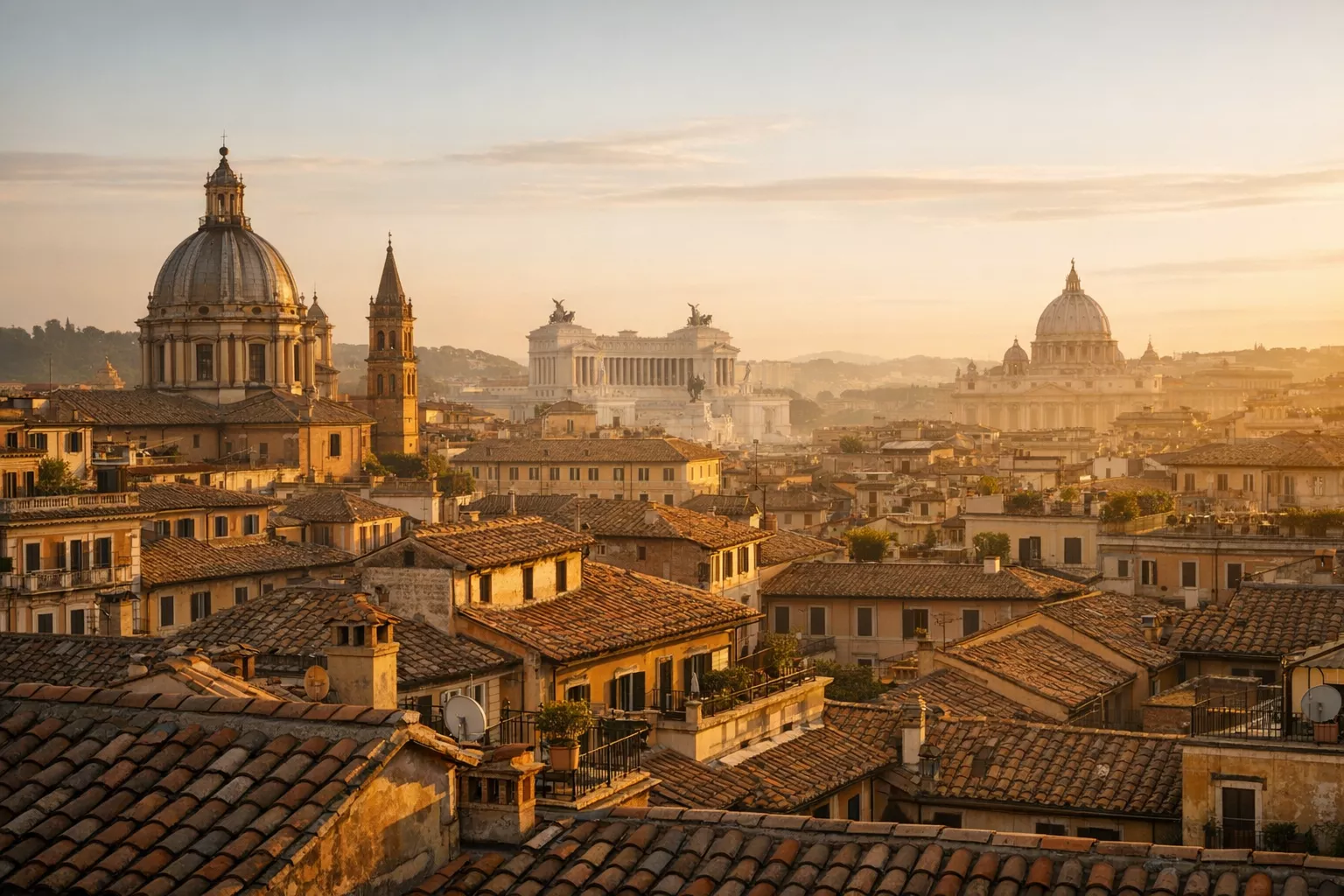
Discover the charm and beauty of Rome with our ultimate guide on what to do in this historic city. From iconic landmarks to hidden gems, we've got you covered with exciting tours and activities.
Read more →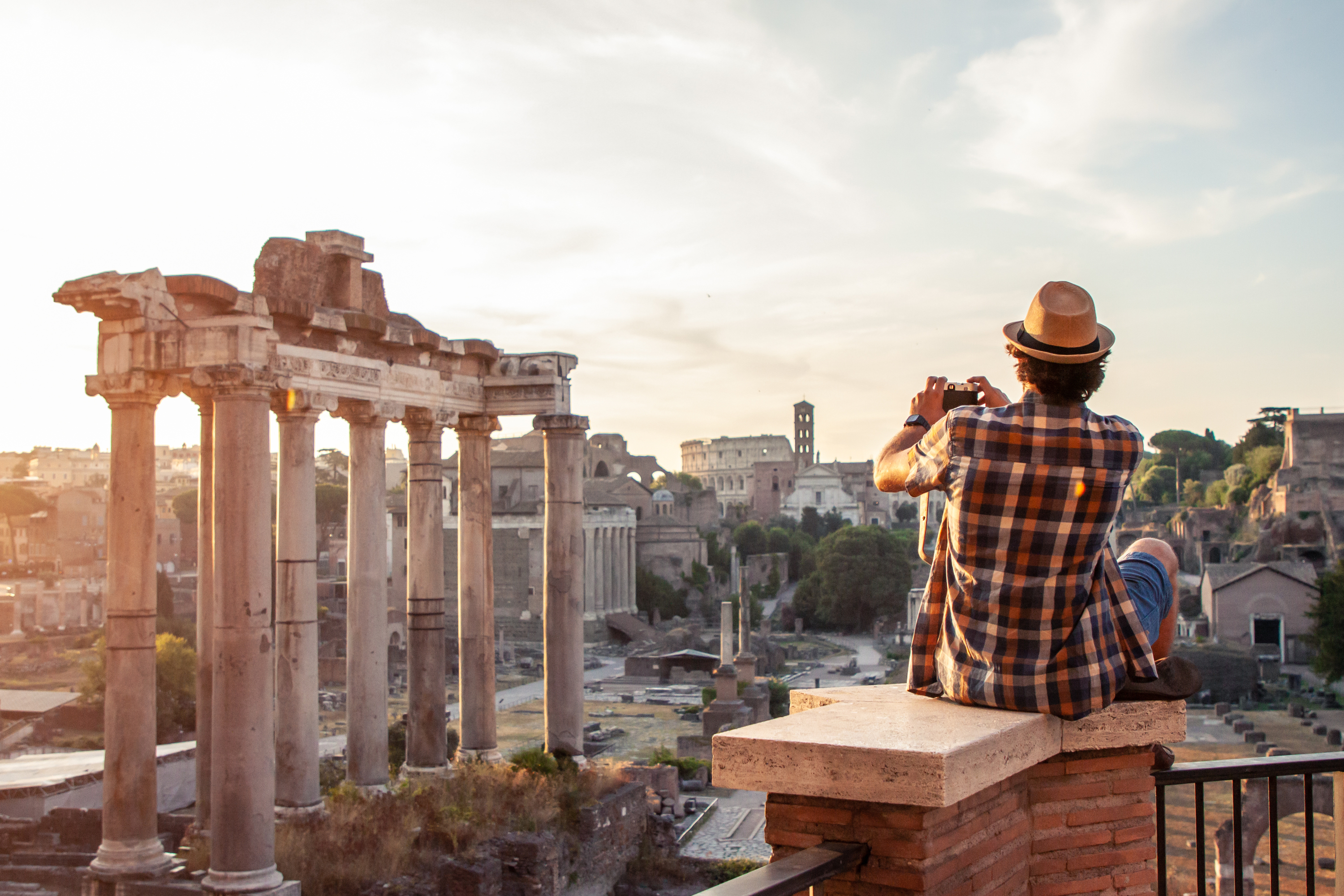
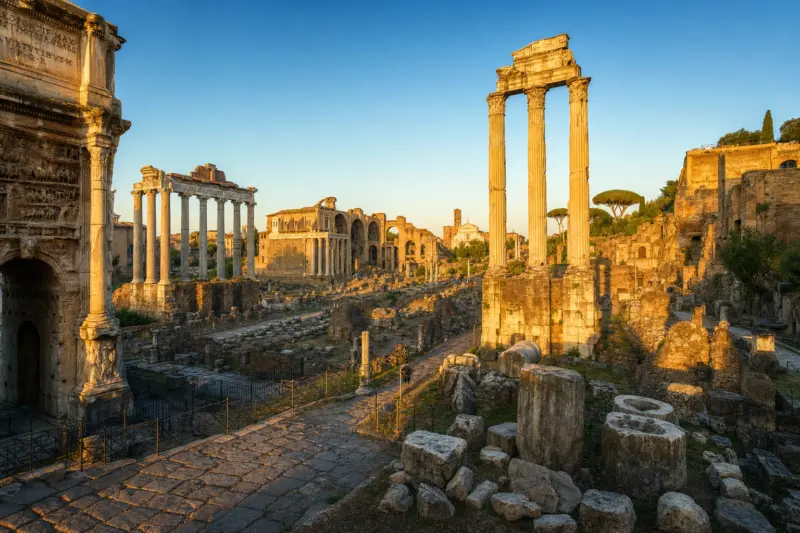
The Forum, the Colosseum and the Palatine are the three great archaeological sites that are preserved in the city of Rome. The concepts of "Forum" (the Roman Forum) or "The Forums" (the Imperial Forums), are difficult to understand what was done in them and how their spaces were organized. What is the difference between the traditional Roman Forum and the so-called Imperial Forums?
Read more →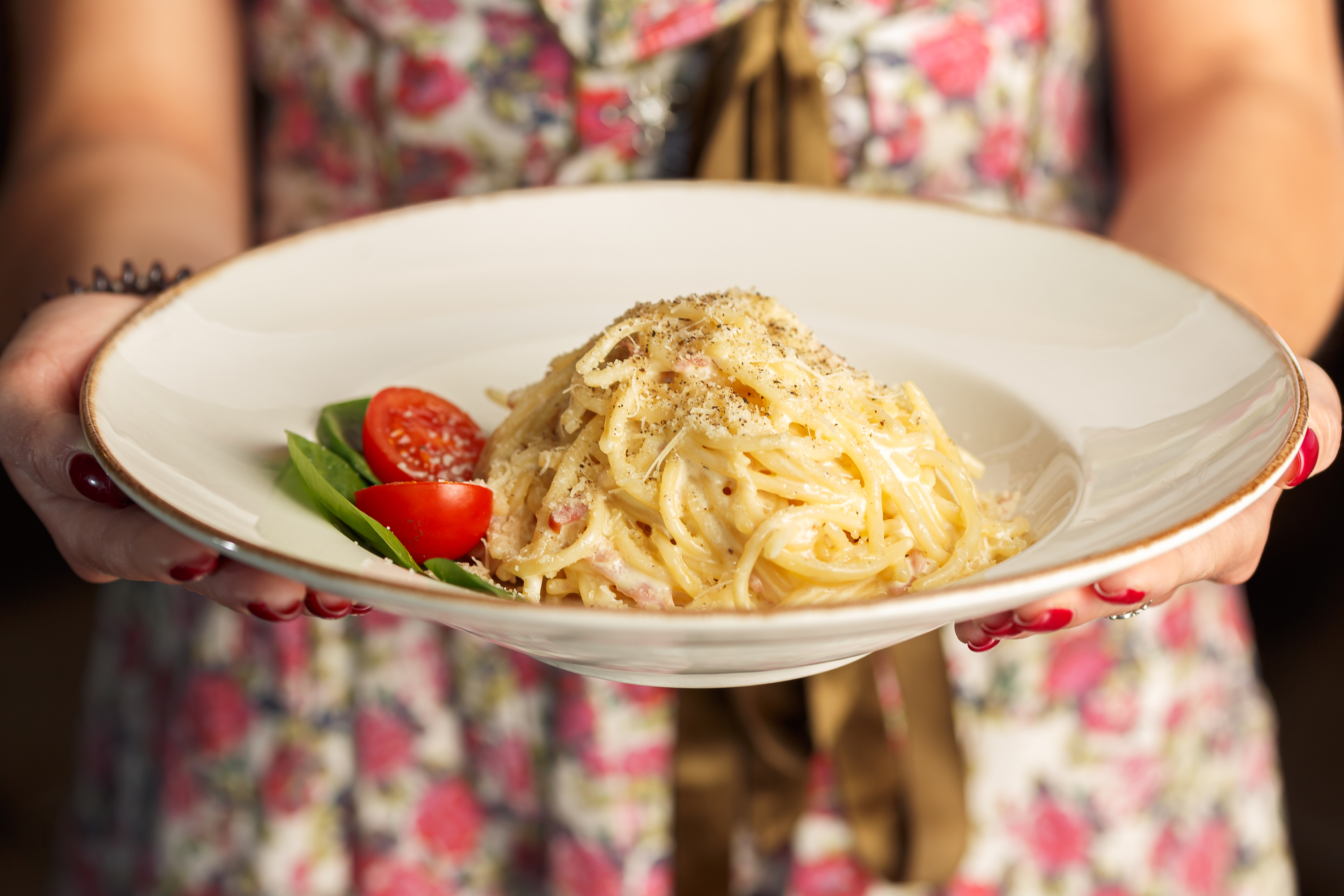
If you travel around Rome, there are dishes that you should not miss for anything in the world. Its typical dishes are very tasty and nutritious as they are very old recipes that have their origin in the villages of the region: they were thought to meet the great energy needs of the peasants. Due to this 'poor' origin, the typical dishes of the Roman cuisine are usually simple, they are made with very daily ingredients and often rich in cholesterol. It is very difficult to make a selection of recommended dishes... but we will give it a try!
Read more →We use a single cookie, to remember this choice. We do not use analytics or advertising cookies. Read our cookie policy.