3 hrs
Rome
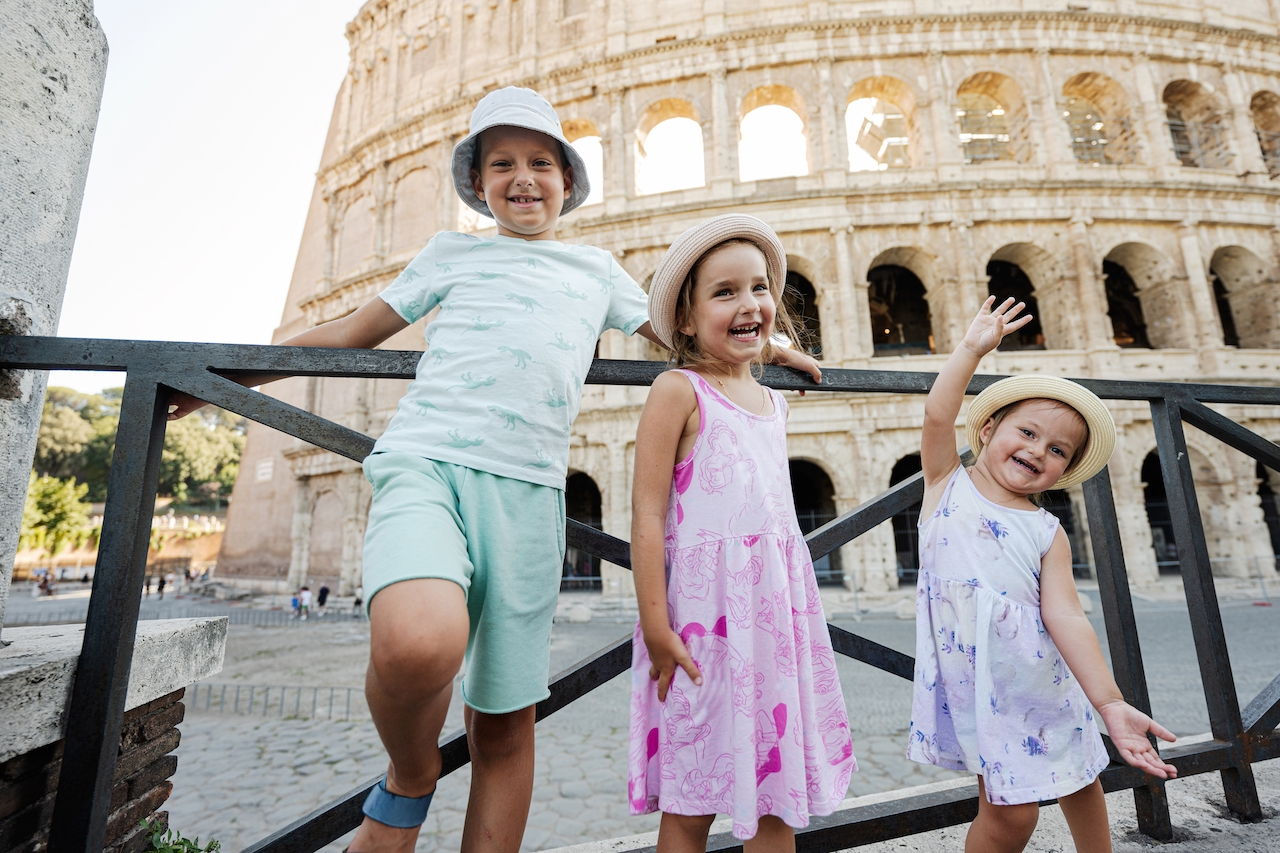
Rome Private Family Walking Tour with Games for Kids
✓ Free cancellation Kids friendly
4.7(32 reviews)
From €177/ person
Book Now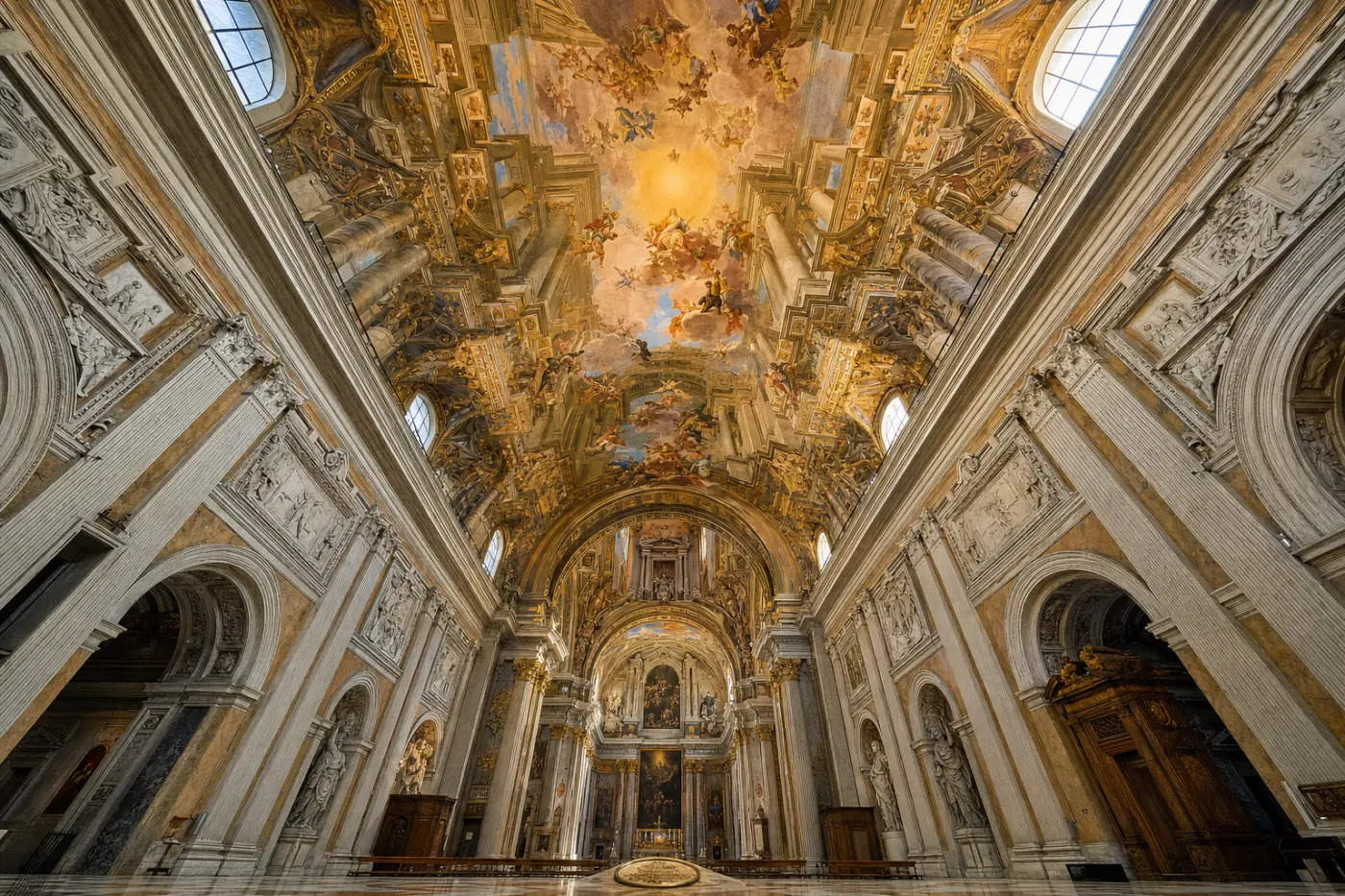
Tourist attraction
The Church of Sant'Ignazio di Loyola in Campo Marzio is one of Rome's most ambitious baroque monuments, built between 1626 and 1650 as the official church of the adjacent Collegio Romano — the Jesuit order's premier intellectual and spiritual training center. Construction was funded largely by Cardinal Ludovico Ludovisi, nephew of Pope Gregory XV, who had canonized Ignatius of Loyola in 1622, just four years before the church's foundation stone was laid. Designed by Jesuit brother Orazio Grassi, the church's Latin-cross plan and colossal nave reflect the Society of Jesus's confidence at the height of its Counter-Reformation influence, rivaling the nearby Church of the Gesù in scale and ambition.
The church's true masterpiece is the work of Jesuit lay brother and mathematician Andrea Pozzo, who between 1685 and 1694 painted the nave ceiling with one of the largest and most technically complex trompe-l'œil frescoes in the world. The composition, titled The Apotheosis of St. Ignatius, depicts the saint being received into heaven surrounded by allegorical figures representing the four continents to which Jesuit missionaries had carried the faith: Europe, Asia, Africa, and the Americas. Pozzo, who published his mathematical methods in the influential treatise Perspectiva Pictorum et Architectorum (1693–1700), calculated a single viewing point on the nave floor — marked today by a small disk — from which the painted columns and arches appear to rise seamlessly from the real architecture into an open sky. Pozzo also painted the church's celebrated false dome: when funding for a real dome ran out, he executed a flat canvas in 1685 depicting a full hemispherical cupola with such precision that it fools visitors completely — until they step off the central disk and the illusion collapses into an obvious flat circle. The church also holds the tombs of three Jesuit saints: Aloysius Gonzaga, John Berchmans, and Cardinal Robert Bellarmine, the theologian who famously presided over Galileo's first inquisition proceedings in 1616.
Visiting Sant'Ignazio is an exercise in calibrated disorientation. Stand on the brass floor disk under the nave and tilt your head back: the painted architecture locks perfectly onto the stone walls below, the sky opens, and figures float overhead in a wash of gold and azure that took Pozzo nine years to complete. Then take three steps sideways and watch the entire illusion dissolve — the columns buckle, the sky flattens, and the genius of the construction becomes suddenly, startlingly clear. The side chapels reward close attention: the chapel of St. Aloysius Gonzaga contains a lapis lazuli altar by Andrea Pozzo himself, completed in 1699, housing a silver urn with the saint's relics beneath a dramatic sculptural group.
Sant'Ignazio faces onto the Piazza di Sant'Ignazio, itself a rococo theatrical set-piece designed by Filippo Raguzzini in 1727–1728, whose curved apartment façades form a stage-like enclosure around the church's broad baroque front. The church is free to enter and open daily; the Campo Marzio neighborhood places it within easy walking distance of the Pantheon (roughly 300 meters northwest), making it a natural pairing on any itinerary. Photography without flash is permitted, and the optimal time to view Pozzo's ceiling is on a bright morning when natural light from the nave windows illuminates the fresco without artificial glare. Free audio guides are available via the church's official website.
Private tours with a local guide, at your own pace.
Rome
Rome
Rome

Rome

Rome
Rome
Rome
Rome

Rome
Rome
We use a single cookie, to remember this choice. We do not use analytics or advertising cookies. Read our cookie policy.