3 hrs
London
Private London Kickstart Tour - City Highlights for newcomers
✓ Free cancellation Kids friendly
4.8(20 reviews)
From €145/ person
Book Now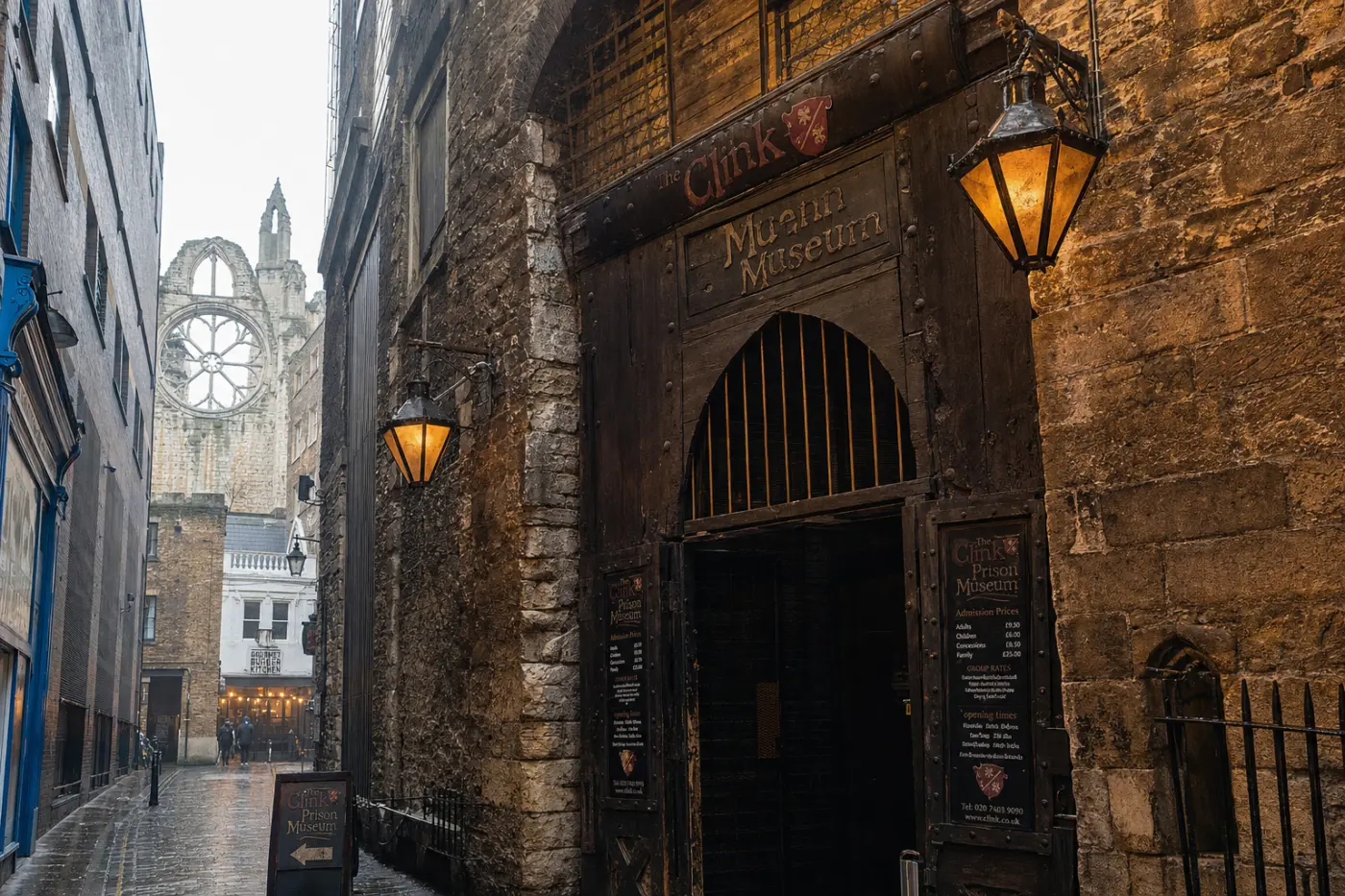
Tourist attraction
The Clink Prison holds a distinction no other institution in the English-speaking world can claim: it gave its name to every jail that followed. Founded in 1144 within the grounds of Winchester Palace — the Thames-fronted residence built for Henry of Blois, Bishop of Winchester and brother to King Stephen — the Clink operated for over 600 years on the south bank of the Thames in Southwark. The name itself appears to have attached to the prison by the 14th century, most likely derived from the sound of a blacksmith's hammer closing iron shackles around prisoners' wrists and ankles, though the Flemish word "klink," meaning latch, may also have contributed. When people say someone has been "thrown in the clink," they are invoking this precise building on Clink Street, SE1.
The prison sat within the "Liberty of the Bishop of Winchester," a jurisdiction that placed Bankside deliberately outside the moral governance of the City of London. This made the surrounding area a lawful home for brothels, bear-baiting arenas, and theatres — including the nearby Globe — and filled the Clink's cells accordingly with drunkards, debtors, sex workers, and vagabonds. But its inmate list also includes figures of serious historical weight: Sir Thomas Wyatt the Younger, who led a rebellion against Queen Mary I; John Rogers, the first Protestant martyr burned under Mary's reign, who had also translated the Bible into English from Latin; Royalist prisoners during the English Civil War; and early Puritan dissenters who would go on to sail aboard the Mayflower and found Plymouth, Massachusetts in 1620. The prison was twice attacked and partially destroyed — during the Peasants' Revolt of 1381 and Jack Cade's Rebellion of 1450 — before finally being burned to the ground in 1780 by followers of Lord George Gordon during the anti-Catholic Gordon Riots. It was never rebuilt, and reportedly none of the released prisoners were ever recaptured.
Today's museum stands on the original site and incorporates an original section of the prison wall. The experience is deliberately sensory and hands-on: visitors encounter reconstructed cells, life-size figures, and working replicas of torture devices including irons, stocks, and the dreaded scold's bridle. Sound effects, dim lighting, and period smells recreate the atmosphere of medieval and Tudor incarceration in visceral detail. Archaeological artefacts recovered from the site are displayed alongside detailed accounts of specific historical inmates, grounding the experience firmly in documented fact rather than theatrical invention.
The museum is located at Clink Street, London SE1 9DG, a short walk from London Bridge station and directly beside the surviving Rose Window of Winchester Palace's Great Hall — itself a Grade I listed ruin well worth examining before or after your visit. Guided tours and ghost-hunt evening events are available for booking in advance. Note that the museum is not wheelchair accessible due to the nature of the historic structure. Admission is affordable by central London standards, and the museum is well-suited to older children as well as adults with an interest in social history, crime, or Tudor and Stuart England.
Private tours with a local guide, at your own pace.
London

London
London

London
London

London
London

London

London
We use a single cookie, to remember this choice. We do not use analytics or advertising cookies. Read our cookie policy.