3.5 hrs
copenhagen
Copenhagen Alternative Private Tour: Vesterbro & Christianshavn
✓ Free cancellation Kids friendly
4.7(0 reviews)
From €311/ person
Book Now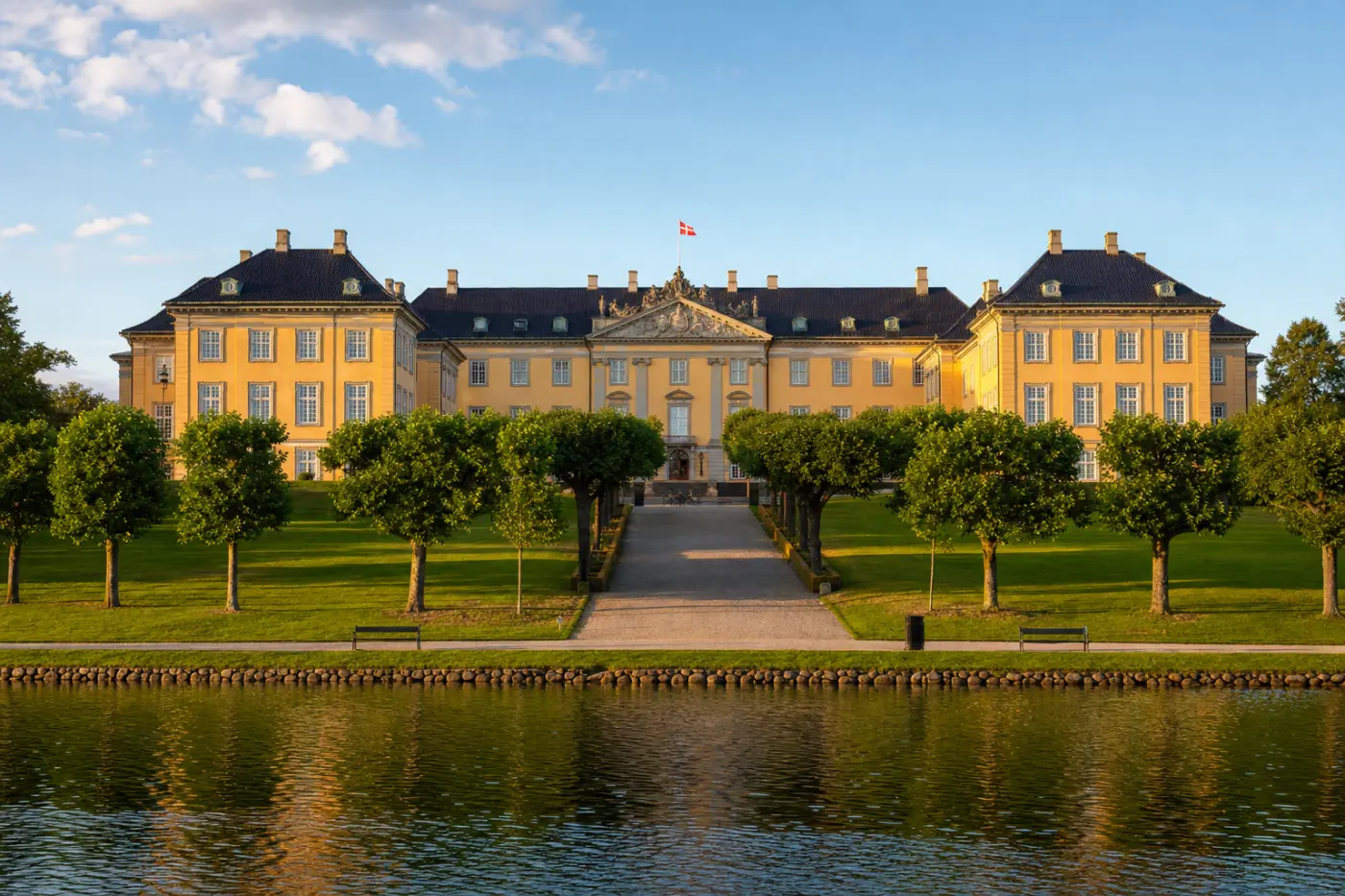
Tourist attraction
Frederiksberg Palace began as a modest one-storey summer residence completed in 1703 for Crown Prince Frederik IV, who had fallen in love with Italian Baroque architecture during his grand tour of Europe in the 1690s. By 1709 it had grown into a full three-storey Baroque palace, and between 1733 and 1738 the prominent Danish architect Lauritz de Thurah added the sweeping lateral wings that define its silhouette today. Perched atop Valby Hill with commanding views over its gardens, the yellow-rendered facade and symmetrical massing place it firmly in the tradition of Continental royal retreats — yet it retains an intimate scale that Versailles-inspired palaces rarely manage. Since 1869 the building has served as the Royal Danish Military Academy (Officers' Academy), giving it a dual identity as both a working institution and a historic monument.
The palace witnessed an extraordinary concentration of royal drama in its first century. Frederik IV hosted Czar Peter the Great of Russia here in 1716 and caused a scandal in 1721 by marrying his mistress Anne Sophie Reventlow within the palace walls while his first queen was barely cold. The most electrifying chapter came under the mentally ill King Christian VII, whose wife Queen Caroline Mathilde began a notorious affair with royal physician Johann Friedrich Struensee — a liaison that briefly reshaped Danish government before ending in Struensee's execution in 1772. The palace also harbours quieter curiosities: a lavishly appointed marble bathroom was constructed for Christian VII, who, in the grip of his illness, reportedly refused to use it. The royal family finally departed for good in 1852, closing more than a century of courtly intrigue.
Surrounding the palace, Frederiksberg Gardens (Frederiksberg Have) cover 32 hectares and constitute the largest romantic landscape garden in Denmark. Laid out initially in a formal Baroque style to complement the palace, they were redesigned in the English landscape tradition in the late 18th and early 19th centuries, acquiring the winding canals, irregular lakes, and wooded hillsides that visitors explore today. The Chinese Pavilion — a rare piece of 18th-century chinoiserie nestled beside one of the canals — was built in 1799 as a royal tea house and remains one of the garden's most photographed features. Rowing boats can be hired on the canals in summer, and the gardens connect seamlessly to Copenhagen Zoo on their southern boundary, making for an effortless half-day circuit.
The gardens are free and open year-round from dawn to dusk, making them a genuine neighbourhood park as much as a tourist destination. The palace interior is not permanently open to the public, but guided tours are offered on the last Saturday of each month, granting access to the state rooms, the infamous marble bathroom, and panoramic views from the upper floors. Arriving by the 6A or 26 bus from central Copenhagen takes around 20 minutes; the main garden entrance on Pile Allé deposits you at the foot of the hill with the palace visible on the rise ahead. Spring brings cherry blossoms along the canal paths; autumn turns the beeches copper and gold — both seasons reward the detour.
Private tours with a local guide, at your own pace.
copenhagen
copenhagen
copenhagen

copenhagen
copenhagen