5.5 hrs
Rome
Villa Adriana Private Day Trip from Rome By Train
✓ Free cancellation Kids friendly
5.0(15 reviews)
From €322/ person
Book Now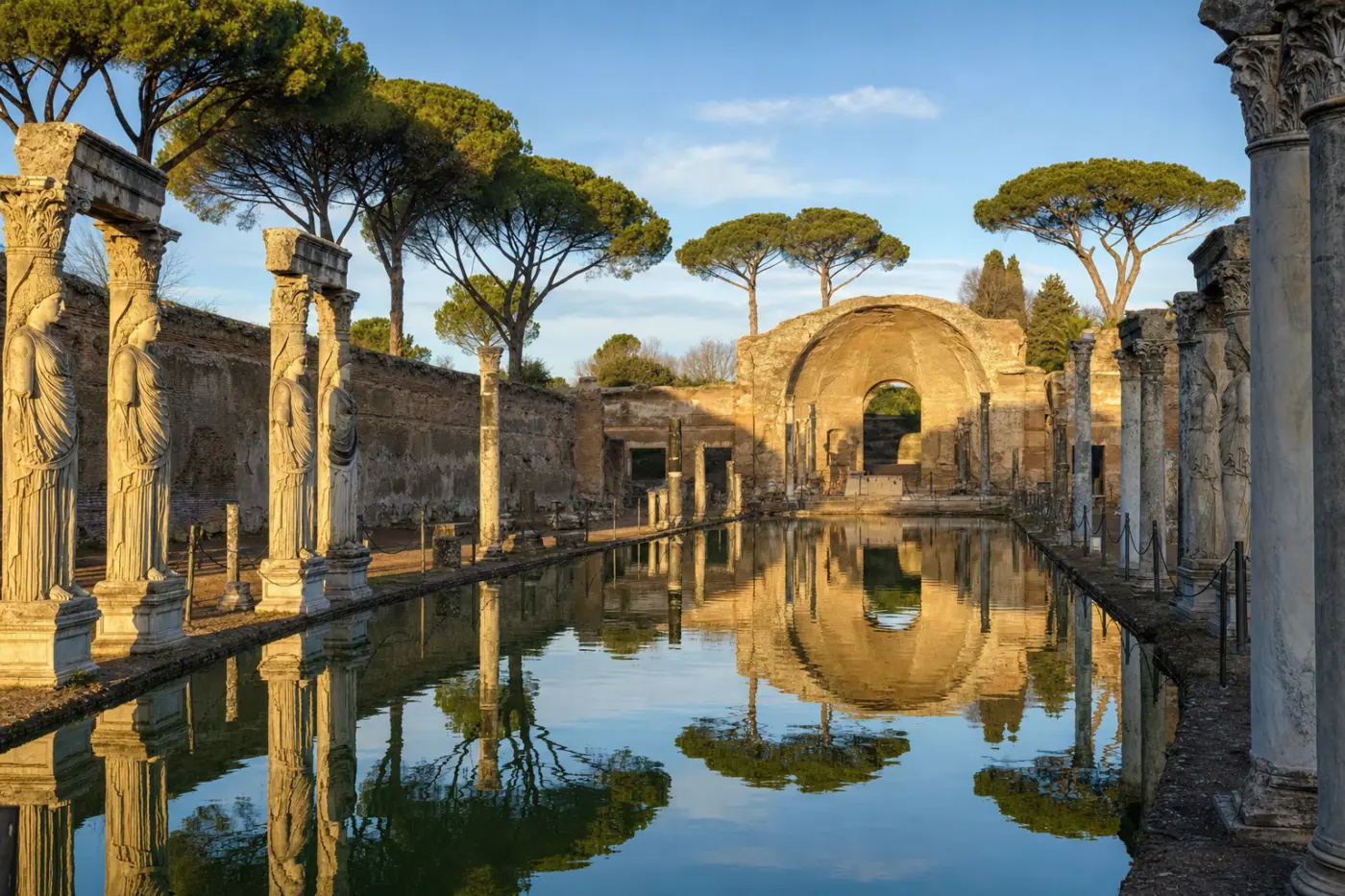
Tourist attraction
Villa Adriana is not a villa in any conventional sense — it is a self-contained imperial city sprawling across 120 hectares in the foothills of the Tiburtine Hills at Tivoli, roughly 30 kilometres east of Rome. Emperor Hadrian commissioned the complex beginning around 118 AD, shortly after his accession, and construction continued until approximately 138 AD, the year of his death. At its peak, the estate contained more than 30 individual buildings, including palaces, libraries, baths, barracks, a Greek theatre, a Latin theatre, canals, cryptoporticoes, and elaborate garden terraces — a concentration of Roman architectural invention unmatched anywhere in the ancient world. UNESCO inscribed it as a World Heritage Site in 1999, recognising it alongside the nearby Villa d'Este as an outstanding testament to Roman design.
Hadrian was himself a trained architect and an obsessive Hellenophile, and Villa Adriana reflects both passions with precision. The Canopus is the estate's most photographed feature: a 119-metre-long reflecting pool lined with marble caryatids and statues of crocodiles and Ares, modelled on the sacred canal linking the Egyptian city of Canopus to Alexandria. At the northern end stands the Serapeum, a semi-domed triclinium where Hadrian dined in theatrical splendour. The Teatro Marittimo — a circular island retreat ringed by a moat and a Ionic colonnade — functioned as a private studio where Hadrian could withdraw entirely from his court, accessible only by rotating wooden bridges. The Piazza d'Oro, despite its name meaning "Golden Square," was an audience hall whose octagonal vestibule displayed some of the most sophisticated concrete vaulting of the ancient world.
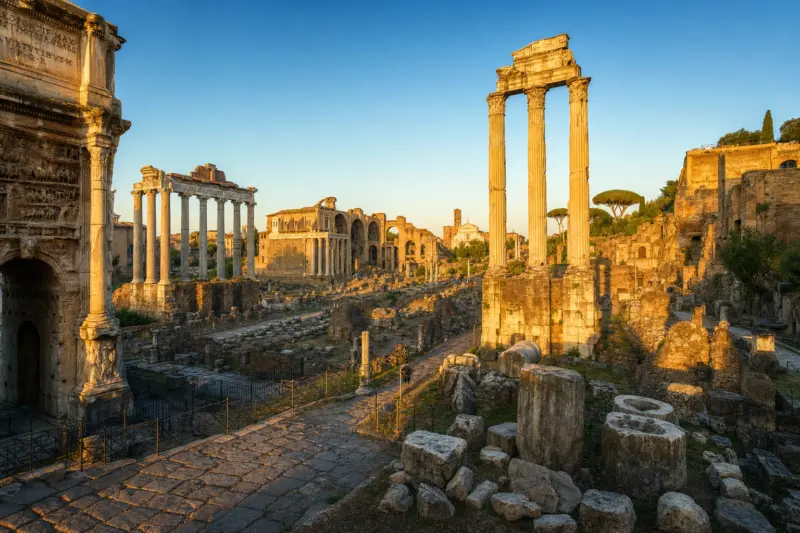
Visitors today walk through a landscape that is simultaneously ruined and legible. The site is vast enough that two to three hours are needed to cover its major monuments without rushing. The Canopus retains much of its original sculptural programme — the caryatids visible today are high-quality casts, with the originals housed in the on-site Antiquarium museum. The Great Baths and Small Baths complexes reveal how Roman engineers manipulated light through concrete vaults pierced with circular oculi. In spring, the grounds burst with umbrella pines, oleanders, and wild herbs, lending the ruins a quality closer to Piranesi's romantic engravings than a sanitised museum environment. An excellent scale model near the entrance helps orientate visitors before they set out.
The site opens daily from 9:00 AM, with last entry two hours before sunset; hours extend in summer. Tivoli is reachable from Rome's Ponte Mammolo metro station (Line B) via CAT bus, a journey of about 70 minutes. Dedicated parking is available on-site. Wear sturdy shoes — many paths are uneven ancient paving. Combining Villa Adriana with the Renaissance water gardens of Villa d'Este, a 10-minute drive uphill in Tivoli, makes for one of the most rewarding day trips from Rome, pairing two millennia of Italian landscape ambition in a single afternoon.
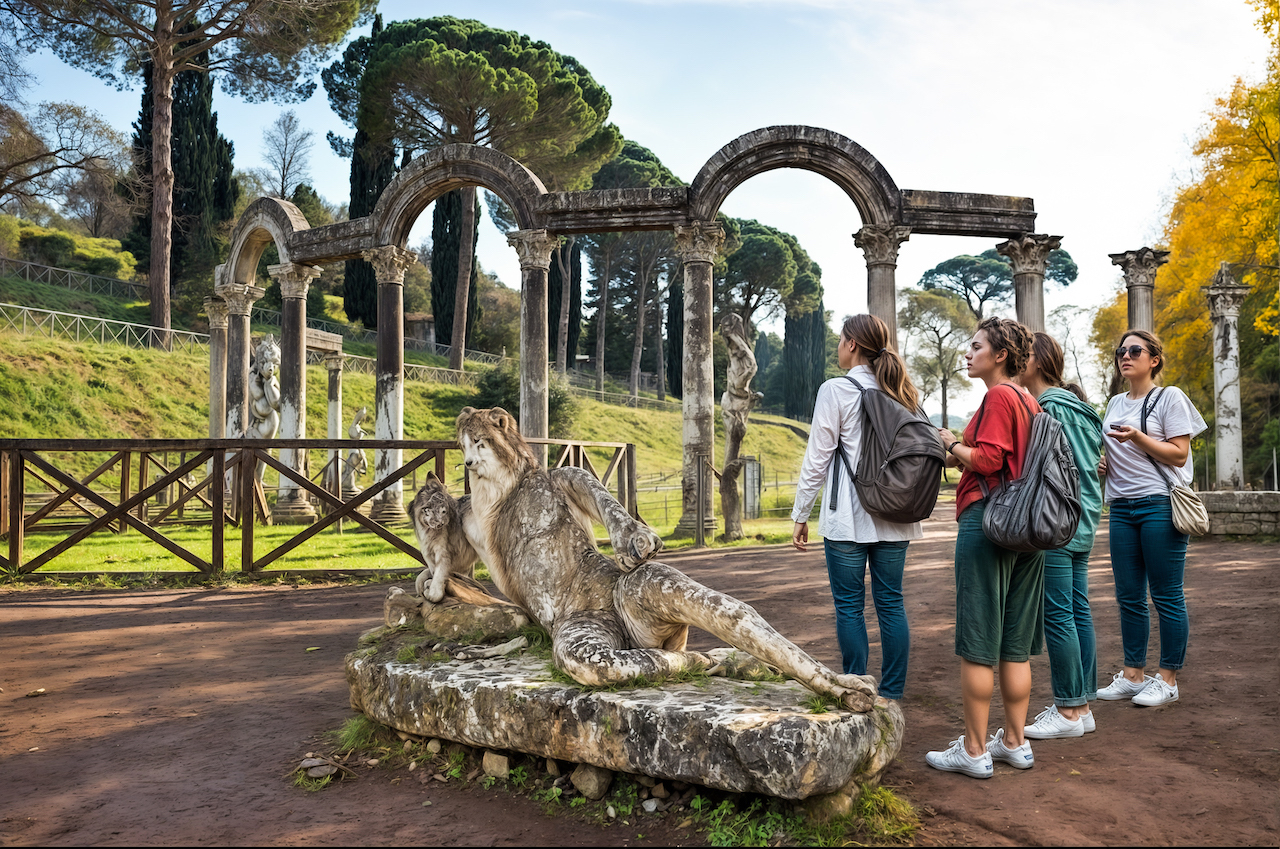
Private tours with a local guide, at your own pace.
Rome
Rome

Rome

Rome

Rome

Rome

Rome
Rome

Rome
We use a single cookie, to remember this choice. We do not use analytics or advertising cookies. Read our cookie policy.