4 hrs
London
Highlights of London Private Tour - Downtown, Notting Hill & Portobello Market
✓ Free cancellation Kids friendly
4.7(27 reviews)
From €188/ person
Book Now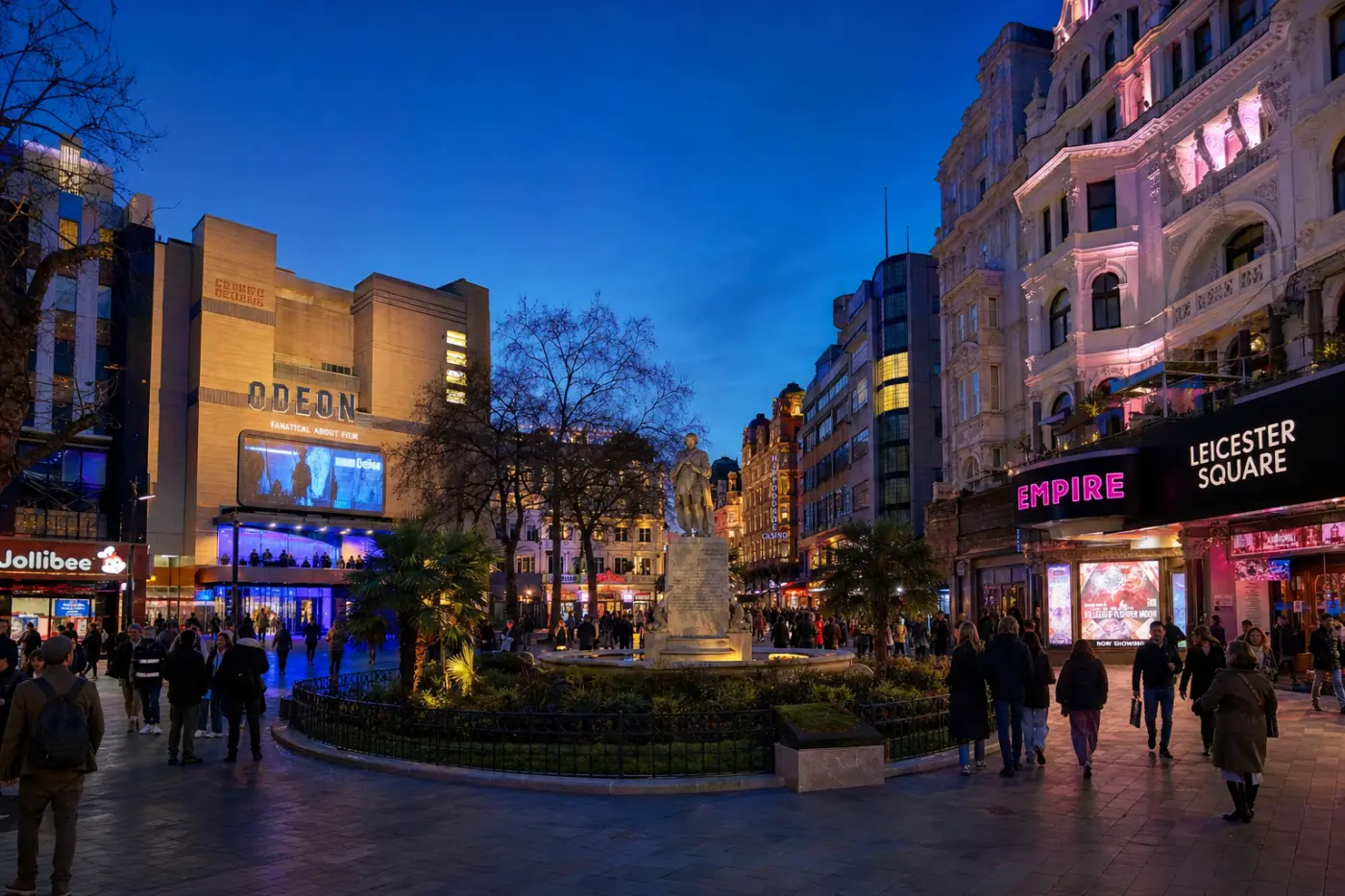
Tourist attraction
Leicester Square sits at the geographical and cultural heart of London's West End, a pedestrianised plaza surrounded by cinemas, restaurants, and the constant hum of one of Europe's busiest entertainment districts. Its origins, however, are far quieter: as late as the 1640s, the site was open farmland used as a drying ground for clothes, with cattle grazing in adjacent fields. The square as a formal space took shape after Leicester House was built between 1632 and 1636 by Robert Sidney, the Earl of Leicester. That grand townhouse defined the north side of the nascent square and attracted aristocratic neighbours for over a century — among them Sir Isaac Newton, who lived on the square's eastern edge, and the painter Sir Joshua Reynolds, who occupied a house on the square itself from 1760 until his death in 1792. William Hogarth, another giant of English art, also resided here, lending the neighbourhood an extraordinary concentration of Enlightenment-era intellectual life.
Through the 18th century, Leicester Square became a stage for spectacle both high and low. Sir Ashton Lever installed his remarkable natural history collection — one of the finest in Europe — at the adjacent Saville House, while Burford's Panorama offered Londoners immersive 360-degree painted scenes of cities and battlefields long before the age of photography. The Alhambra Theatre, which opened on the eastern side of the square in 1854, became a defining venue for ballet and variety entertainment, hosting audiences until its demolition in 1936, when the Art Deco Odeon cinema was built in its place. By the mid-19th century the square had fallen into neglect, its central garden overgrown and the equestrian statue of George I toppled. It was rescued in 1874 by financier Albert Grant, who purchased the land, landscaped the garden, and donated it to the Metropolitan Board of Works — placing a copy of a marble bust of Shakespeare at its centre, where it still stands today.
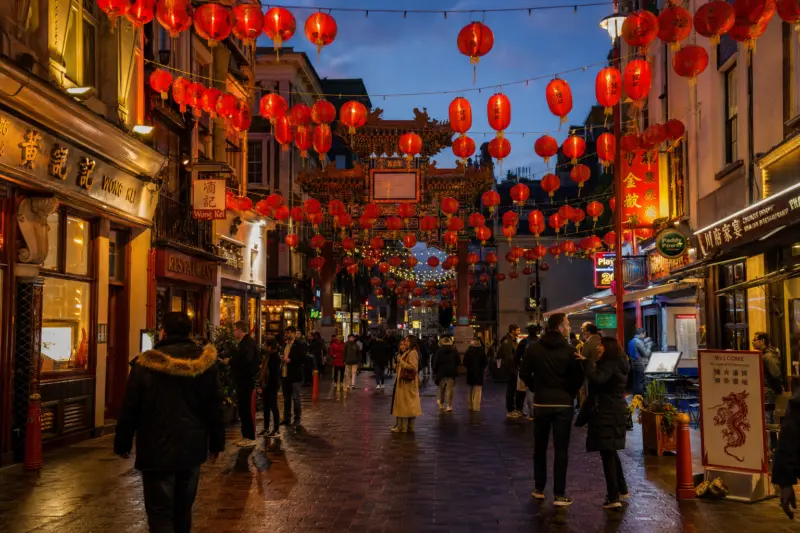
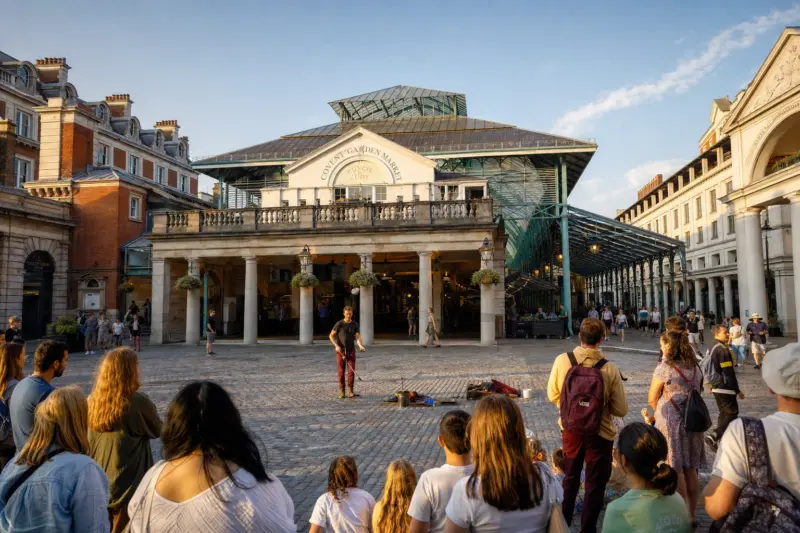
Visitors today experience a square that has fully embraced its role as London's cinema capital. The Empire, Odeon, and Vue cinemas ring the plaza, and red-carpet film premieres regularly transform the square into a spectacle of klieg lights and celebrity. The garden at the centre, a rare patch of greenery in this dense urban quarter, contains bronze plaques commemorating the notable residents of the square's past. The nearby TKTS booth on the south side sells discounted same-day tickets to West End theatre productions, making it a practical first stop for theatre-goers. Streets radiating outward lead within minutes to Covent Garden, Chinatown on Gerrard Street, and the National Portrait Gallery on St Martin's Place.
Leicester Square is served directly by the London Underground station of the same name on the Northern and Piccadilly lines, making it one of the most accessible points in central London. The square itself is open around the clock and free to enter. It is at its most atmospheric in the evening, when the illuminated cinema facades and the dense pedestrian crowds give it the kinetic energy of a city fully alive — a character it has maintained, in one form or another, since the reign of Charles II.
Private tours with a local guide, at your own pace.
London
London
London
London
London
London
London
London
London
We use a single cookie, to remember this choice. We do not use analytics or advertising cookies. Read our cookie policy.