3 hrs
London
Private London Kickstart Tour - City Highlights for newcomers
✓ Free cancellation Kids friendly
4.8(20 reviews)
From €145/ person
Book Now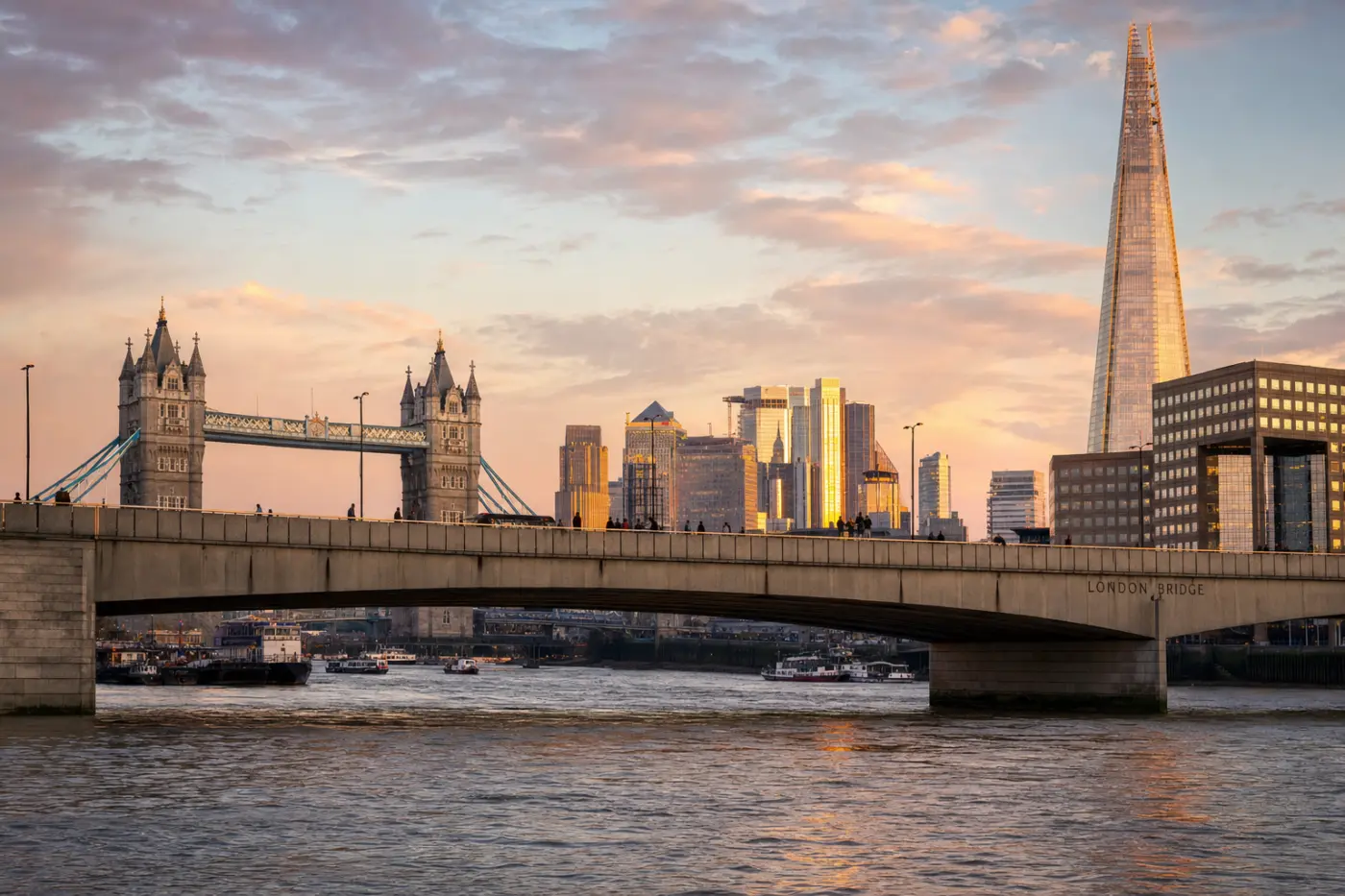
Tourist attraction
London Bridge is the oldest and most historically significant crossing of the River Thames, occupying a site that has been bridged continuously for nearly 2,000 years. The Romans constructed the first timber bridge here around AD 50, establishing it as the southeastern gateway into Londinium and anchoring the city's street plan for centuries. The bridge that captured the world's imagination, however, was the medieval stone structure completed in 1209 — a 900-foot span of 19 arches that stood for over 600 years. That bridge was not merely a crossing but a living street: it carried shops, houses, a chapel dedicated to Thomas Becket, and, notoriously, the severed heads of traitors displayed on poles above its gatehouse, including those of William Wallace in 1305 and Sir Thomas More in 1535.
The nursery rhyme "London Bridge is Falling Down" almost certainly draws on the bridge's turbulent history — it was damaged by Viking raids under Olaf II of Norway in 1014, partially destroyed by a tornado in 1091, and repeatedly ravaged by fire. After centuries of deterioration, the medieval bridge was replaced by a new stone structure designed by John Rennie, opened by King William IV in 1831. That Rennie bridge itself was sold in 1968 — famously purchased by American entrepreneur Robert P. McCulloch for $2.46 million under the widespread myth that he believed he was buying Tower Bridge — and was dismantled stone by stone and rebuilt in Lake Havasu City, Arizona, where it stands today. The current bridge, a utilitarian concrete structure designed by architects Mott, Hay and Anderson, was opened by Queen Elizabeth II on 17 March 1973.
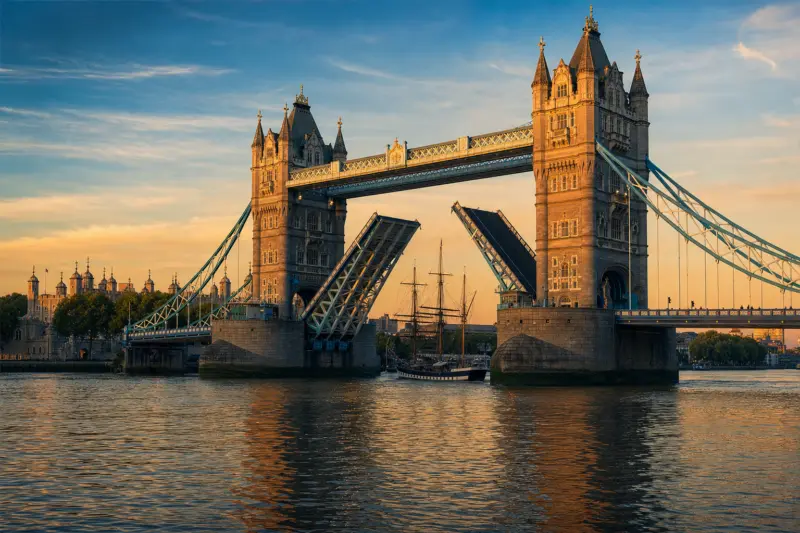
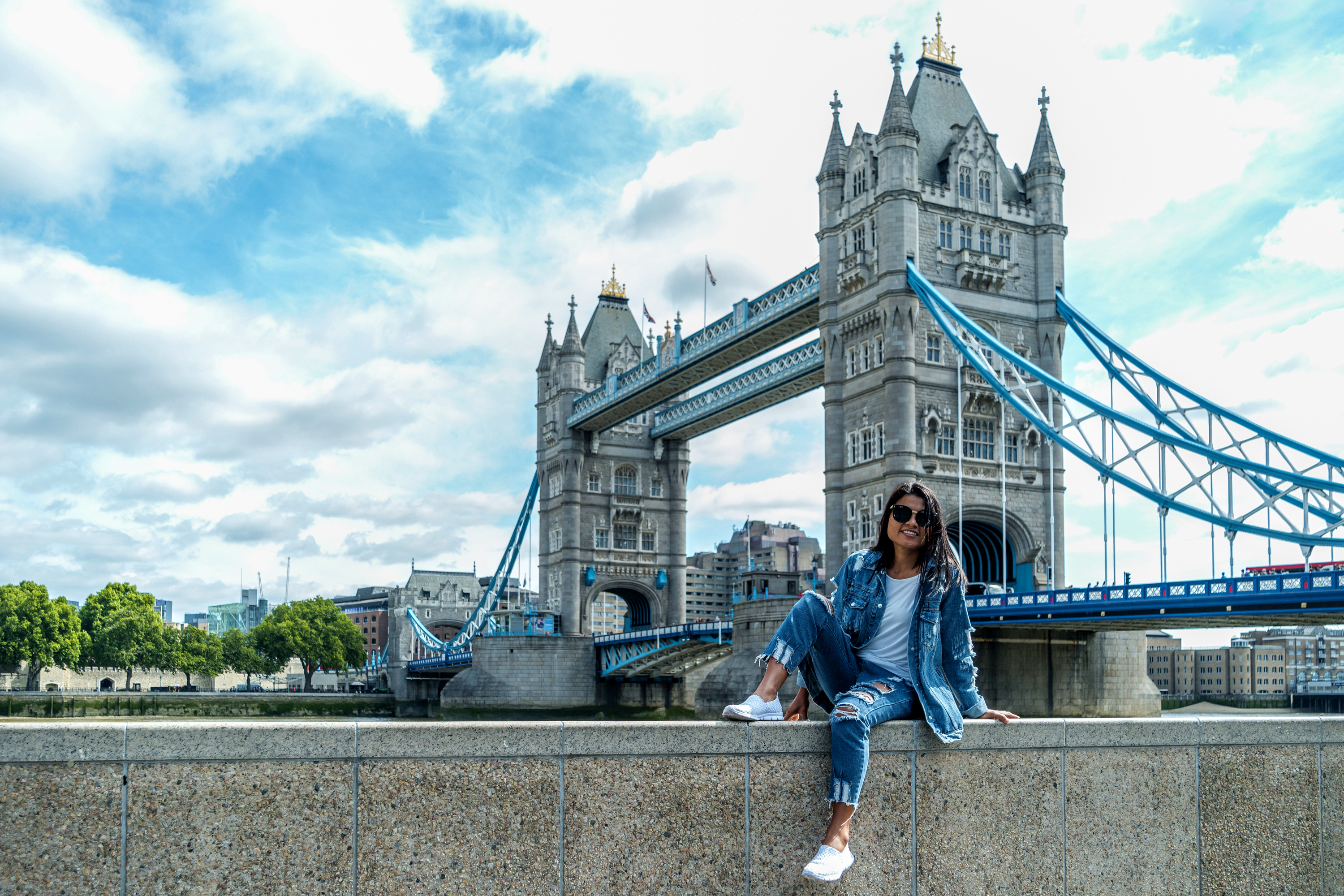
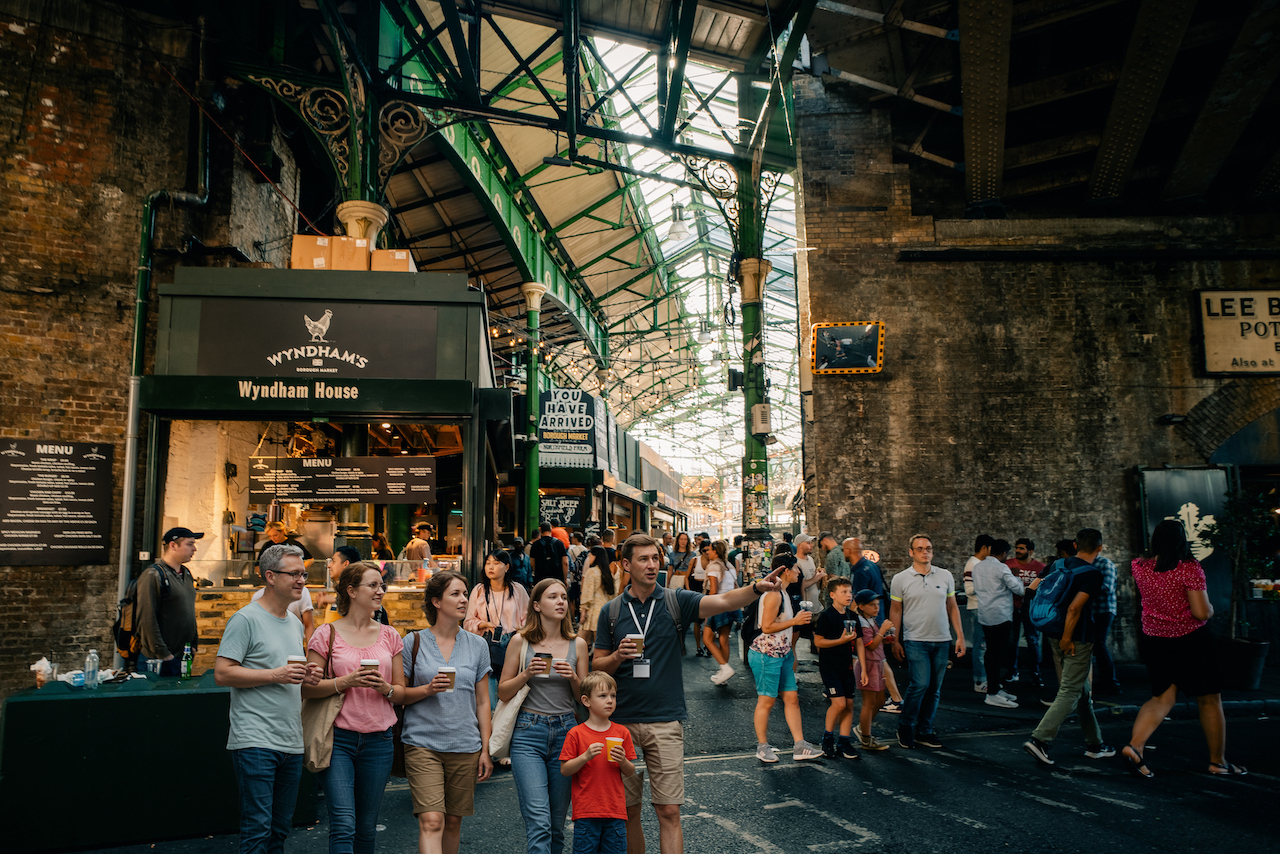
Standing on London Bridge today, visitors command one of the finest panoramas in the city. Looking east, the full dramatic silhouette of Tower Bridge frames the river, with the glass pyramid of The Shard rising behind the South Bank. To the west, the dome of St Paul's Cathedral and the clustered towers of the City of London financial district define the northern skyline. The bridge connects the historic Borough Market and Southwark Cathedral on the south bank to the City of London on the north — a walk of only 283 metres that crosses nearly two millennia of urban history. The London Bridge Experience, located in the vaults beneath the northern approach, explores the bridge's darker chapters through immersive exhibitions.
London Bridge is freely accessible at all hours and is served by London Bridge station, one of the busiest rail and Underground hubs in the capital, connecting the Jubilee and Northern lines. The bridge is busiest on weekday mornings when City workers flood across it, but early morning and dusk offer calmer conditions and the most dramatic light for photography. Borough Market, just steps from the southern end, opens Thursday through Saturday and is an ideal stop before or after crossing. Note that the bridge itself has no viewing platforms or barriers — it is simply a working city crossing, which is precisely what makes it so authentic.
Private tours with a local guide, at your own pace.
London
London
London
London
London
London
London

London

London
We use a single cookie, to remember this choice. We do not use analytics or advertising cookies. Read our cookie policy.