3 to 4 hrs
London
Highlights & Secrets of London Private Tour - Camden Town, Downtown & Markets
✓ Free cancellation Kids friendly
4.9(19 reviews)
From €267/ person
Book Now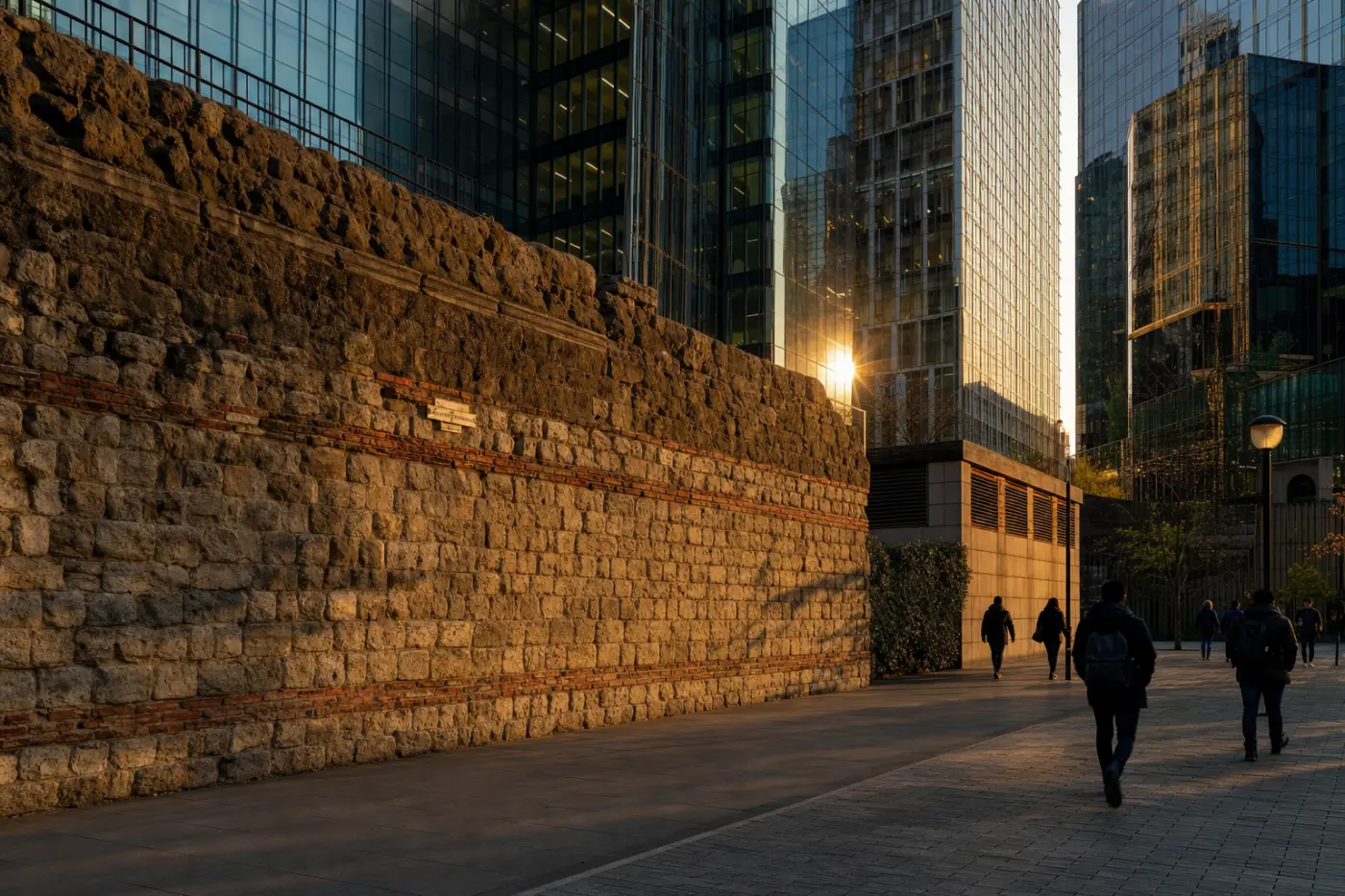
Tourist attraction
London Wall is the remnant of the defensive stone fortification built by the Romans around their settlement of Londinium, constructed in stages between approximately AD 190 and AD 225. At its height, the wall enclosed roughly 330 acres of the city, stretched nearly three miles in circumference, stood up to 6 metres tall, and was 2.4 metres thick at its base — a feat of engineering that required an estimated 1.3 million tiles and 85,000 tonnes of Kentish ragstone, shipped up the Thames from quarries near Maidstone. It incorporated the earlier riverside fort of Cripplegate, built around AD 120, and was later extended southward along the Thames waterfront, completing a full circuit of protection that defined the city's boundary for well over a thousand years.
The wall shaped London's physical and political geography long after Roman rule ended in Britain in AD 410. Medieval Londoners maintained and reinforced it, and its gates — Aldgate, Bishopsgate, Newgate, Ludgate, and others — controlled trade and taxation entering the City well into the 17th century. The Great Fire of 1666 and subsequent development erased much of the wall's above-ground course, and the Blitz of 1940–41 paradoxically revealed new sections when bomb damage cleared centuries of accumulated buildings. Today, around a third of the original circuit survives in fragments scattered across the modern City of London, with the most substantial and accessible sections managed by English Heritage.
Visitors can follow a waymarked trail connecting more than 20 surviving fragments. The most dramatic stretch stands in the underground car park at Noble Street near the Barbican, where the Roman core — recognisable by its distinctive courses of red tile bonding — is clearly visible beneath layers of medieval rebuilding. Tower Hill offers another photogenic section standing nearly 4 metres high, complete with a later medieval addition in ragstone atop the original Roman base, and a replica bronze statue of the Emperor Trajan standing sentinel beside it. Inside the Museum of London (now relocated to West Smithfield), excavated gate towers and interactive displays provide essential context for the fragments encountered on the street.
Admission to the wall's outdoor sections is free and they can be visited at any hour, making them ideal for early-morning walks before the City's financial district fills with office workers. The trail between Tower Hill Underground station and the Barbican — roughly 1.5 miles — passes all major surviving sections and takes around 90 minutes at a relaxed pace. English Heritage produces a free printed leaflet and downloadable map; the Museum of London's wall trail app provides audio commentary keyed to each fragment. Comfortable footwear is recommended, as the route traverses cobblestones, underpasses, and landscaped churchyards in equal measure.
Private tours with a local guide, at your own pace.
London
London

London
London

London

London
London

London

London
We use a single cookie, to remember this choice. We do not use analytics or advertising cookies. Read our cookie policy.