2,5 - 3 hrs
London
London Unexpected Private Tour - Markets, Street Art & Camden Town
✓ Free cancellation Kids friendly
5.0(3 reviews)
From €172/ person
Book Now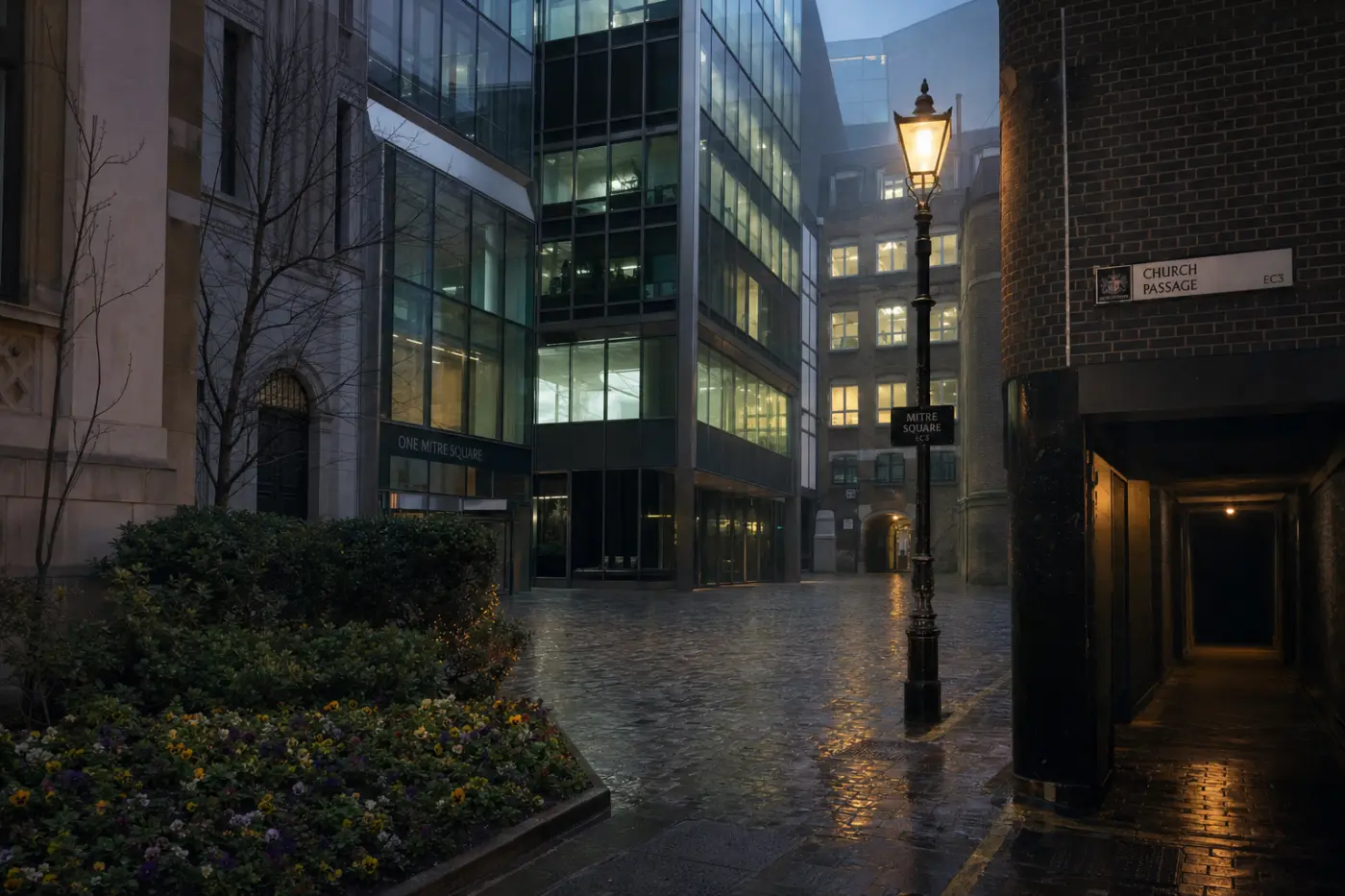
Tourist attraction
Mitre Square is a small, irregularly shaped courtyard tucked into the Aldgate ward of the City of London, accessible through three narrow entrances from Mitre Street, Church Passage, and St. James's Place. Its history stretches back to the late 11th century, when the site formed part of the cloister grounds of the Holy Trinity Priory, an Augustinian religious house established shortly after the Norman Conquest. The priory functioned as one of the most significant ecclesiastical institutions in medieval London until Henry VIII dissolved it in 1532 during his break with Rome. By the 19th century, the square had been absorbed into the dense commercial fabric of the City, surrounded by warehouses and counting houses, its ancient monastic origins buried beneath layers of urban redevelopment.
The square achieved permanent infamy on the night of 30 September 1888 — a date known in Ripper scholarship as the "double event." At approximately 1:45 a.m., City of London Police Constable Edward Watkins discovered the mutilated body of 46-year-old Catherine Eddowes in the southwest corner of the square. Eddowes had been released from Bishopsgate Police Station less than 45 minutes earlier, where she had been held for public drunkenness. The killer had operated within that narrow window, completing extensive abdominal mutilations and removing her left kidney and uterus in what surgeons estimated took between four and ten minutes. Critically, Mitre Square fell within the jurisdiction of the City of London Police — making it the only canonical Jack the Ripper murder committed outside the Metropolitan Police area — a jurisdictional split that complicated the already fractured investigation. Constable Watkins had patrolled the square just 14 minutes before his grim discovery, underscoring how the square's poor gas lighting and enclosed, secluded geometry shielded the killer from detection.
The square was transformed significantly during the 20th century. German bombing raids during World War II destroyed several of its surrounding Victorian warehouses, and postwar commercial redevelopment replaced much of the original built fabric with modern office buildings. Today the square is a quiet, paved courtyard bordered by contemporary City architecture, with the southwest corner where Eddowes was found now marked by a low flowerbed — an understated but deliberate memorial. A small green-on-white City of London heritage plaque near Church Passage acknowledges the events of 1888. The passage itself, a dark covered alleyway, survives largely intact and gives the most visceral sense of how enclosed and unlit the square would have felt on that autumn night over 135 years ago.
Mitre Square sits a five-minute walk from Aldgate and Aldgate East Underground stations and is freely accessible at all hours. It features prominently on Jack the Ripper walking tours, which have operated in the area since as early as 1982, though the square rewards independent exploration just as richly. Early morning visits, before the City's office workers arrive, capture something of the square's eerie stillness. Visitors should also note the adjacent St. Katharine Cree church on Leadenhall Street, one of the few pre-Great Fire churches to survive in the City, which provides further medieval context for a neighbourhood whose layered history extends far beyond 1888.
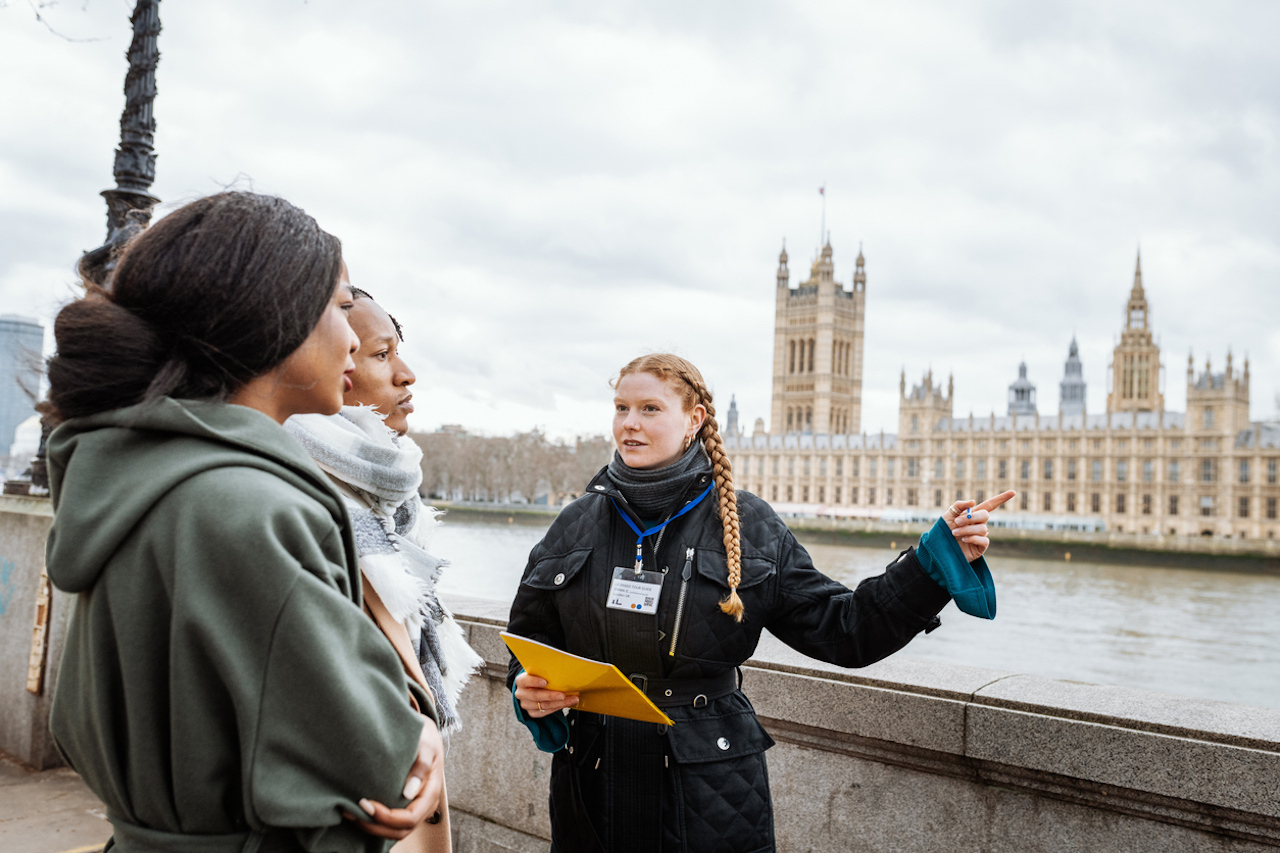
Private tours with a local guide, at your own pace.
London
London
London

London

London

London
London
London

London
We use a single cookie, to remember this choice. We do not use analytics or advertising cookies. Read our cookie policy.