2,5 - 3 hrs
London
London Unexpected Private Tour - Markets, Street Art & Camden Town
✓ Free cancellation Kids friendly
5.0(3 reviews)
From €172/ person
Book Now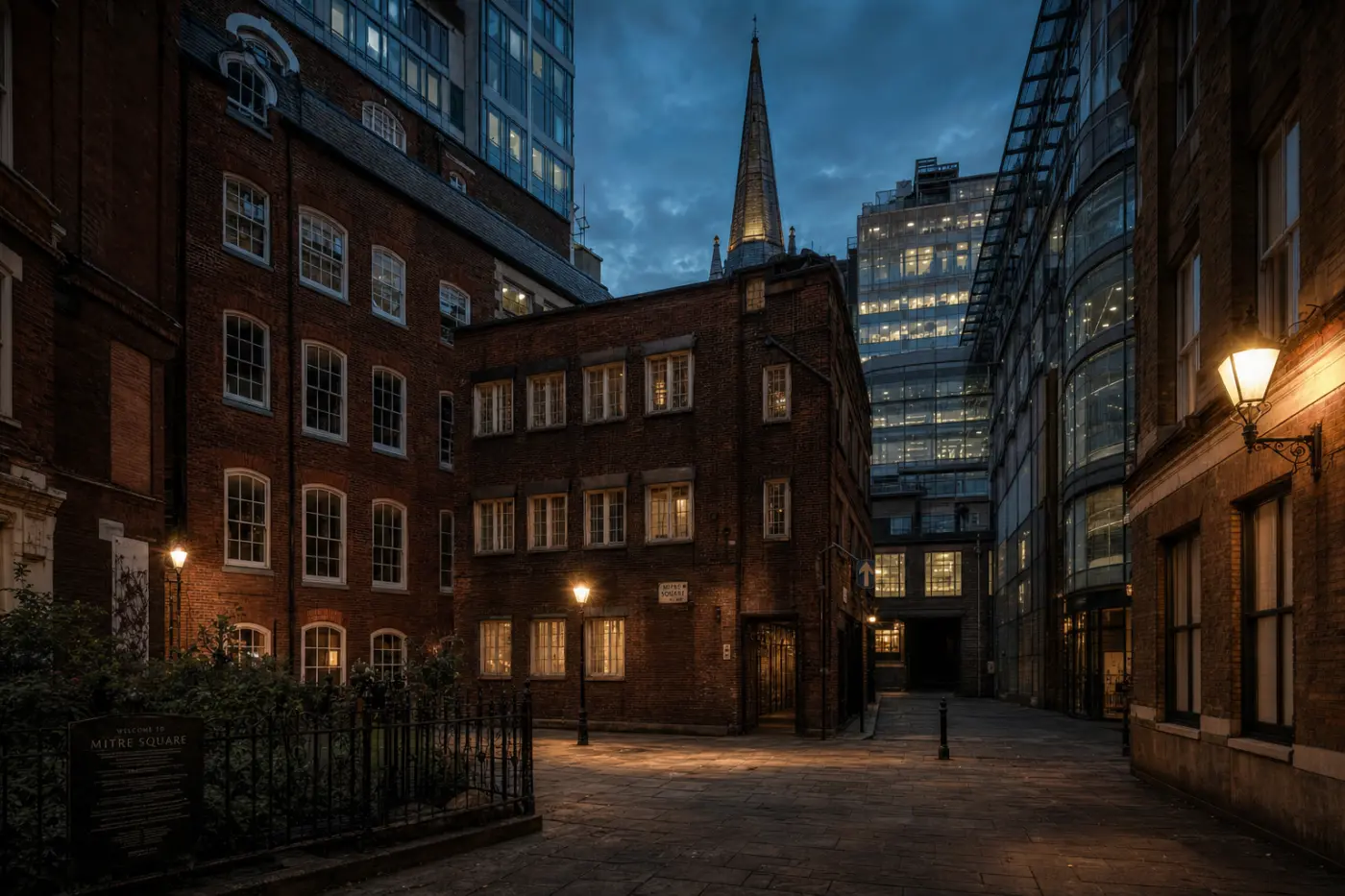
Tourist attraction
Mitre Square is a small, irregularly shaped courtyard tucked into the Aldgate ward of the City of London, accessible through three narrow entrances: Mitre Street, Church Passage, and St. James's Place. Its history stretches back to the medieval period — the square occupies part of the former cloister grounds of the Holy Trinity Priory, an Augustinian religious house founded in the late 11th century. That priory stood for over four centuries before Henry VIII dissolved it in 1532 during his broader suppression of English monasteries. The urban fabric of the square as it exists today took shape largely through 19th-century commercial development, with warehouses and counting houses gradually replacing the remnants of the priory's grounds.
The square achieved lasting historical notoriety on the night of 30 September 1888, when Police Constable Edward Watkins discovered the mutilated body of 46-year-old Catherine Eddowes in its southwest corner at approximately 1:45 a.m. Eddowes had been released from Bishopsgate Police Station less than 45 minutes earlier, having been held for public drunkenness. She became the fourth of the five canonical victims attributed to Jack the Ripper — and the only one killed within the jurisdiction of the City of London Police rather than the Metropolitan Police, a bureaucratic division that significantly complicated the joint investigation. The post-mortem, conducted by Dr. Frederick Brown, documented extensive abdominal mutilations and the removal of the left kidney and uterus, carried out with a speed that pointed to either surgical knowledge or practiced anatomical familiarity. The inquest led by Coroner Wynne Baxter highlighted the square's poor gas lighting and deep seclusion as conditions that allowed the attack to occur within a patrol gap of no more than 15 minutes.
The square was substantially altered over the following century. Bomb damage during the Second World War destroyed several of the Victorian warehouse buildings that had flanked it, and postwar commercial redevelopment replaced them with mid-century office blocks. By the early 21st century, further redevelopment brought modern glass and steel structures to the surrounding streets, embedding this Victorian crime scene within London's contemporary financial district. A small paved garden now occupies the southwest corner — the precise spot where Eddowes was found — marked by a plaque that acknowledges the site's dark history without sensationalising it.
Visitors to Mitre Square today find a genuinely atmospheric location, particularly in the early morning or evening when the square empties of office workers. The three passageway entrances give the space a compressed, enclosed quality that makes the documented events feel strikingly plausible. The square sits within easy walking distance of Aldgate East and Aldgate Underground stations and forms a key stop on the many Jack the Ripper walking tours that have operated in the East End since 1982. Beyond the Ripper connection, the square rewards those interested in the City of London's layered history — from Augustinian monks to Victorian commerce to Blitz-era destruction, all compressed into a few hundred square metres of worn stone.
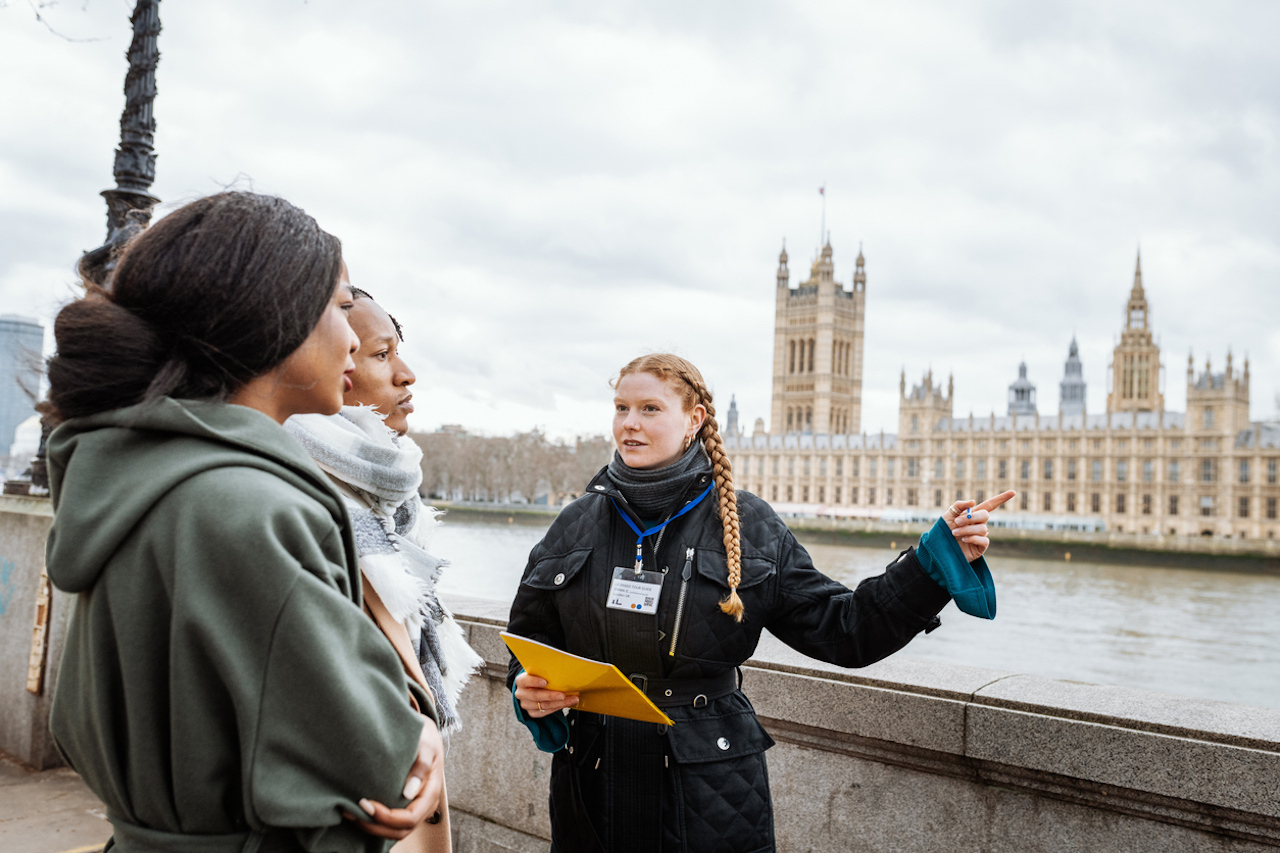
Private tours with a local guide, at your own pace.
London
London
London

London

London

London
London
London

London
We use a single cookie, to remember this choice. We do not use analytics or advertising cookies. Read our cookie policy.