2,5 - 3 hrs
London
London Unexpected Private Tour - Markets, Street Art & Camden Town
✓ Free cancellation Kids friendly
5.0(3 reviews)
From €172/ person
Book Now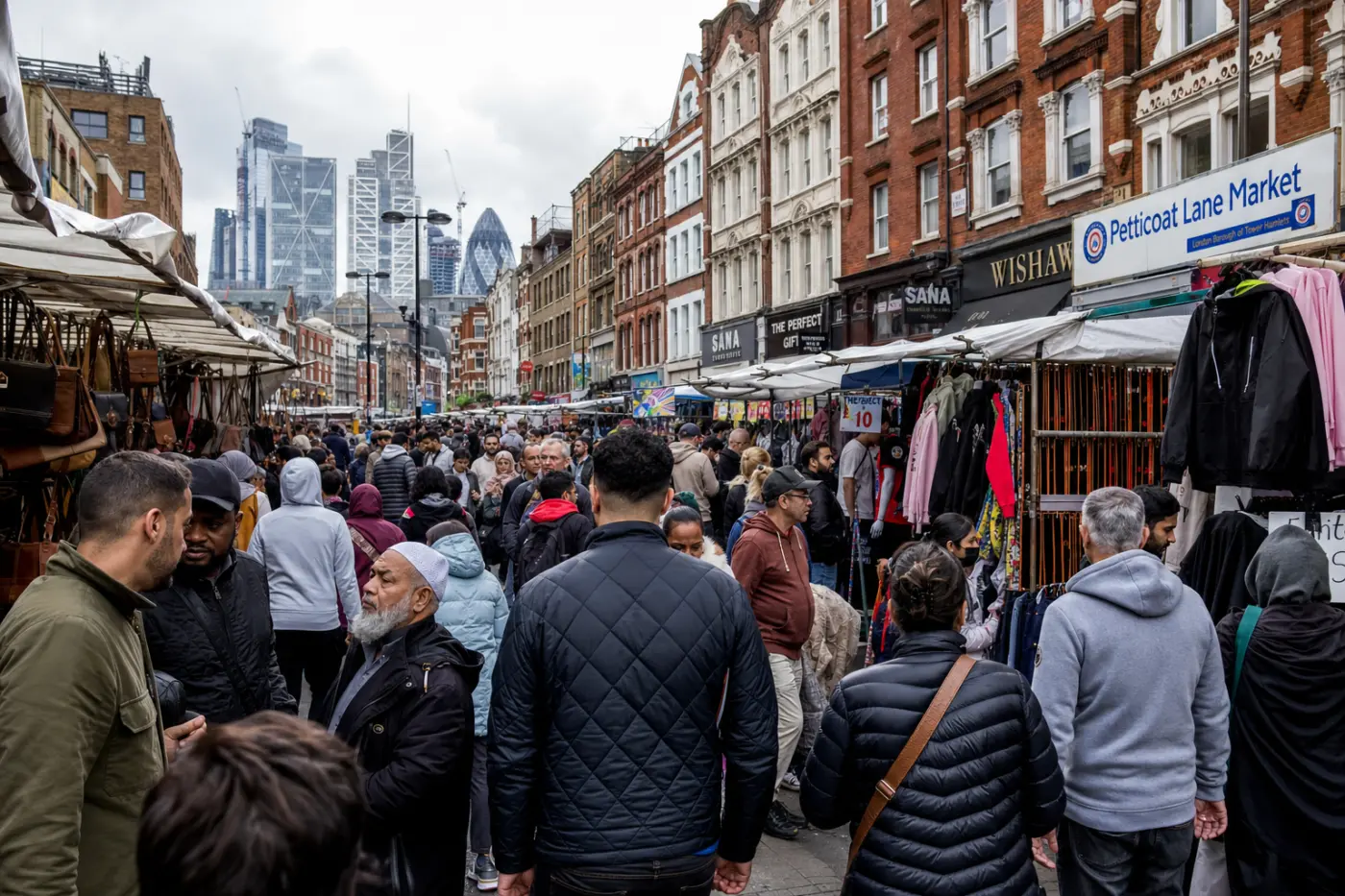
Tourist attraction
Petticoat Lane Market occupies Middlesex Street and the surrounding network of lanes on the border of the City of London and the East End, and it ranks among the oldest continuously operating street markets in Britain. Trading on this site dates to at least the early 17th century, when the lane was literally named for the secondhand petticoats and clothing sold by Huguenot refugees who had fled religious persecution in France after the revocation of the Edict of Nantes in 1598. The street's official name was changed to the more respectable "Middlesex Street" in 1830 — Victorian authorities considered "Petticoat Lane" too vulgar for a city directory — yet the original name stubbornly persisted in everyday use and remains the market's identity to this day.
The market's character was profoundly shaped by successive waves of immigration. From the late 17th century, Ashkenazi Jewish immigrants from Eastern Europe settled densely in Spitalfields and Whitechapel, and by the 19th century Jewish traders dominated Petticoat Lane entirely, specialising in leather goods, textiles, and tailoring. This heritage made the market legally unique: the original Sunday trading laws that applied across London were waived here specifically to accommodate Jewish vendors who observed the Sabbath on Saturday and needed Sunday as their primary trading day. That Sunday market tradition continued uninterrupted for centuries and remains the market's busiest session. Through the 20th century, Bangladeshi and South Asian communities added their own commercial and culinary layers to the area, transforming the surrounding streets into one of London's most culturally dense neighbourhoods.
Visitors today encounter roughly 1,000 stalls spread across Middlesex Street, Wentworth Street, Goulston Street, and several connecting alleys. The range of goods is deliberately eclectic: leather jackets and belts, mobile phone accessories, cheap fashion, tools, street food, and costume jewellery sit side by side with the occasional genuine bargain in vintage clothing. The atmosphere on a Sunday morning — the peak time to visit, from around 9am — is loud, theatrical, and unapologetically commercial. Traders call out to passers-by in a tradition of market patter that has changed little in substance since the Victorian era, when Charles Dickens himself observed and wrote about the market's colourful hawkers.
The market operates Sundays from approximately 9am to 2pm, with a smaller version on Wentworth Street running Monday to Friday. It is best reached via Liverpool Street or Aldgate East Underground stations, both a five-minute walk away. Arrive early on Sundays for the fullest spread of stalls and the most energetic atmosphere; by early afternoon many traders begin to pack down. The surrounding streets — including Brick Lane to the north and the streets of Spitalfields — make Petticoat Lane a natural starting point for a broader exploration of East London's layered immigrant history.
Private tours with a local guide, at your own pace.
London

London
London

London

London
London
London
London

London
We use a single cookie, to remember this choice. We do not use analytics or advertising cookies. Read our cookie policy.