4 hrs
Rome
Rome: Private Food & Aperitivo Tour with Vatican Views
✓ Free cancellation Kids friendly
5.0(18 reviews)
From €288/ person
Book Now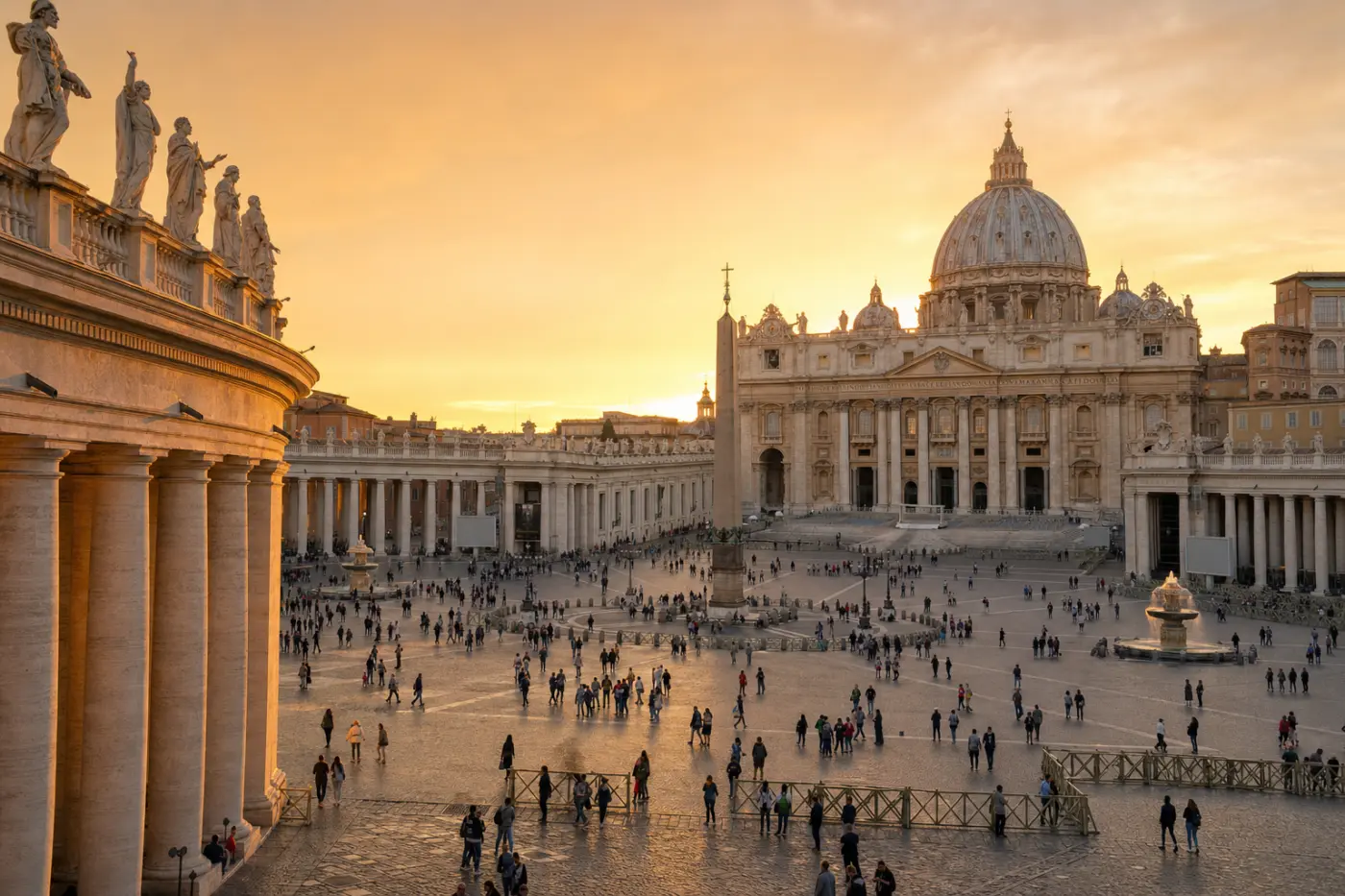
Tourist attraction
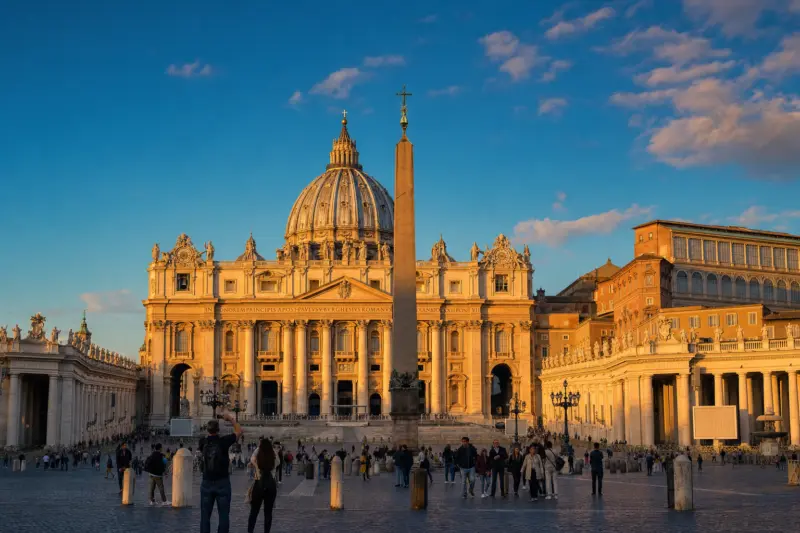
Piazza San Pietro is the grand ceremonial forecourt of St. Peter's Basilica in Vatican City, and one of the most architecturally ambitious public spaces ever conceived. Designed by Gian Lorenzo Bernini and built between 1656 and 1667 under the patronage of Pope Alexander VII, the elliptical piazza measures approximately 240 metres across at its widest point and is encircled by a colonnade of 284 Doric columns and 88 pilasters arranged in four rows — a feat of Baroque urban planning that Bernini himself described as the "motherly arms of the Church" reaching out to embrace the faithful. Atop the colonnade stand 140 travertine statues of saints, each roughly 3.3 metres tall, designed by Bernini's workshop. At the centre of the oval stands an Egyptian obelisk, originally quarried in Heliopolis and erected in Rome by Emperor Caligula around 37 AD; it was moved to its current position in 1586 by architect Domenico Fontana under Pope Sixtus V — a feat requiring 900 workers, 140 horses, and 44 winches.
The piazza's history is inseparable from that of the Catholic Church. The site sits above the ancient Circus of Nero, where, according to tradition, St. Peter was martyred around 64–68 AD. Constantine the Great built the first basilica over his presumed tomb in 326 AD. The current St. Peter's Basilica, whose façade closes the piazza to the west, was rebuilt from 1506 onwards, with Michelangelo designing the iconic dome — completed posthumously in 1590 — that dominates the entire skyline. The piazza itself was the final grand gesture of this centuries-long building campaign. Two symmetrical fountains flank the obelisk: the one on the right was designed by Carlo Maderno in 1614, the left by Bernini in 1675. A pair of white marble discs set into the paving marks the two foci of the ellipse; standing on either disc, the four rows of columns appear to collapse into a single row — a hidden optical illusion Bernini built into the geometry.
Today the piazza functions as the principal gathering space for papal audiences and major Catholic liturgies. On Sundays and major feast days, the Pope appears at a window of the Apostolic Palace on the north side of the square to deliver the Angelus prayer and blessing to crowds that frequently exceed 100,000 people. The square is also the starting point for visiting the Basilica, the Vatican Museums, and the Vatican Necropolis, where excavations begun in 1940 uncovered what the Vatican identifies as St. Peter's tomb beneath the high altar. Entry to the piazza itself is free and open daily, though security checks are in place at the colonnade entrances.
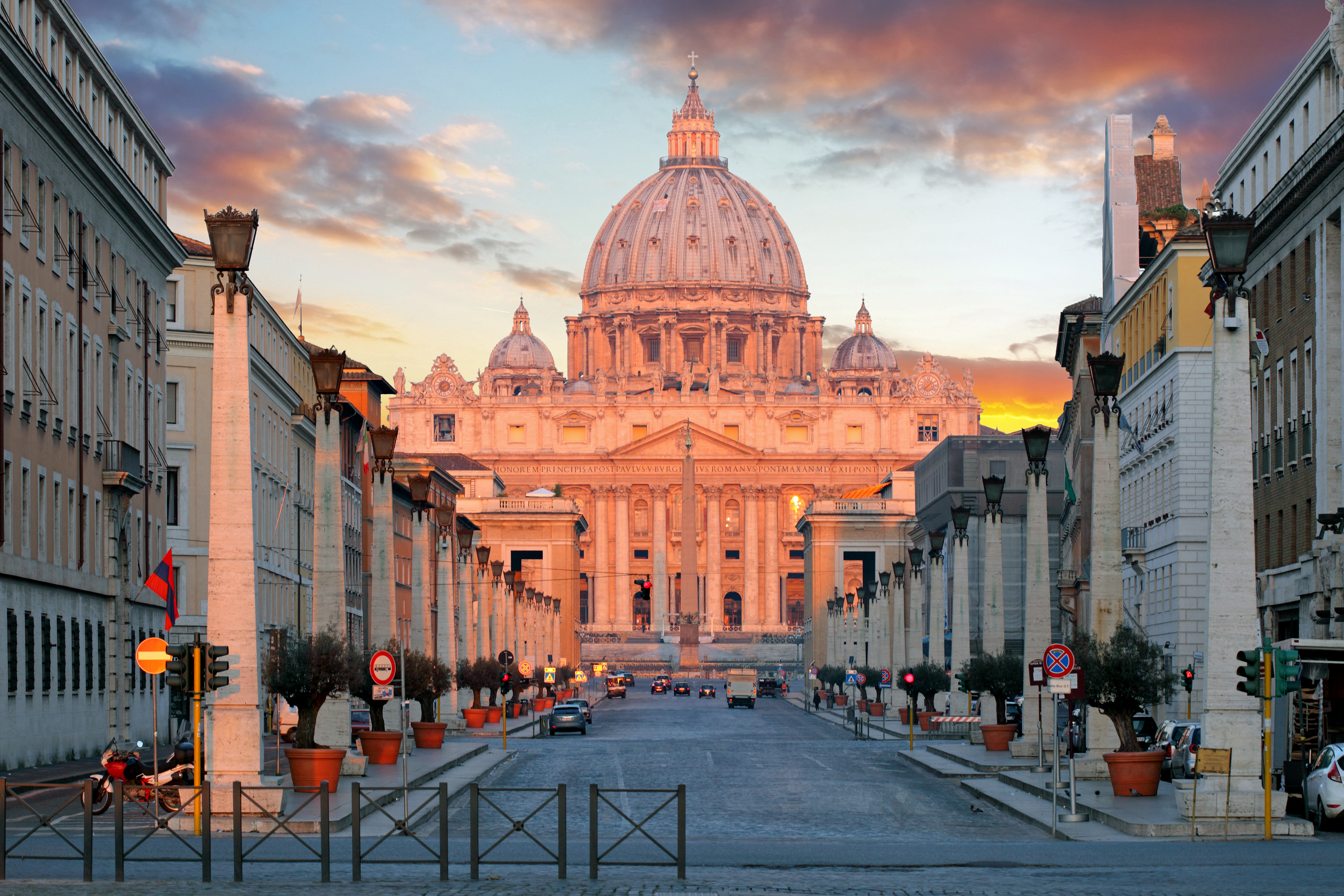
Visitors should arrive early in the morning to experience the square without the dense midday crowds and to catch the low light illuminating Bernini's columns in warm gold tones. Wednesday mornings are reserved for the General Papal Audience, which requires a free ticket obtained in advance through the Prefecture of the Papal Household. The square lies just across the Tiber from the Castel Sant'Angelo, making a combined visit along the Via della Conciliazione — the broad avenue opened in 1936 — straightforward on foot. Comfortable shoes and modest dress (covered shoulders and knees) are required to enter the Basilica, and large bags are subject to security screening.
Private tours with a local guide, at your own pace.
Rome

Rome
Rome
Rome

Rome

Rome
Rome
Rome
Rome
Rome
We use a single cookie, to remember this choice. We do not use analytics or advertising cookies. Read our cookie policy.