3 hrs
Rome
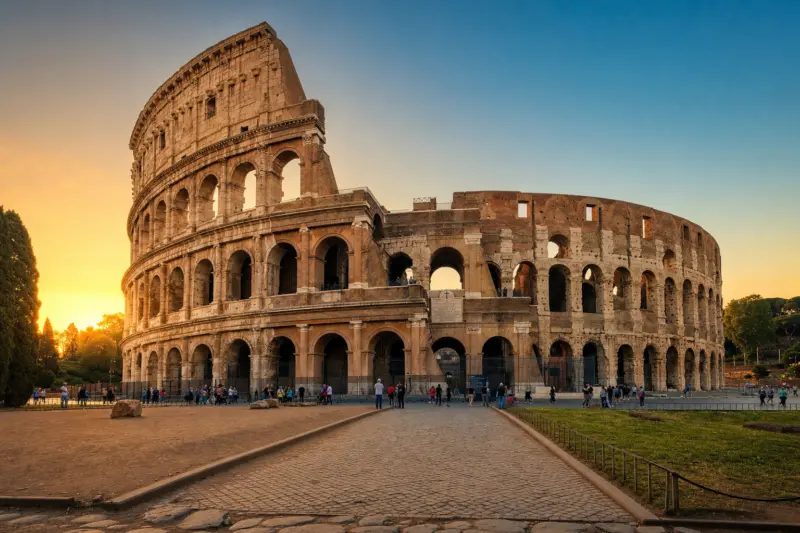
Private Cooking Class with Colosseum Views and Local Chef
✓ Free cancellation Kids friendly
4.7(19 reviews)
From €223/ person
Book Now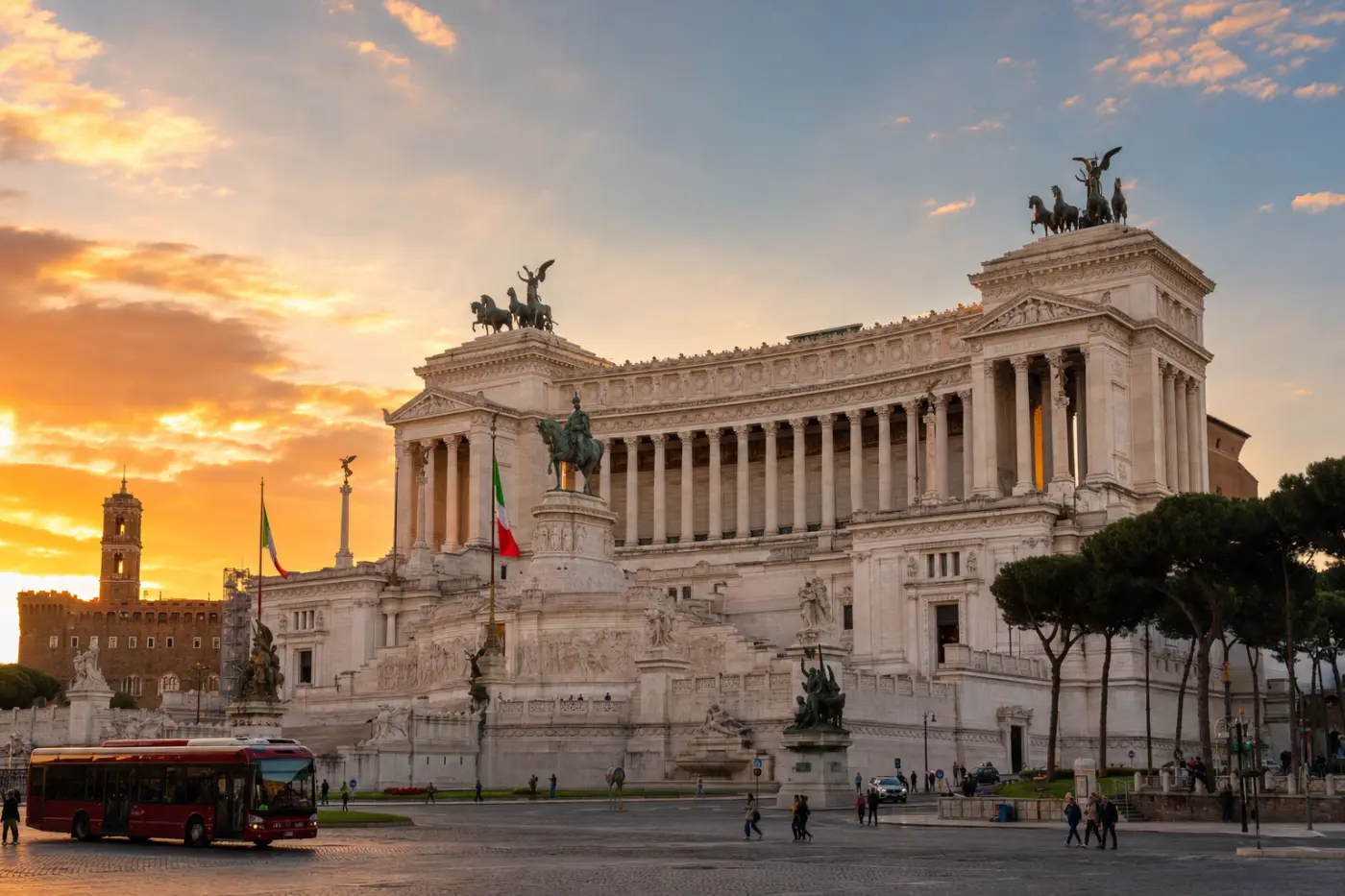
Tourist attraction
Piazza Venezia is the geographic and symbolic heart of Rome, positioned at the foot of the Capitoline Hill — the city's oldest continuously inhabited hill — where the Via del Corso, Via dei Fori Imperiali, and Via del Teatro di Marcello all converge. Its most commanding presence is the Vittoriano, also called the Altare della Patria (Altar of the Fatherland), an enormous white Brescian marble monument built between 1885 and 1935 to honor Victor Emmanuel II, the first king of unified Italy. The structure's neoclassical colonnade, equestrian statue, and Tomb of the Unknown Soldier — guarded around the clock since 1921 — make it one of the most symbolically loaded public spaces in the country. Romans have long nicknamed it the "wedding cake" or "typewriter" for its tiered, gleaming white silhouette, which stands in deliberately stark contrast to the ochre and terracotta tones of the surrounding city.
On the square's western flank stands the Palazzo Venezia, constructed between 1455 and 1471 under Cardinal Pietro Barbo, who later became Pope Paul II. It is considered one of the earliest full Renaissance palaces in Rome, built with travertine blocks famously quarried from the Colosseum. The palace served as the Venetian Embassy to the Holy See — hence the square's name — and later became the residence of Austro-Hungarian ambassadors. Its most notorious chapter came during the Fascist era, when Benito Mussolini used it as his headquarters from 1929 to 1943, delivering speeches from its central balcony to enormous crowds gathered below. The balcony and the palace's Map Room, where Mussolini reportedly kept a light burning all night to project an image of ceaseless work, are still visible today. The palace now houses the Museo Nazionale del Palazzo Venezia, with collections of medieval and Renaissance decorative arts, arms, and tapestries.
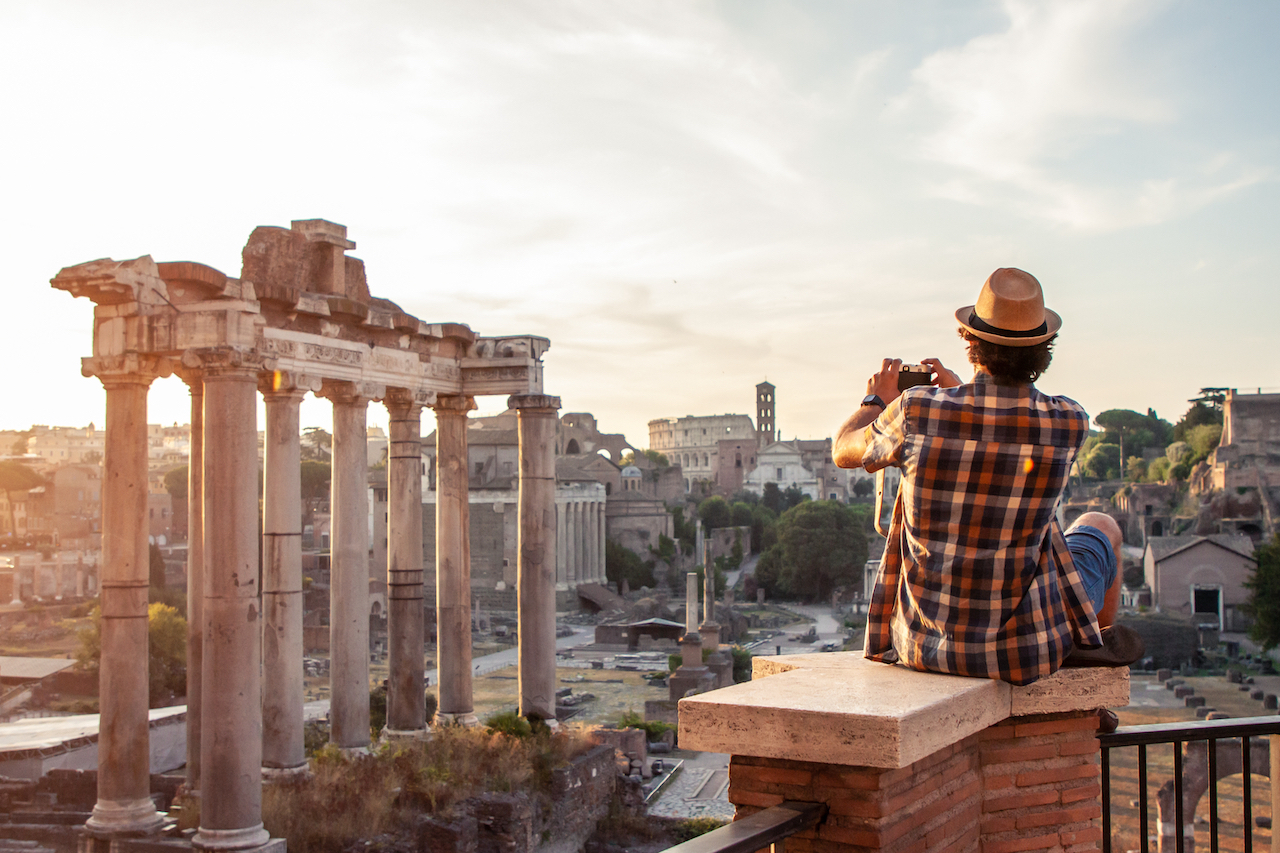
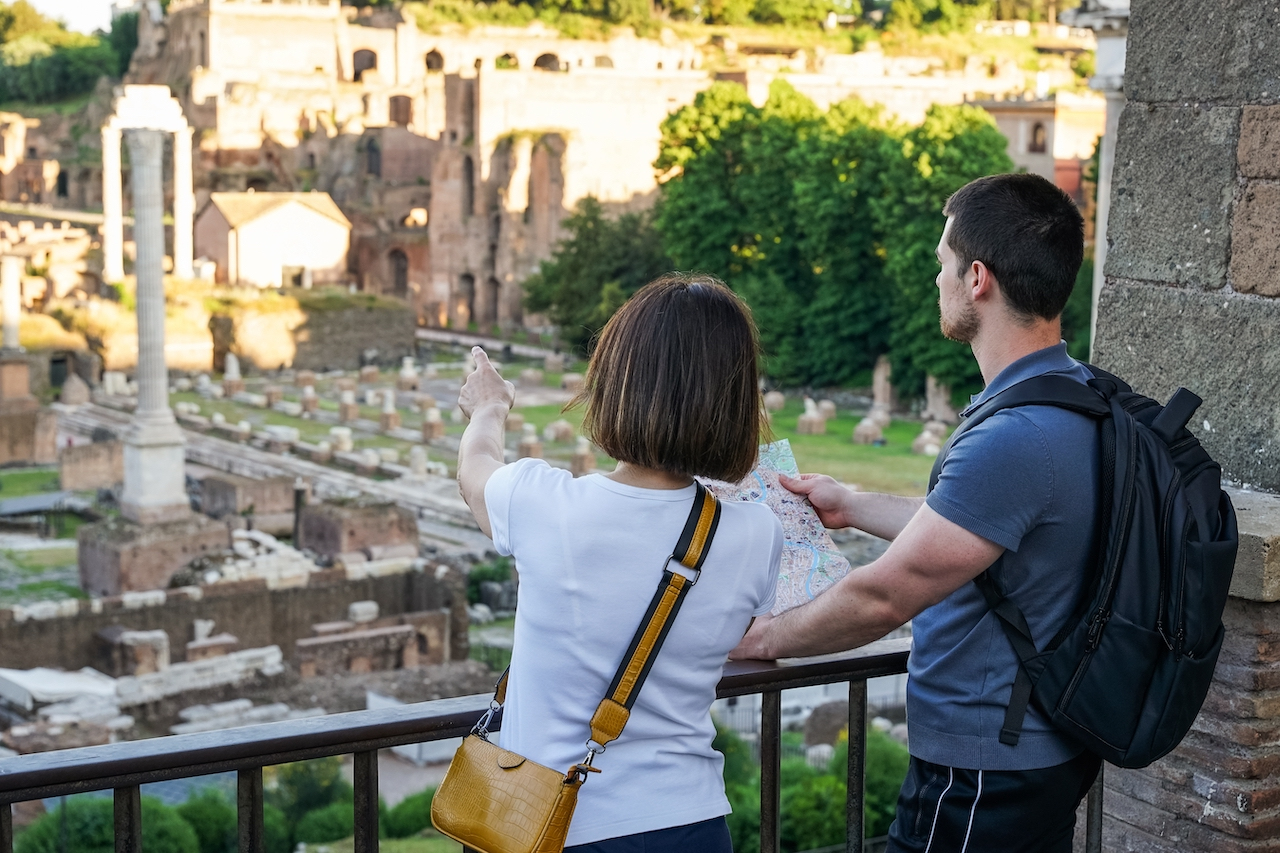
Visitors arriving at Piazza Venezia are immediately struck by the sheer scale of the space and its relentless traffic — it is one of the busiest roundabouts in Europe, a perpetual choreography of buses, scooters, and pedestrians managed by a single traffic officer on a raised podium. From the square, the Via Sacra leads directly toward the Roman Forum and the Colosseum, making it the natural starting point for any tour of ancient Rome. The Vittoriano itself offers free entry to its lower levels, while a paid elevator (the Roma dal Cielo service) ascends to the very top of the monument, delivering a 360-degree panorama that stretches from the Pantheon to St. Peter's Basilica and the Alban Hills beyond.
The square is fully open and free to explore at all hours. The best time to photograph it is in the early morning before traffic builds, when the Vittoriano's white marble catches the first eastern light. The nearest bus stops serve numerous lines connecting the square to Trastevere, the Vatican, and Termini station. There is no dedicated metro station, but it is an easy walk from the Colosseo stop on Line B. Dress modestly if you plan to enter any of the adjacent churches or museums, and be alert to pickpockets in the crowded pedestrian zones around the monument's base.
Private tours with a local guide, at your own pace.
Rome
Rome
Rome
Rome

Rome
Rome
Rome
Rome