3 hrs
London
London: Private Family Tour, Natural History Museum & Games
✓ Free cancellation Kids friendly
4.5(0 reviews)
From €208/ person
Book NowTourist attraction
The London Eye is a cantilevered observation wheel standing 135 metres (443 feet) tall on the South Bank of the River Thames in Lambeth. Architects David Marks and Julia Barfield first submitted the design in 1993 as an entry for a competition to create a landmark that would mark the turn of the millennium in London. Their proposal was initially rejected, yet the pair continued to develop it independently, eventually securing private backing and a site beside Westminster Bridge. Construction began in 1998, and on 31 December 1999, Prime Minister Tony Blair ceremonially opened the structure — then the tallest Ferris wheel on Earth, a title it held until 2006. The wheel opened to the paying public on 9 March 2000 and quickly became one of the most visited paid attractions in the United Kingdom, drawing over 3.5 million visitors each year.
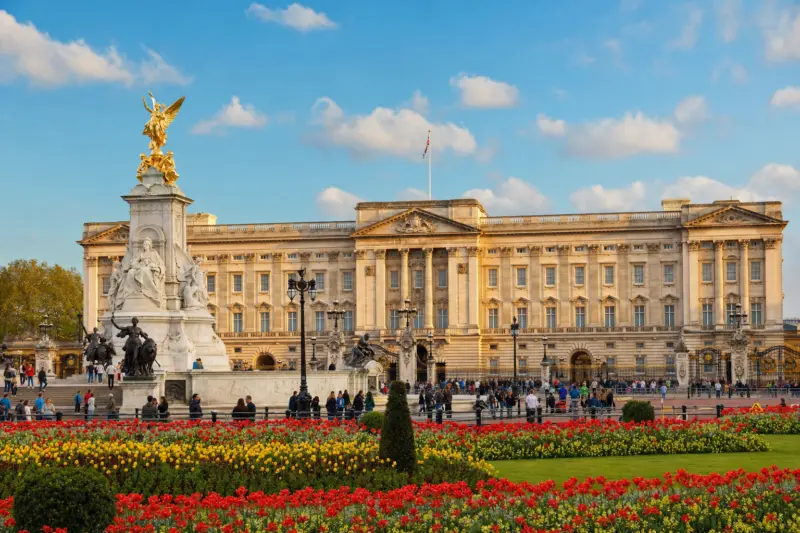
Unlike a conventional Ferris wheel, the London Eye is a cantilevered design: its entire load is supported on one side by an A-frame, allowing an unobstructed circular rim. The wheel carries 32 sealed, air-conditioned capsules — numbered 1 to 33 (skipping 13) — each weighing 10 tonnes and holding up to 25 passengers. The capsules rotate on the outer rim on motorised bogies, keeping them level throughout the wheel's slow, continuous revolution. A single rotation takes approximately 30 minutes, travelling at a leisurely 0.9 kilometres per hour — slow enough that most passengers board and disembark without the wheel stopping. On a clear day, the panoramic views extend up to 40 kilometres, encompassing Buckingham Palace, St Paul's Cathedral, the Houses of Parliament directly across the river, and on exceptional days, Windsor Castle to the west.
The location itself adds historical depth to the visit. The South Bank foreshore on which the Eye stands has been a centre of public entertainment since the medieval period, when Southwark hosted bear-baiting arenas and the original Globe Theatre. The wheel's immediate neighbour, County Hall — the grand Edwardian building completed in 1922 — served as the headquarters of the Greater London Council until its abolition in 1986, giving the riverside site a charged political history entirely at odds with its current festive atmosphere. The Eye was originally granted planning permission as a temporary structure for five years, yet it proved so popular and so economically significant that it received permanent status and was acquired by Merlin Entertainments in 2006.
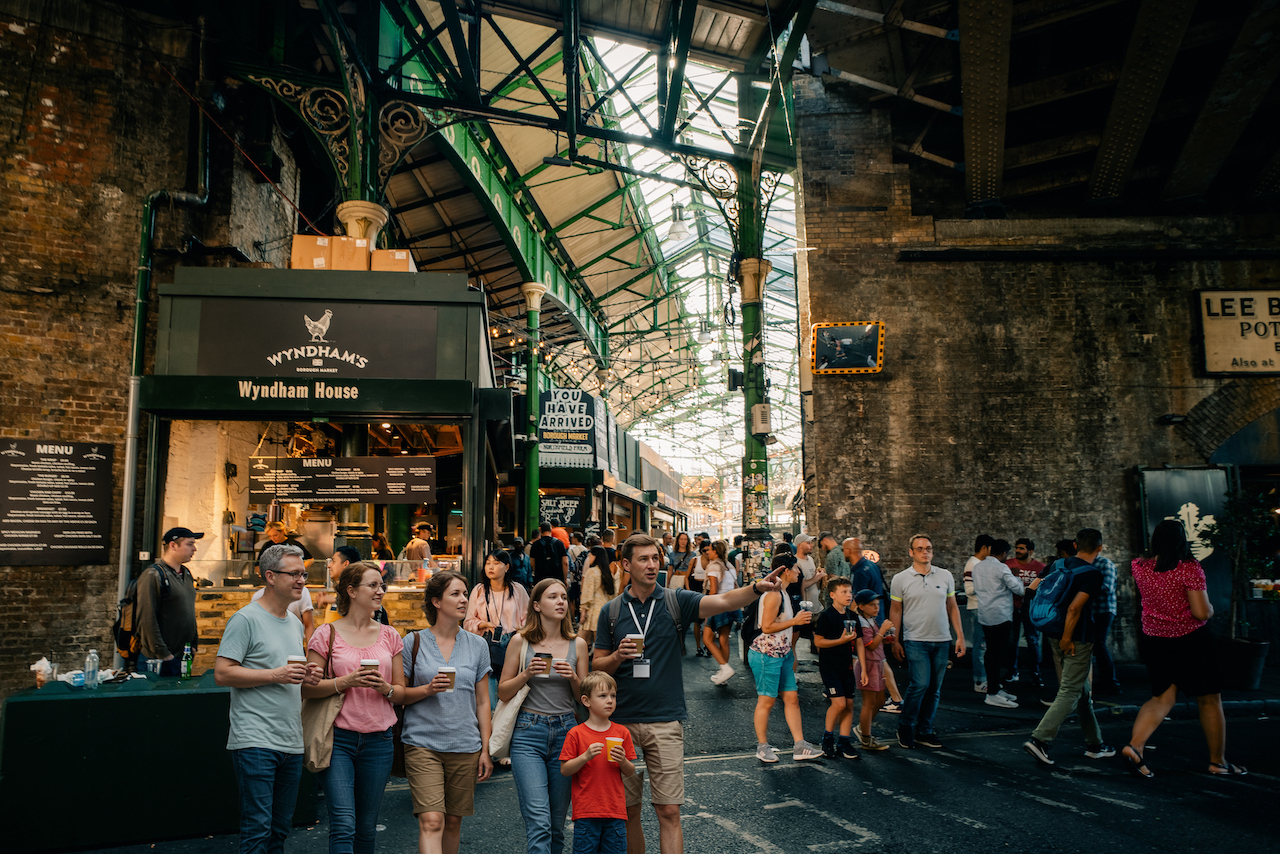
Visitors should book tickets online in advance to secure a specific time slot and avoid queues that regularly exceed an hour during peak summer months and school holidays. Standard capsule tickets are available alongside premium options including private capsule hire, champagne experiences, and a fast-track boarding pass. The Eye operates year-round and is particularly dramatic at dusk, when the setting sun illuminates the Palace of Westminster in warm amber light and the capsule interior dims enough to reveal the city's emerging streetscape. The nearest underground station is Waterloo (Jubilee, Northern, and Bakerloo lines), and the Southbank riverside walk connecting the Eye to Tate Modern, the Globe Theatre, and Borough Market is one of London's finest pedestrian routes.
Private tours with a local guide, at your own pace.
London
London
London
London
London
London
London
London