3 hrs
London
London: Private Family Tour, Natural History Museum & Games
✓ Free cancellation Kids friendly
4.5(0 reviews)
From €208/ person
Book Now
Check out other tourist attractions in the same city
London
London
London
London
London
London
London
London
London
London
London
London
The most persistent myth about London with kids is that it will drain your wallet before lunch. The reality is almost the opposite — if you plan around the city's extraordinary free infrastructure. Children under 11 travel free on all Transport for London services, including the Tube, buses, and the Overground. The Natural History Museum, Science Museum, British Museum, and Young V&A charge no admission. A family of four can spend a genuinely world-class day in London without spending a penny on entry or transport — the trap is not the attractions, it is the lunch spots clustered around the South Kensington museum strip, where a sandwich and a juice can cost as much as a zone 1–2 day Travelcard.
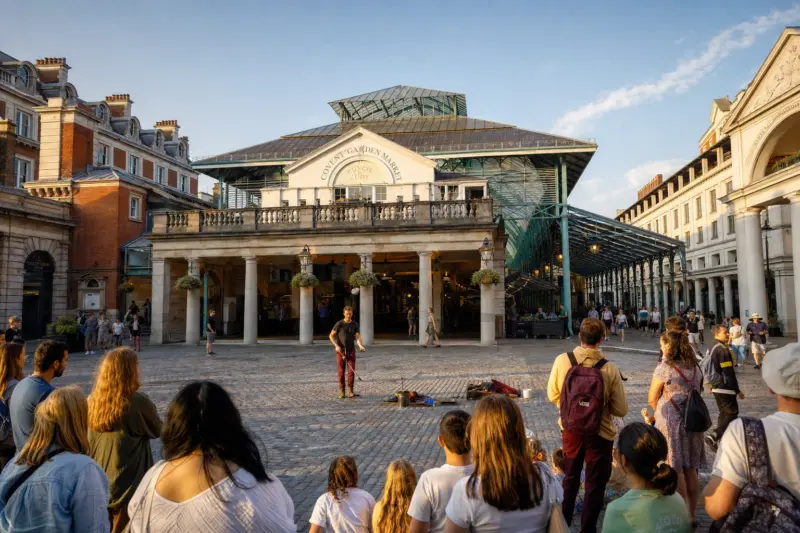
The itinerary logic here is simple: anchor the morning at Covent Garden — free street performance, historic architecture, and a free museum inside the piazza — then take the Piccadilly Line three stops to South Kensington and spend the afternoon at the Natural History Museum. Both anchors are within a child's walking tolerance of their respective Tube stations. Neither requires pre-booking. Neither charges entry.
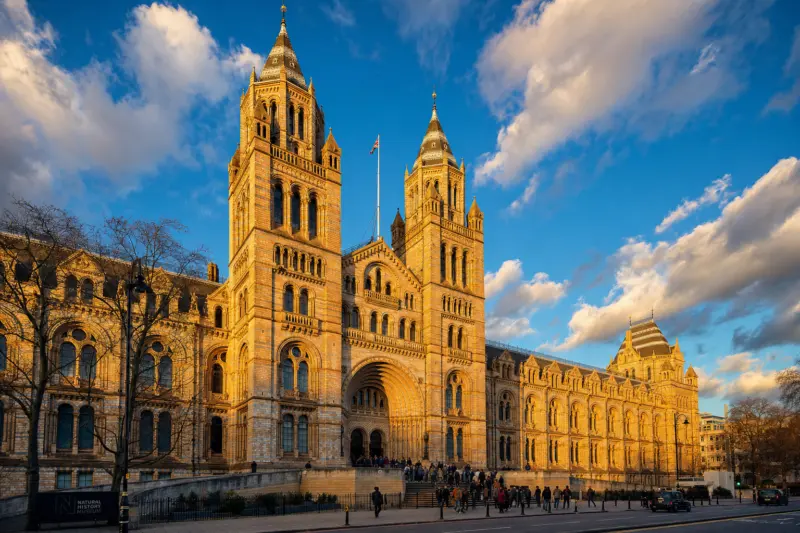
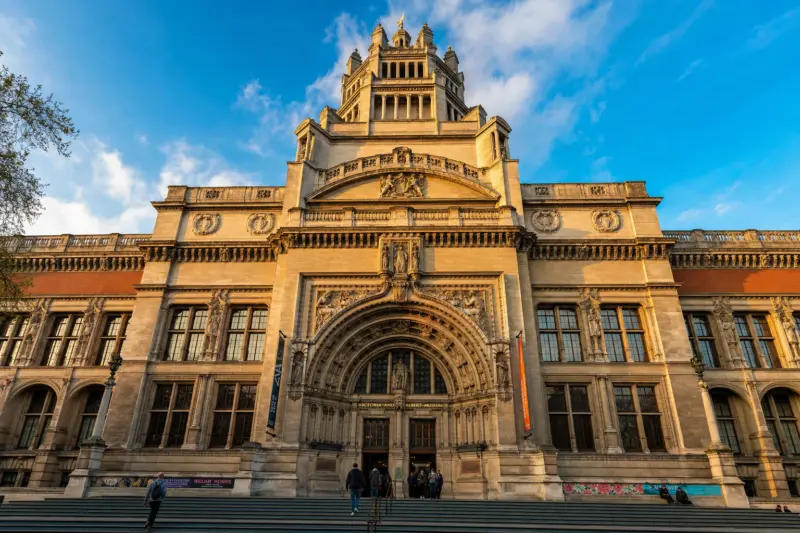
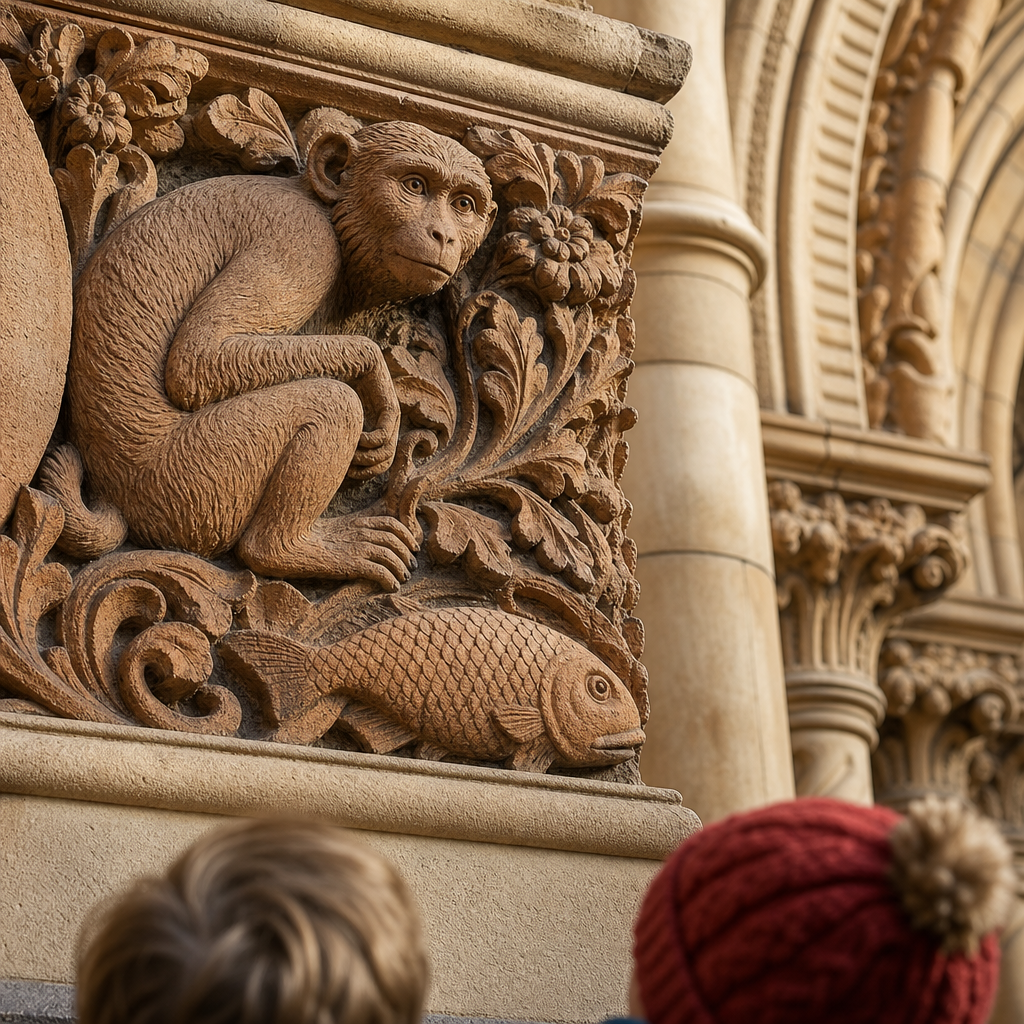
Before you even push through the NHM's doors, the building itself rewards curiosity. Alfred Waterhouse's 1881 Romanesque-Gothic terracotta façade is covered in carved animals and plants — a deliberate encyclopaedia in stone that Waterhouse designed to reflect the museum's collections. Ask your children to spot a monkey, a fish, and a fern before you go inside. It reframes the arrival as discovery rather than a queue.
One more conversation starter: in 2017, the NHM replaced the beloved Diplodocus cast 'Dippy' — which had stood in Hintze Hall since 1979 — with 'Hope', a real blue whale skeleton suspended from the ceiling. Why did a museum swap a dinosaur for a whale? That question alone will carry you through the entrance hall. For a guided version of this full day, the Family Tour London covers the itinerary with a local expert who pitches every story to your children's ages.
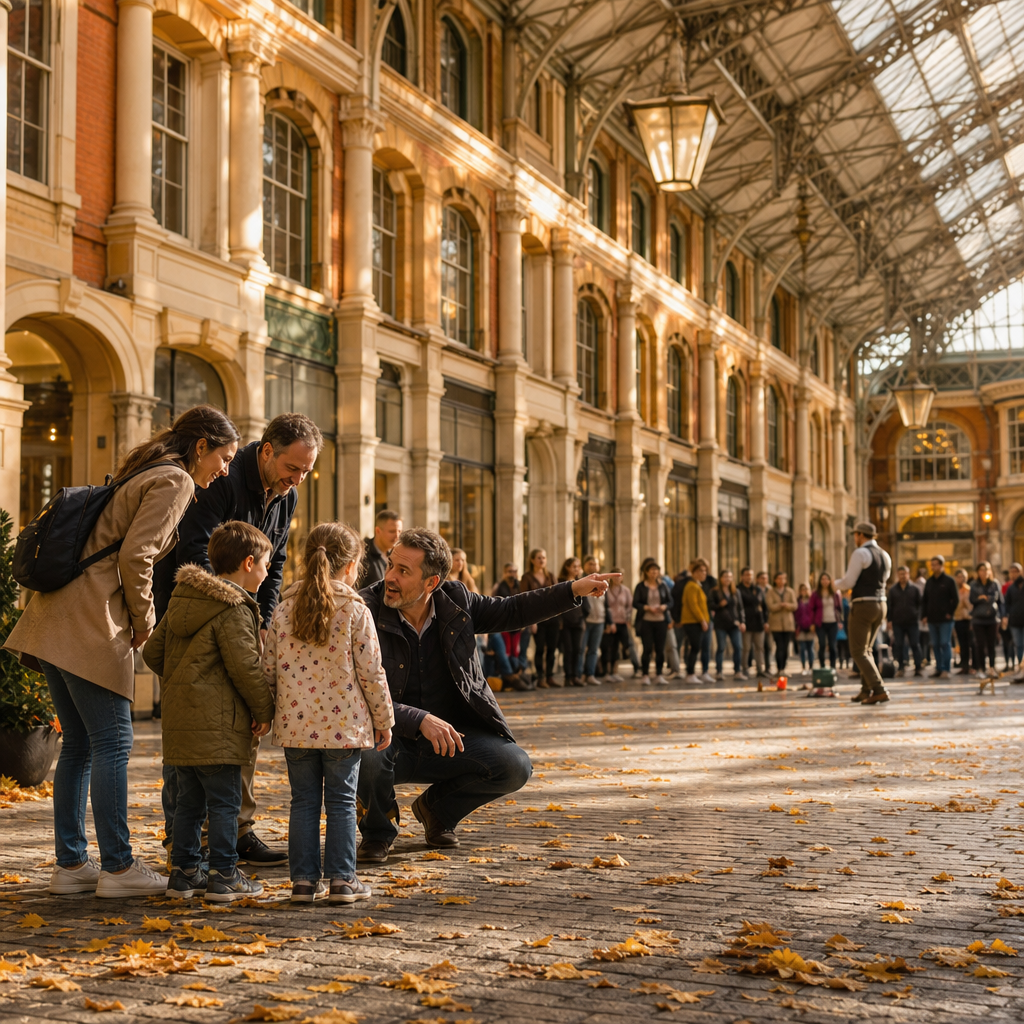
Covent Garden has been London's premier entertainment piazza since 1662, when Samuel Pepys recorded in his diary watching a Punch and Judy show here — making it the earliest known written account of the performance tradition in England. The current market building dates to 1830, designed by Charles Fowler; it served as London's principal fruit-and-vegetable wholesale market until the entire operation relocated to Nine Elms in 1974. The original cast-iron roof structure is still overhead, and worth pointing out to older children as a piece of working Victorian engineering that outlasted its original purpose by half a century.
Timing is everything. Covent Garden's street performers hold licensed 'pitches' that are auditioned by the Covent Garden Estate — this is not busking in the informal sense, but a competitive professional circuit. The best performers typically begin at 10:30am on the lower piazza. Arriving by 10:00am lets you claim a front-row pavement position before the crowd builds. The show format builds to a finale that requires audience participation — children at the front get chosen. That detail alone makes the early start worth it.
Inside the piazza, the London Transport Museum is free for all under-18s. Its collection includes a working steam locomotive cab children can climb into, decommissioned Tube carriages from the 1890s, and the original Johnston typeface that still appears on every London Underground sign today. Allow 45–60 minutes if your children engage with it — it runs deeper than it looks from the entrance.
If you are walking south toward the Embankment afterward, the 12-minute route along the Strand passes the Savoy Hotel, which opened in 1889 as the first hotel in Britain fitted with electric lights and passenger lifts — a useful anecdote for older children curious about the Victorian obsession with novelty technology. The Family Tour London and the London Kickstart Tour both work well for families who want this neighbourhood context without navigating it alone.
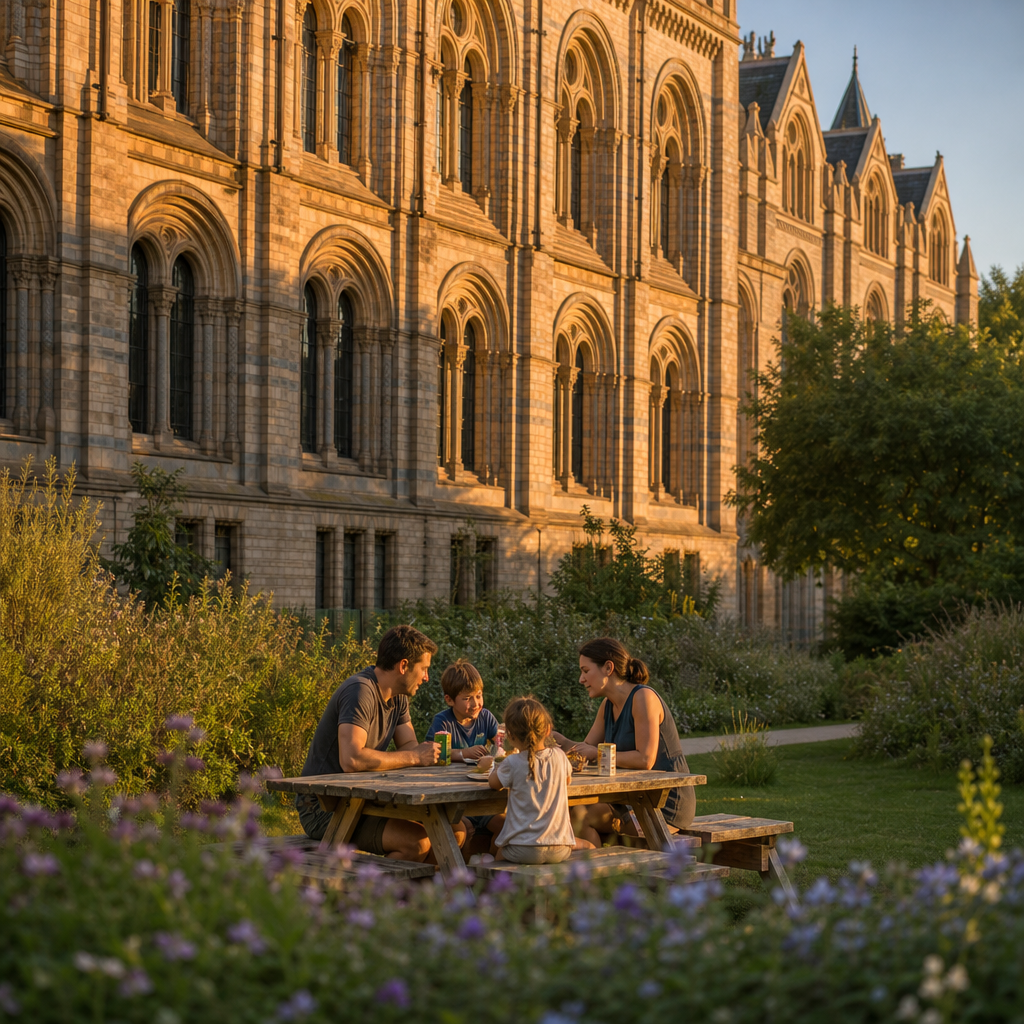
The Natural History Museum holds 80 million specimens — only a fraction on public display, making it the world's largest 'iceberg' collection. The practical challenge for families is not finding something good; it is resisting the urge to see everything. Sequence matters more than coverage.
Start in Hintze Hall with 'Hope' the blue whale skeleton: 25.2 metres long, suspended from the ceiling since 2017, the bones collected from a whale that beached in Wexford, Ireland, in 1891. The largest animal ever to have lived on Earth is above your children's heads — give that sentence a moment to land before moving on.
Move to the Dinosaur Gallery (Blue Zone). The animatronic T. rex has occupied this space since 1993 and still provokes genuine alarm in under-7s — it moves, vocalises, and tracks motion. Pair it with the real Stegosaurus skeleton on the mezzanine above for a scale comparison. Then take the escalator into the Red Zone (Earth Galleries) for the Earthquake Simulator: a recreation of the 1995 Kobe earthquake inside a mock Japanese supermarket. It lasts 60 seconds and is the most viscerally educational four square metres in the building.
Practical logistics: use the Exhibition Road entrance (east side) — queues are consistently shorter than the Cromwell Road main entrance. Eat at the museum's own café rather than the South Kensington restaurant strip outside. The Piccadilly Line runs direct from Covent Garden to South Kensington in approximately 8 minutes across 3 stops — time your departure from the piazza to arrive at the museum around 1:00pm, after the first-wave lunch crowd has settled. Between April and October, the Wildlife Garden on the west lawn — a genuine rewilded meadow inside Zone 1 London — is free and a calm endpoint to the afternoon.
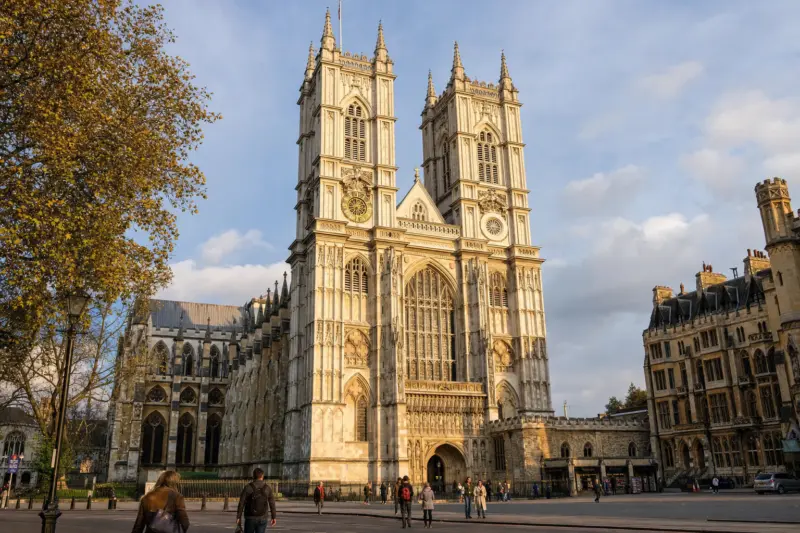
The Family Tour London builds this exact sequence with a guide who adjusts depth and pace to your children's ages. The Full Day Westminster Abbey Tour is an alternative for families whose older children are drawn more to royal history than natural science.
Everything above is genuinely doable on your own — this guide was written so you can use it without booking anything. But there is one thing a well-researched article cannot replicate: a local guide who reads your children's energy in real time, skips the gallery that isn't landing, and knows which T. rex viewing angle makes the animatronic look biggest. That is the actual value of a private tour with kids, not access or information, but pace management and decision fatigue elimination.
Local Cool Tour's Family Tour London is the turnkey version of this itinerary, built specifically around the Natural History Museum with age-adapted games and storytelling. If your family is new to London entirely, the London Kickstart Tour offers city-wide orientation first — useful before you commit a full day to one neighbourhood.
Other options worth knowing about: the London Unexpected Tour, the Full Day Westminster Abbey Tour, the Food & Drink London Tour, the London Full Day Tower Tour, the Oxford Day Trip, the Highlights of London – Camden Town, and the Highlights – Notting Hill Tour. Browse the full London tours page to find what fits your family's pace and interests.
Explore the city with a local guide
London
London

London
London
London
London
London
London
We use a single cookie, to remember this choice. We do not use analytics or advertising cookies. Read our cookie policy.