3.5 hrs
copenhagen
Copenhagen Alternative Private Tour: Vesterbro & Christianshavn
✓ Free cancellation Kids friendly
4.7(0 reviews)
From €311/ person
Book Now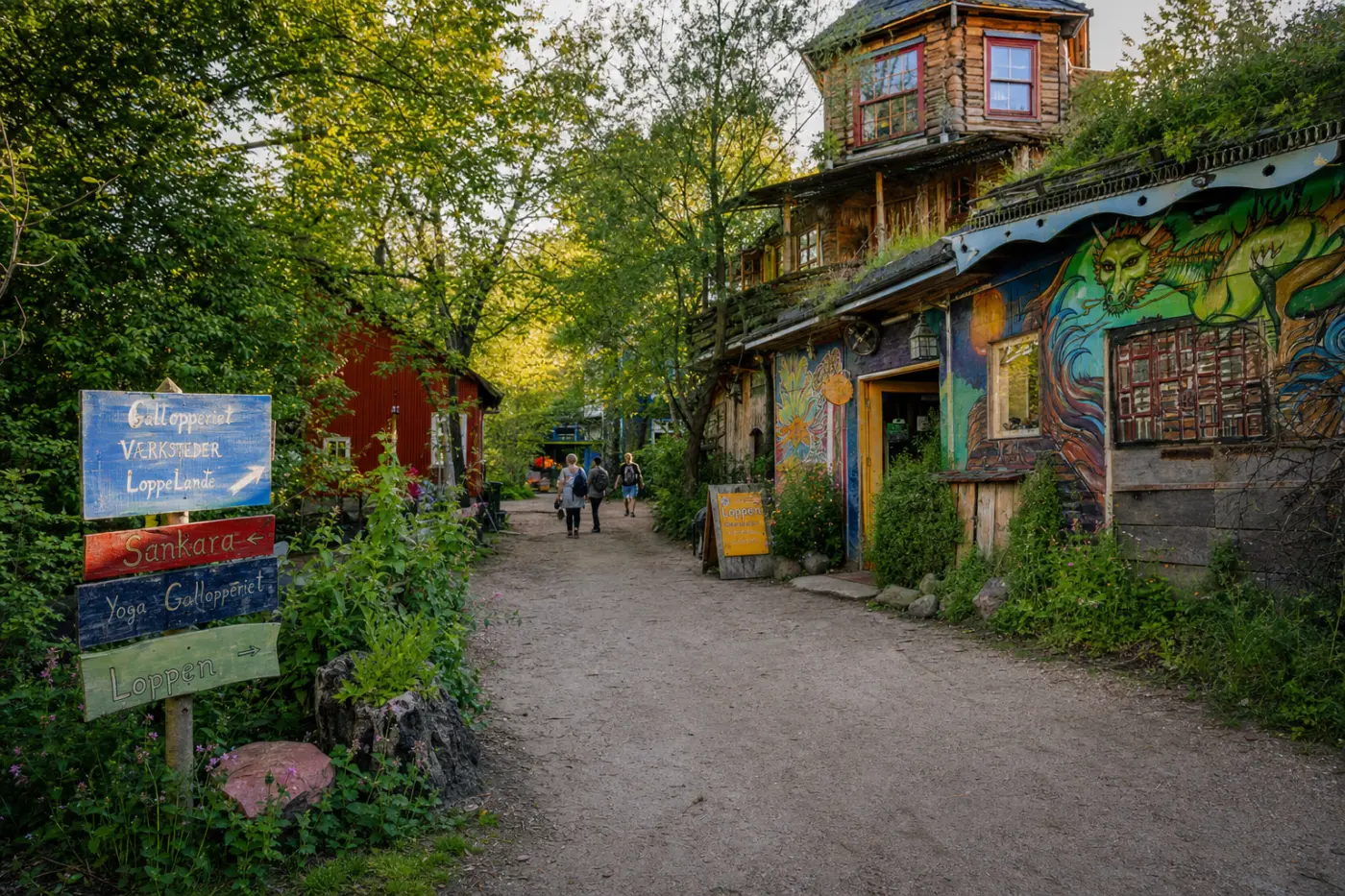
Tourist attraction
Freetown Christiania is a self-declared autonomous neighborhood occupying 34 hectares of former Danish military barracks on the island of Amager, in the Christianshavn district of Copenhagen. On September 26, 1971, a group of squatters — led by journalist Jacob Ludvigsen — broke through a fence on the abandoned Bådsmandsstræde military base and proclaimed a free society governed by its own rules: no private ownership of land or buildings, collective decision-making by consensus, and a rejection of Danish state authority. What began as a countercultural occupation rapidly attracted hundreds of residents, artists, and activists, eventually stabilizing into a permanent community of approximately 900 residents living in about 300 homes — many of them hand-built, architecturally eccentric structures featuring timber frames, sod roofs, repurposed industrial materials, and intricate murals that make the neighborhood look unlike anywhere else in Scandinavia.
The community's legal status remained in dispute for over three decades. The Danish government made multiple attempts to dismantle it, most seriously in 2004 when authorities demolished several buildings along the so-called "Pusher Street" cannabis market. A landmark 2011 agreement allowed Christiania's residents to collectively purchase the land from the Danish state for 76.2 million DKK (approximately €10 million), paid through a foundation structure that preserves the communal ownership model — a pragmatic compromise that saved the freetown while forcing it to engage with the very legal system it had long rejected. Despite this, Christiania still operates by its own internal laws: cars are banned from most of the area, residents pay a communal fee rather than rent, and all major decisions are made in open community meetings called "stormøder."
Visitors enter through the main gate on Prinsessegade and immediately encounter the famous Pusher Street — a long, open-air market historically associated with cannabis sales. Photography is explicitly forbidden in this area, and signs make this emphatically clear; respecting this rule is non-negotiable for residents. Beyond Pusher Street, the atmosphere shifts dramatically: the walking paths along the ramparts of the old moat reveal a remarkable landscape of hand-built homes surrounded by vegetable gardens, sculptures, and chickens, with the lakes of Christianshavn glittering beyond. The community hosts a concert venue (Loppen), a cinema (Biograf), several organic restaurants and cafés including the beloved Morgenstedet vegetarian kitchen (open since the 1970s), and a thriving arts scene that has produced internationally recognized painters, musicians, and designers.
The best time to visit is on a weekday morning, when the atmosphere is calm and residential rather than touristic. The main entrance from Prinsessegade is open to the public at all hours, though guided tours — including official ones run by residents — are available and provide access to context that independent visits miss entirely. Wear comfortable shoes, as the interior paths are unpaved. Do not attempt to photograph people without explicit permission, and treat the neighborhood as what it is: a living community, not a theme park. Christiania sits a 10-minute walk from Christianshavn Metro station (line M1/M2), making it one of the most accessible countercultural landmarks in Europe.
Private tours with a local guide, at your own pace.
copenhagen
copenhagen
copenhagen
copenhagen

copenhagen