Rome
Rome Private Walking Tour with Highlights & Gelato Tasting
✓ Free cancellation Kids friendly
5.0(7 reviews)
From €118/ person
Book Now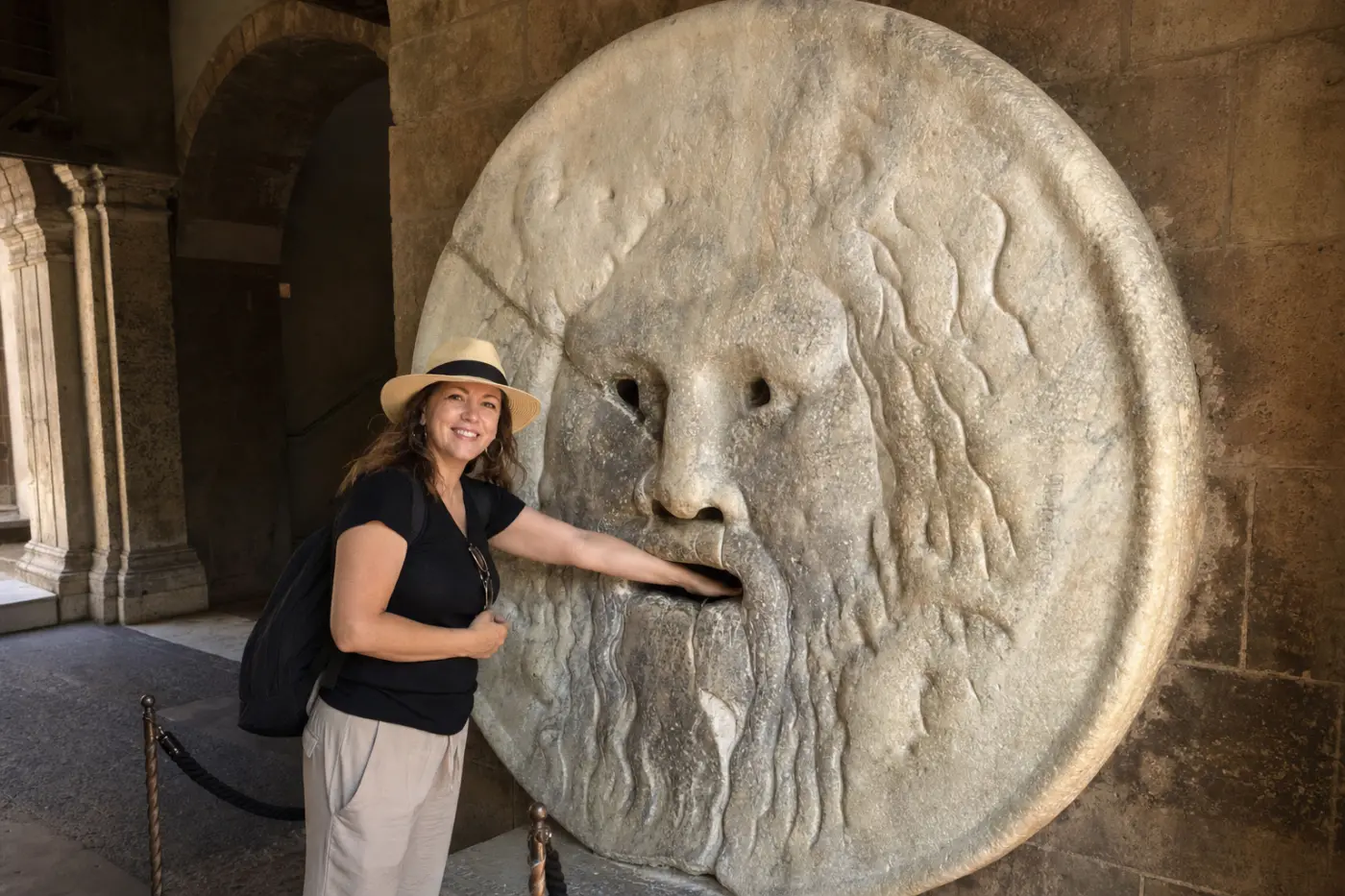
Tourist attraction
The Bocca della Verità is an ancient Roman marble mask measuring approximately 1.75 metres in diameter, carved in the form of a bearded face — most likely a river god or deity associated with the Tiber — with hollow eyes, nostrils, and an open, gaping mouth. Dating to the 1st century BC, it is one of the oldest surviving large-scale face carvings from the Roman world. Its precise original function remains debated: the leading theories suggest it served either as a drain cover in the Forum Boarium, Rome's ancient cattle market district, or as an altar piece connected to a nearby temple. The face's circular shape and central drain hole strongly support the sewer cover interpretation, which would have allowed rainwater and waste to flow through it.
The mask's documented history begins in the 13th century, when it was placed in the Piazza della Bocca della Verità — the open square that still bears its name today — likely salvaged from an excavation or demolition nearby. It remained outdoors until 1632, when it was mounted on the wall of the portico of the medieval Basilica of Santa Maria in Cosmedin to protect it from further weathering and damage. That church, built in the 6th century and significantly rebuilt in the 8th century under Pope Hadrian I, is itself a remarkable example of early medieval Roman architecture, with a distinctive Romanesque bell tower added in the 12th century. The placement of the mask within the church's entrance porch gave it both shelter and a new layer of religious gravity.
The legend attached to the mask — that it will bite off the hand of a liar who places it inside the mouth — has no confirmed ancient origin and likely grew during the medieval period, possibly as a practical tool used by priests and husbands to extract confessions or test fidelity. The mask's fame exploded internationally after it appeared in the 1953 Hollywood film Roman Holiday, in which Gregory Peck staged a mock bite to frighten Audrey Hepburn. That single scene transformed the Bocca della Verità into one of the most photographed objects in Rome, drawing hundreds of visitors daily who queue to insert their hand and pose for photos.
The Bocca della Verità is located on the Lungotevere Aventino, a short walk from the Circus Maximus and the Palatine Hill. Entry to the portico to see the mask is free, though a small donation to the church is customary. Arriving early in the morning significantly reduces wait times, which can stretch to 30–45 minutes at midday. The surrounding Piazza della Bocca della Verità is also worth exploring — the nearby temples of Hercules Victor and Portunus, both from the 2nd century BC, are among the best-preserved Republican-era temples in Rome and are often overlooked by visitors focused solely on the mask.
Private tours with a local guide, at your own pace.
Rome
Rome
Rome
Rome
Rome
Rome
Rome
Rome
Rome
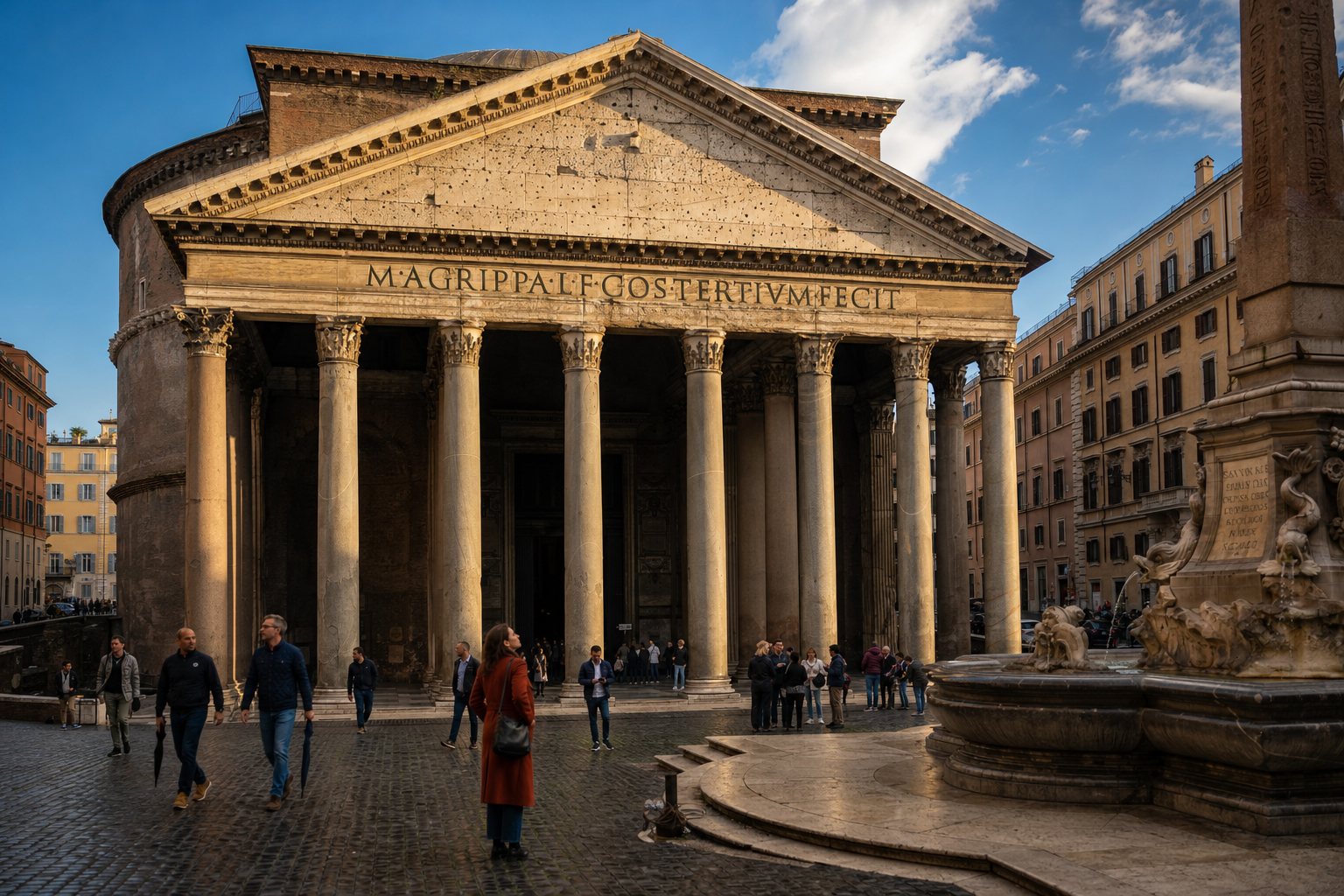
On the afternoon of 2 November 1950, Rome received 108mm of rain in a single day — one of the heaviest downpours in the city's recorded history. Locals ducked into trattorias, lingered over lunch, and emerged hours later to find the Sampietrini cobblestones of the historic center gleaming like polished obsidian. Here's the thing no travel guide tells you: rain doesn't ruin Rome. It transforms it. The same city that feels exhausting under July heat — queues snaking past the Trevi Fountain, tour groups stacked three-deep at the Pantheon — becomes something quieter, moodier, and far more liveable when clouds roll in off the Tyrrhenian Sea. Rome averages around 800mm of rainfall per year, with October, November, and February forming the wettest windows. That means millions of visitors each year encounter rain, yet most arrive with no plan beyond panic. This guide is that plan.
Read more →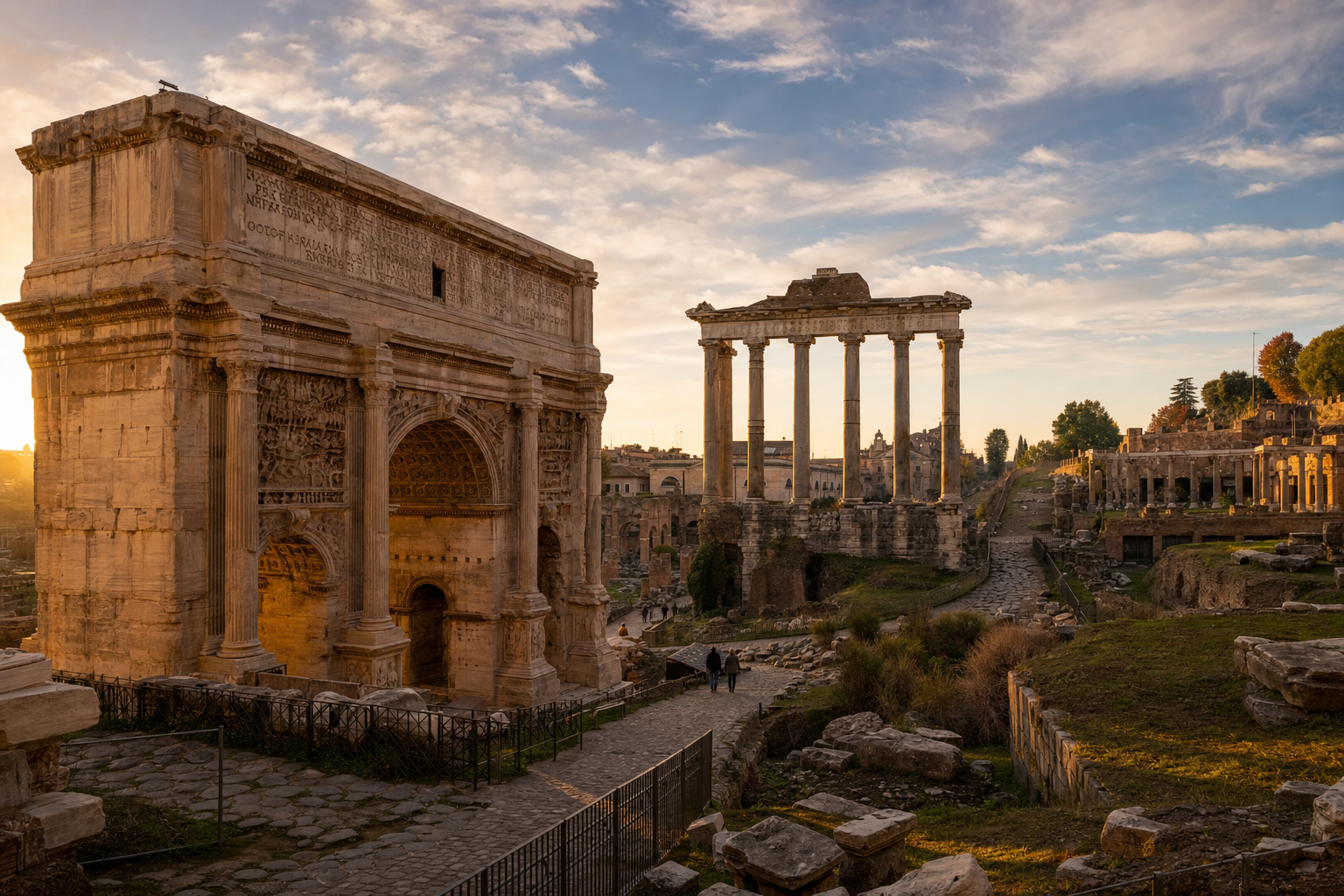
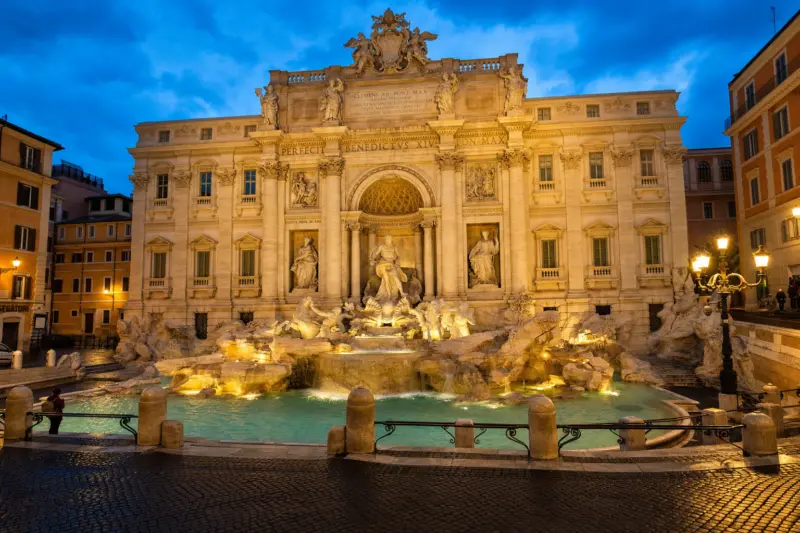
Rome was not built in a day — and it cannot be truly experienced in one either. Founded, according to tradition, on 21 April 753 BC, the city has been welcoming visitors for over two millennia, yet the question of when to go remains as contested as the Senate floor once was. Average annual tourist arrivals at the Colosseum alone exceed 7 million, meaning timing your visit is not a minor detail — it is everything. July temperatures regularly breach 35°C on the cobblestones of the Roman Forum, while a wet November morning at the Fontana di Trevi can feel like a private audience with Anita Ekberg's ghost. Each month carries its own character, crowd density, price point, and light quality. This guide cuts through the noise with specific facts, seasonal realities, and honest advice drawn from years of walking Rome's streets — so you arrive at exactly the right moment for the trip you actually want.
Read more →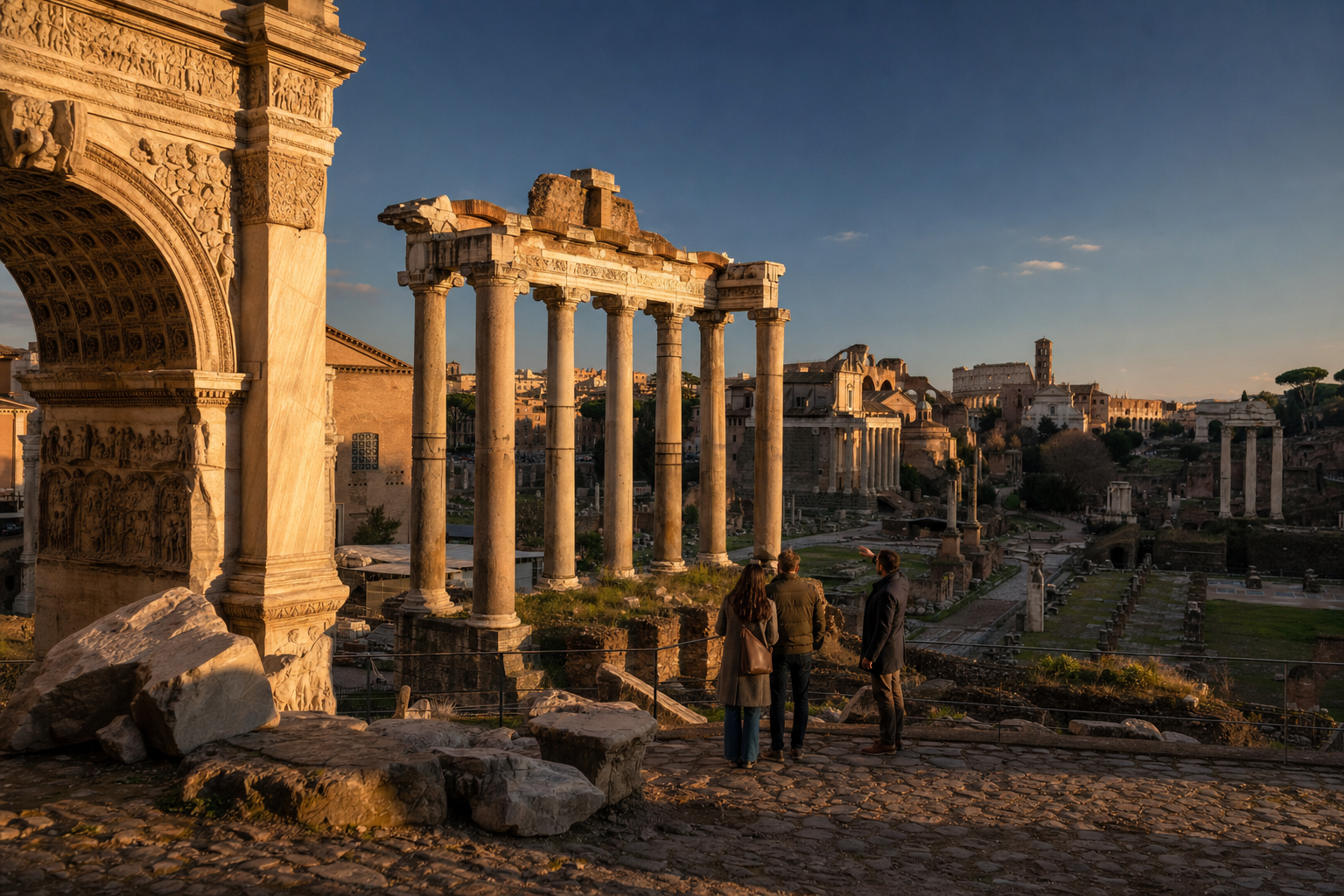
In 27 BC, Augustus Caesar famously boasted that he had found Rome a city of brick and left it a city of marble. What he didn't mention was that the city already contained several hundred years of Republican-era stone beneath his feet — and that future emperors, popes, and Renaissance architects would keep adding layers on top for the next two millennia. Today, Rome packs more than 2,000 years of continuous civilisation into 1,287 km², making it arguably the most historically dense urban environment on Earth. That density is precisely the problem with seeing it quickly, on a coach, in a crowd of strangers following a flag on a stick. Every piazza hides a deeper story. Every church floor covers an older church floor. Private tours in Rome don't just make the experience more comfortable — they make it genuinely comprehensible, turning a blur of ancient stones into a living, breathing city you actually understand.
Read more →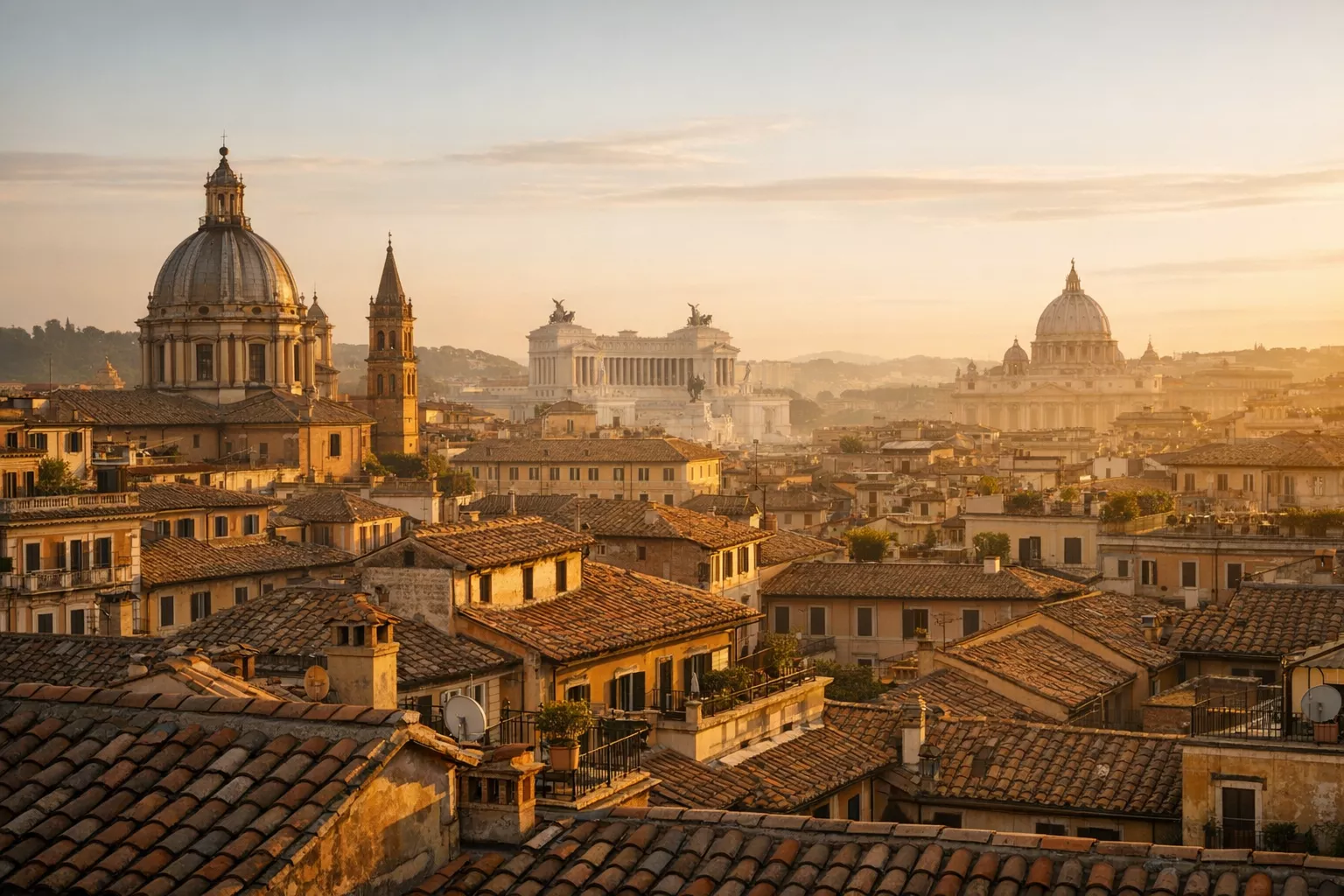
Discover the charm and beauty of Rome with our ultimate guide on what to do in this historic city. From iconic landmarks to hidden gems, we've got you covered with exciting tours and activities.
Read more →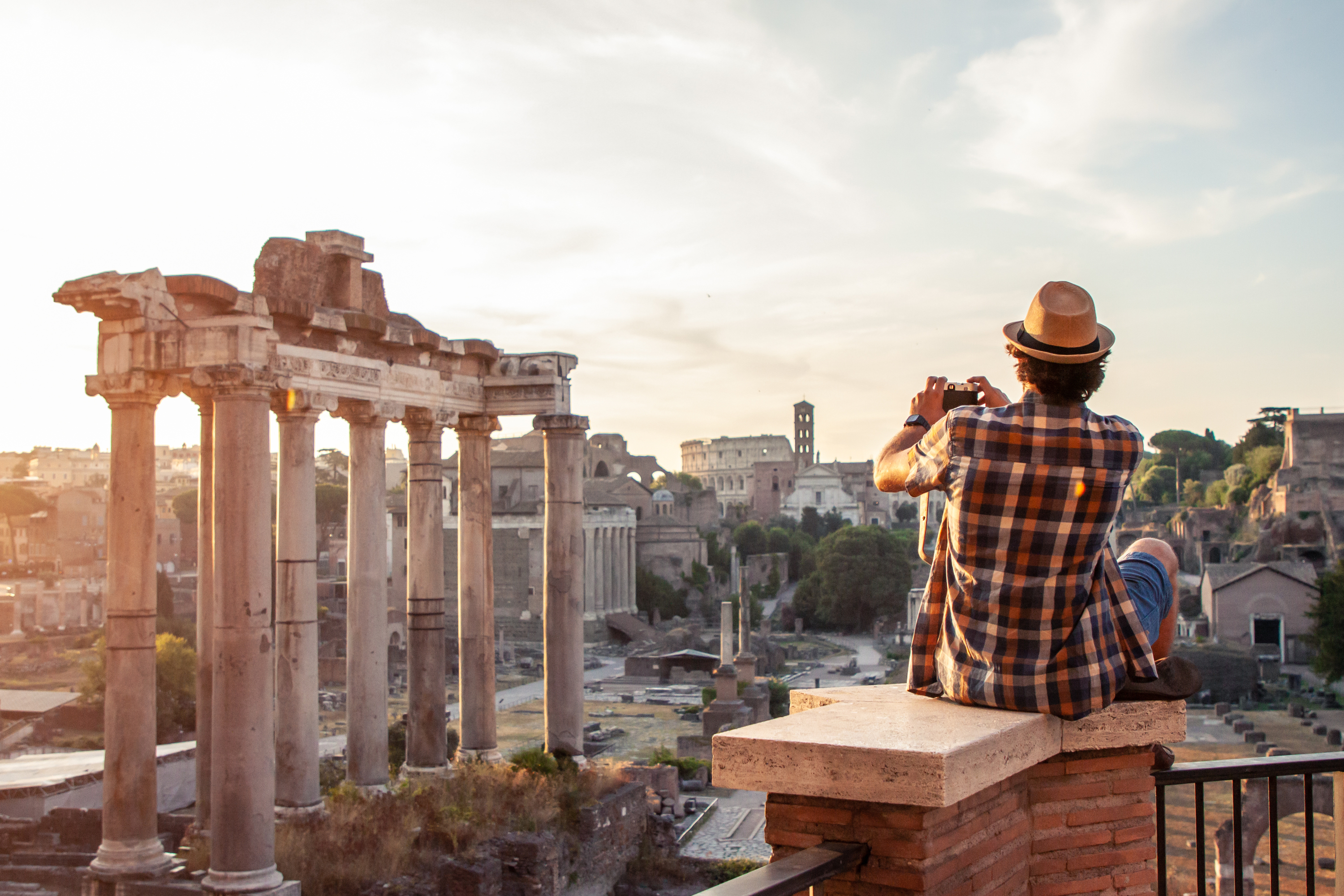
The Forum, the Colosseum and the Palatine are the three great archaeological sites that are preserved in the city of Rome. The concepts of "Forum" (the Roman Forum) or "The Forums" (the Imperial Forums), are difficult to understand what was done in them and how their spaces were organized. What is the difference between the traditional Roman Forum and the so-called Imperial Forums?
Read more →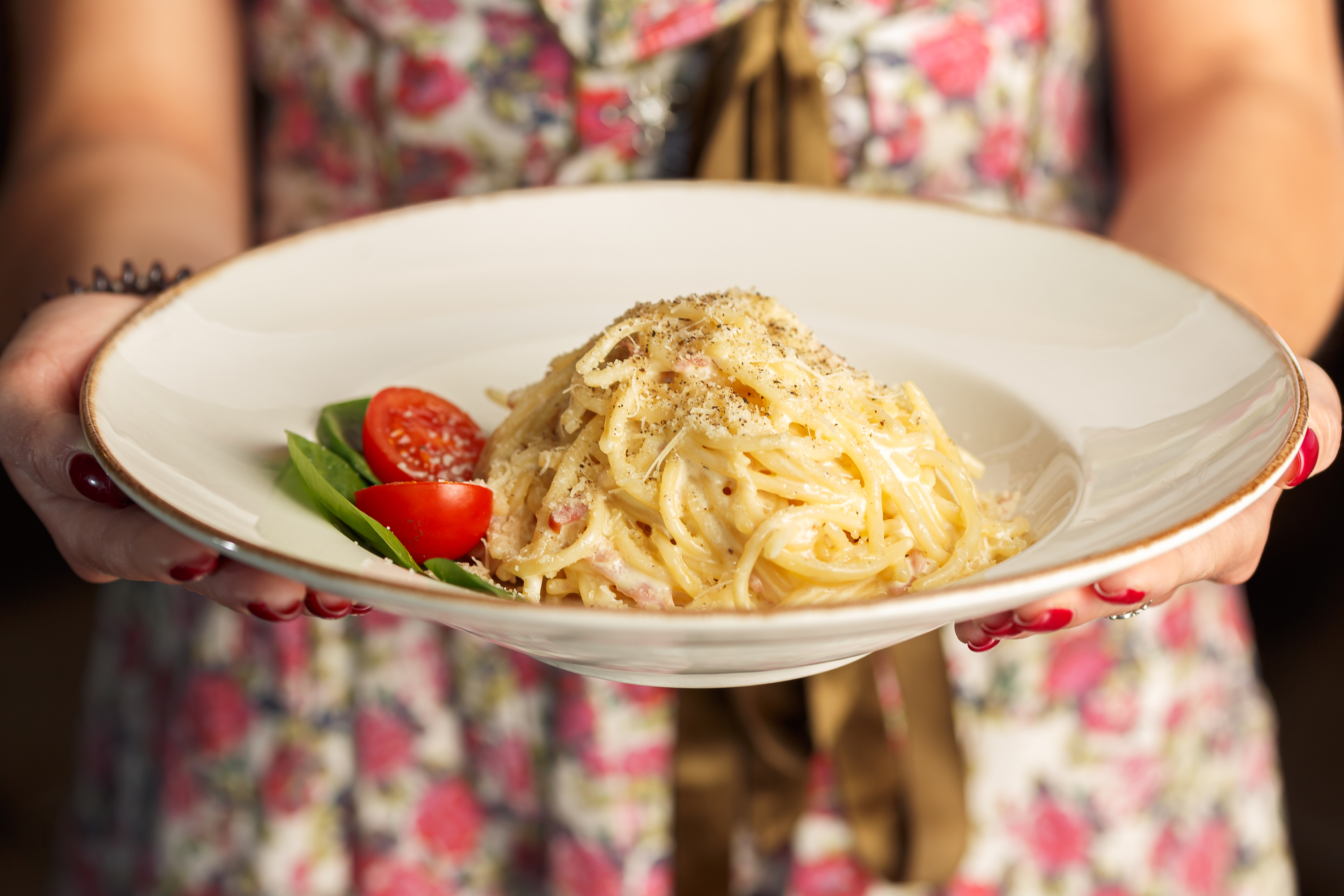
If you travel around Rome, there are dishes that you should not miss for anything in the world. Its typical dishes are very tasty and nutritious as they are very old recipes that have their origin in the villages of the region: they were thought to meet the great energy needs of the peasants. Due to this 'poor' origin, the typical dishes of the Roman cuisine are usually simple, they are made with very daily ingredients and often rich in cholesterol. It is very difficult to make a selection of recommended dishes... but we will give it a try!
Read more →We use a single cookie, to remember this choice. We do not use analytics or advertising cookies. Read our cookie policy.